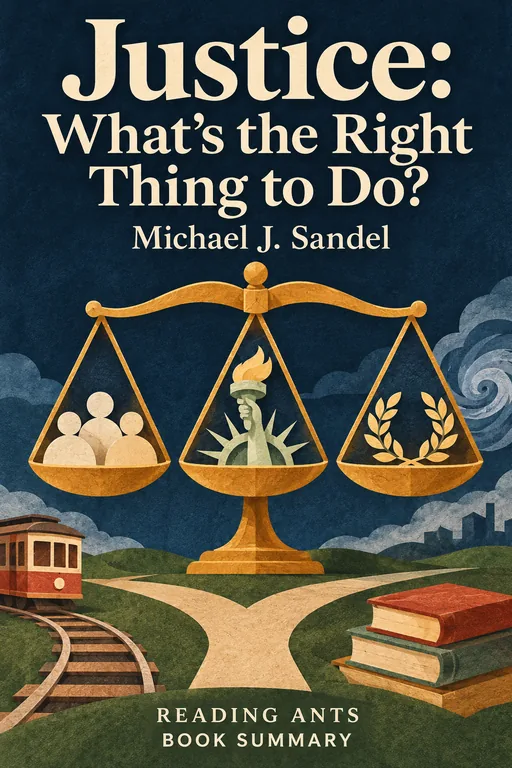
Justice: What's the Right Thing to Do?
Using lively real-life puzzles, Michael Sandel introduces the major philosophical answers to the question "What is the right thing to do?" and shows how they apply to everyday moral and political debates.
Overview
Justice: What’s the Right Thing to Do? was written by Michael Sandel, a political philosopher at Harvard University, and published in 2009. It grew out of his popular Harvard course, also called Justice, which attracted thousands of students and was made available as free online lectures. Sandel begins each chapter with a concrete dilemma, such as a runaway trolley, price increases after a hurricane or paying for children to read books, and uses it to explore ideas from great thinkers. He considers three main approaches to justice: promoting welfare, respecting freedom and cultivating virtue. The book is written for general readers and encourages them to think for themselves.
Full Summary
1. Doing the right thing: dilemmas
The idea: Sandel opens with moral puzzles. In one, a trolley is speeding toward five workers, and a driver can turn it onto a side track where it will kill one person. Many say turning is right. But if the only way to save the five is to push a large man off a bridge, most people say no, though the numbers are the same. These cases show that our moral intuitions are not simple, and that we often must reason about principles to decide. He also points out that moral questions are often tied to politics.
In real life: Choices about how to allocate scarce resources, such as hospital beds, raise similar tensions between numbers and rights.
2. Maximizing welfare: utilitarianism
The idea: The first approach, utilitarianism, associated with Jeremy Bentham and John Stuart Mill, says that the right action is the one that produces the greatest happiness for the greatest number. It has the appeal of simplicity and of treating everyone equally. But Sandel raises objections: it might justify harming a minority for the benefit of a majority, and it assumes that all values can be measured on a single scale. Mill tried to reply by distinguishing higher from lower pleasures.
In real life: A policy that benefits most people but seriously harms a few makes the problem clear.
3. Respecting freedom: libertarianism and markets
The idea: The second approach is libertarianism, represented by thinkers like Robert Nozick, who argue that justice means respecting individual rights, especially property and the freedom to choose. Taxing the rich to help the poor is, in this view, a kind of forced labor. Sandel explores cases such as selling organs, paying substitutes in wars and hiring surrogate mothers, to see where market freedom may clash with moral concerns about fairness and coercion.
In real life: Debates over whether prices should rise during emergencies, such as after a hurricane, show conflicts between freedom to trade and fairness.
4. Kant and Rawls: freedom and fairness
The idea: Sandel next discusses Immanuel Kant, who held that morality is about duty and treating people always as ends in themselves, never merely as means, and that actions should follow principles that could apply to everyone. He then turns to John Rawls, who proposed that just principles are those we would choose behind a “veil of ignorance,” not knowing our place in society. People would likely choose equal basic liberties and arrange inequalities to help the least advantaged. These ideas support the view that justice is about fair rules, which we choose.
In real life: If you had to design school rules without knowing whether you’d be the star athlete or the new student, you’d likely make them fairer.
5. Merit, community and the common good
The idea: Sandel then examines arguments that justice involves honoring people for what they deserve and for their role in a community. He draws on Aristotle, who held that justice means giving people what fits their virtues and the purpose of social practices, and on modern “communitarian” thinkers who say that we are shaped by our relationships and obligations. Questions about affirmative action, military service and public apologies for past wrongs show how these ideas apply. Sandel suggests that a just society must debate the good life, instead of staying neutral.
In real life: Arguments about who should get a place at a university involve ideas about merit, fairness and the purpose of education.
6. Toward a politics of the common good
The idea: In the final chapter, Sandel argues that a healthy democracy needs a shared public life in which citizens argue openly about moral and political questions, including ones about the common good, instead of avoiding them. He suggests that ignoring such questions leaves a vacuum filled by narrow or intolerant views. He does not give a final answer to what justice requires, but urges readers to engage in reasoned debate and to be willing to revise their views.
In real life: Talking with people who disagree, calmly and with real questions, is a practical way to apply his ideas.
Why It Matters
Justice was an international bestseller, and the free Harvard lectures have been viewed by millions of people worldwide, including in countries where public debate is limited. The book helped bring moral philosophy to the general public and has been used in classrooms, discussion groups and workplaces.
It also influenced public conversation about markets, fairness and the role of morality in politics. Sandel followed it with books such as What Money Can’t Buy and The Tyranny of Merit, continuing his inquiry into how values shape society. Many teachers use the book’s opening dilemmas on the first day of an ethics class because they draw in even students who think philosophy is dull.
Key Takeaways
- Moral questions are everywhere. Everyday politics involves ethics.
- Three approaches. Welfare, freedom and virtue each offer insight.
- No single theory is perfect. Each has strengths and problems.
- Intuitions need examination. Test them against principles.
- Debate is healthy. Democracies need open discussion of the common good.
What We Can Learn
The book teaches us to test our beliefs by considering hard cases. When we find that our reactions conflict, we can discover which principles we really hold and whether they are consistent.
It also demonstrates how to disagree respectfully. Sandel’s classroom method is to ask questions, hear different views and push everyone to give reasons, which is a model for conversations among friends and citizens.
Finally, it reminds us that justice is not only a matter for judges and politicians. How we treat others, share resources and speak about our community are all part of living justly.
Criticism and Counterpoints
Some critics say that Sandel’s survey is too simplified, and that it presents great thinkers through short summaries that can distort their ideas. Others argue that he leans toward communitarian views without stating this clearly, or that he avoids committing to a final theory. Defenders of utilitarianism and libertarianism say his objections do not fully capture their best versions.
Some readers also feel that the book’s focus on American examples limits its reach. Moreover, the book gives little attention to global justice or to issues like climate change. Even so, many appreciate it as an accessible and thought-provoking introduction.
Who Should Read It
This book suits teenagers and adults who enjoy debating moral questions. It requires no background in philosophy and its examples are engaging. It makes a good book for a class, family or discussion group.
Want the whole book?
A summary is a taste, not the meal. Here is where to find the full book.
You reached the end 🎉
Nicely done. Mark this one as read, and we will suggest what to read next.
Read this next
The Republic
Plato
Plato, through the character of Socrates, asks what justice is and imagines an ideal city, arguing that a just person and a just state are ruled by wisdom, with reason guiding the whole.
🕊️ Philosophy & Religion
Nicomachean Ethics
Aristotle
Aristotle argues that the best human life is one of flourishing, achieved by building good character through habit, finding the balance between extremes, using practical wisdom and cultivating friendship.
🕊️ Philosophy & Religion
On Liberty
John Stuart Mill
John Stuart Mill argues that society may limit a person's freedom only to prevent harm to others, and that free thought, free speech and individuality benefit everyone.
🕊️ Philosophy & Religion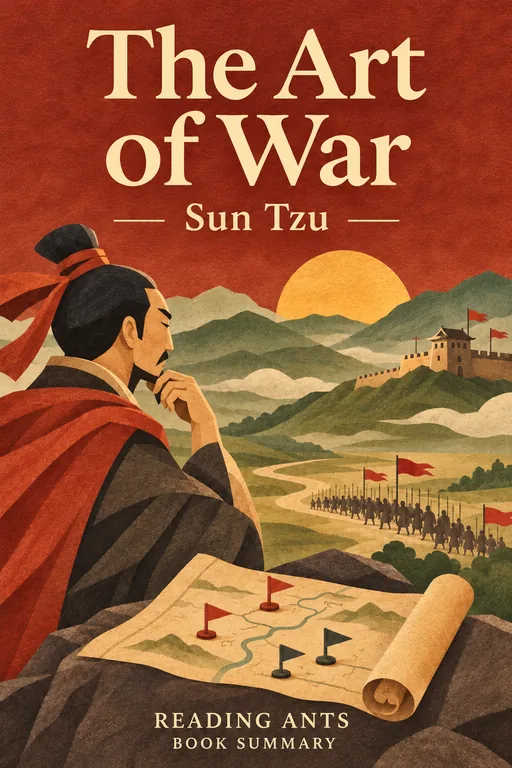
The Art of War
Sun Tzu
The greatest victory is the one won without fighting, achieved through careful planning, knowing both yourself and your opponent, and using deception, flexibility and timing.
🕊️ Philosophy & Religion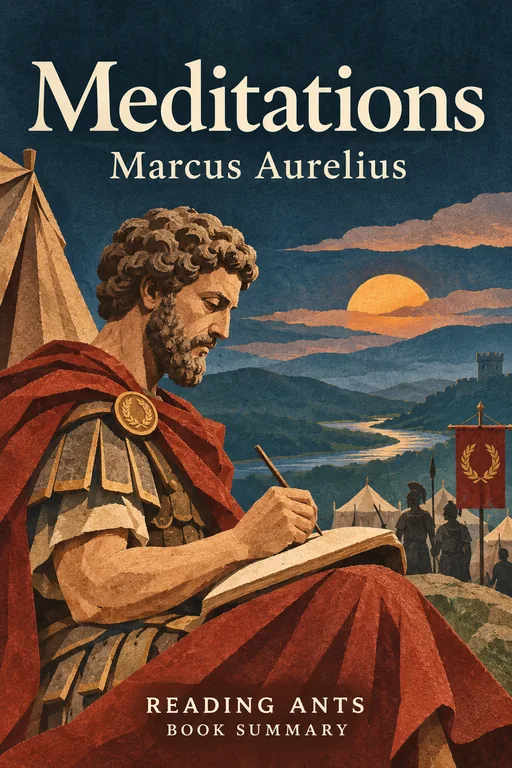
Meditations
Marcus Aurelius
The private notebook of a Roman emperor, reminding himself daily to accept what he cannot control, to act with justice and kindness, and to remember that life is short.
🕊️ Philosophy & Religion
Tao Te Ching
Laozi
The deepest wisdom is to live in harmony with the Tao, the natural way of the universe, by being humble, gentle and simple, and by acting without force.
🕊️ Philosophy & ReligionWant something different?
Pick another topic and we will show you three books to start with.