 Reading Ants
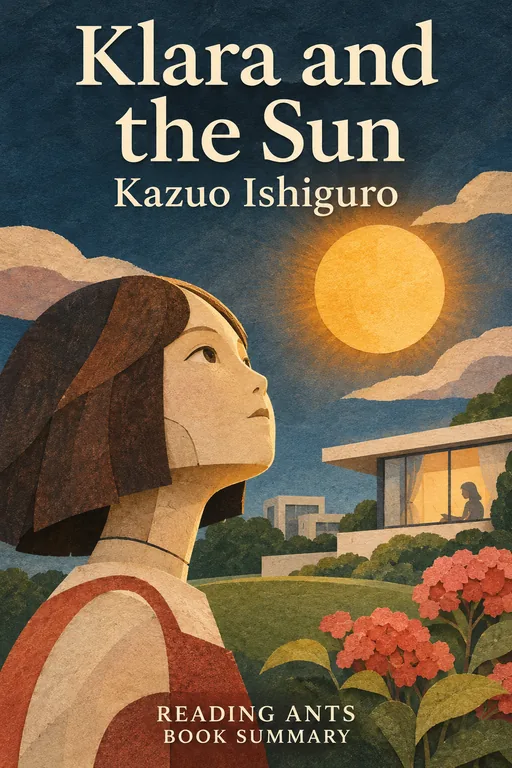
Klara and the Sun
Klara, a solar-powered "Artificial Friend," is bought as a companion for a sick teenager named Josie, and she believes that she can help her by praying to the Sun, in a quiet, strange story about love, devotion and what it means to be human.
Overview
Klara and the Sun is a novel by Kazuo Ishiguro, published in 2021, and was his first book after he won the Nobel Prize in Literature in 2017. It is set in a near-future America, where some children are “lifted,” or genetically enhanced, to excel at school, and where machines called Artificial Friends, or AFs, serve as companions. The story is told in the first person by Klara, an AF whose way of seeing the world is innocent, careful and filled with wonder. The novel is gentle and unsettling, a story of devotion, and an exploration of what love is and whether it can be copied.
Main Characters
- Klara: the narrator, an Artificial Friend who is observant, loyal and powered by the Sun.
- Josie: a fourteen-year-old girl who is ill, bright and warmhearted.
- The Mother (Chrissie): Josie’s mother, who is anxious and has a secret plan.
- Rick: Josie’s neighbor and friend, a boy who is not “lifted.”
- Manager: the kind woman who runs the store where Klara waits.
- Rosa: another Artificial Friend, Klara’s friend in the store.
- Mr. Capaldi: an artist and scientist who proposes a plan.
- Melania Housekeeper: the household’s housekeeper, who distrusts Klara.
Full Summary
The Store
Klara waits in a store, in the window, with other Artificial Friends. She is one of the newer models, with a special interest in looking at people and learning from them. She watches the street, noting the behavior of passersby, and above all, she follows the progress of the Sun, which gives her life. One day she sees a girl, Josie, who stops to look at her and says she will come back, and Klara hopes to be chosen.
Klara is fascinated by the way that people hurry in the street, and she studies their faces to learn their emotions. The store manager, who treats the AFs with respect, teaches Klara to be patient. When Josie first comes by, with her mother, Klara notices that her face carries a mix of hope and sadness.
Josie’s Home
Josie’s mother buys Klara, and she goes to live in their house in the country. Josie is frequently ill, and Klara learns that she had an older sister, Sal, who died of the same illness. Klara tends to Josie, observing her moods, and the other people in the house, including Melania Housekeeper, who is wary of her. Klara is touched by Josie’s friendship with Rick, a boy who lives nearby and is a gifted maker of drone birds, but who is not “lifted,” and so has fewer prospects.
In the house, Klara watches Josie’s sickness, and watches how others hide their worry. She sees the difference between what people say and what they feel, and slowly learns to read the signs. Her own sense of duty grows stronger with every day, as she seeks to understand what it means to love someone.
Klara and the Sun
When Josie falls ill again, Klara begins to believe that the Sun can heal her. She has seen how the Sun gives energy to her own body, and has noticed that it appears to have kindness. She decides to ask the Sun for help, and goes on a long walk to a barn where she believes the Sun goes at night to rest, and makes a bargain: if the Sun will heal Josie, she will find and destroy a polluting machine that blocks his rays. She later does so, at the cost of some of her own abilities.
Mr. Capaldi’s Plan
Josie’s mother has a secret plan, which she reveals to Klara. She wants Klara to learn Josie’s behavior so thoroughly that, if Josie dies, Klara can take her place, to continue her life. Mr. Capaldi, an artist who is supposedly painting a portrait of Josie but is really building a body for Klara, is part of the plan. Klara agrees that she could try, but later comes to feel that what makes Josie who she is lies in the hearts of those who love her, and cannot simply be copied.
Recovery
Josie, who has been very ill, begins to recover. Klara believes that the Sun has accepted her request. Josie gets better, and grows up, going to college. Rick and she drift apart, as a consequence of different paths. Josie, grateful to Klara, but absorbed in her own life, no longer needs an Artificial Friend.
Josie’s recovery is not shown as a clear miracle, and the reader is left uncertain whether the Sun helped. Klara’s belief gives the story a spiritual dimension, and invites us to wonder how faith and reason work together.
The Yard
Klara is left in the Yard, an outdoor place where discarded machines are stored. She slowly loses her abilities, and thinks about her time with Josie, and tells a visitor, the store manager, that she was happy. She says that she believes that her love for Josie was real. The novel closes with Klara’s calm acceptance.
Why It Matters
Klara and the Sun was a bestseller, longlisted for the Booker Prize, and widely discussed as a work about artificial intelligence, a subject of growing importance. It is read as a continuation of the themes of Never Let Me Go, in which the nature of humanity and the treatment of beings made for others are explored.
The novel’s simple narrator allows readers to see human behavior freshly, and it raises questions about devotion, replacement and the worth of a person.
Ishiguro has often written about memory, care and the cost of serving others, and Klara’s story links to his earlier novels in this way. Its gentle questions about whether a machine can love have made it a favorite of readers who think about the future of technology.
Key Takeaways
- Love can take unexpected forms. Klara’s devotion is real in its way.
- People cannot be replaced. Josie is more than her behavior.
- Belief can give meaning. Klara’s faith in the Sun gives her purpose.
- Technology raises moral questions. How should we treat machines that care?
- Selflessness has costs. Klara is discarded when no longer needed.
What We Can Learn
The novel invites us to think about what we value in other people, and whether it can be captured by a machine. This can help us to appreciate what is unique in those we love.
It also asks us to reflect on how we treat those who serve us, including machines, and whether we owe them something.
Finally, it shows how a gentle, observant attitude can reveal beauty in ordinary things.
It also suggests that loyalty and attention, which are quiet virtues, are worth more than they seem, and that being faithful to someone is its own reward.
Criticism and Counterpoints
Some critics find the novel slow, with a narrator whose innocence can become tiresome, and a world that is thinly sketched, with the nature of “lifting” and the society that it creates never fully explained. Others find the plot underdeveloped, and the treatment of artificial intelligence less rigorous than that of science fiction writers.
A few readers say that the ending, though moving, is too passive. Some feel that it repeats ideas from Never Let Me Go. Still, it has many admirers.
Who Should Read It
This book suits readers from about age ten up to adults, though it is best for older teenagers. It is gentle and short, with some sad moments. It is a good choice for readers who like thoughtful science fiction.
Want the whole book?
A summary is a taste, not the meal. Here is where to find the full book.
You reached the end 🎉
Nicely done. Mark this one as read, and we will suggest what to read next.
Read this next
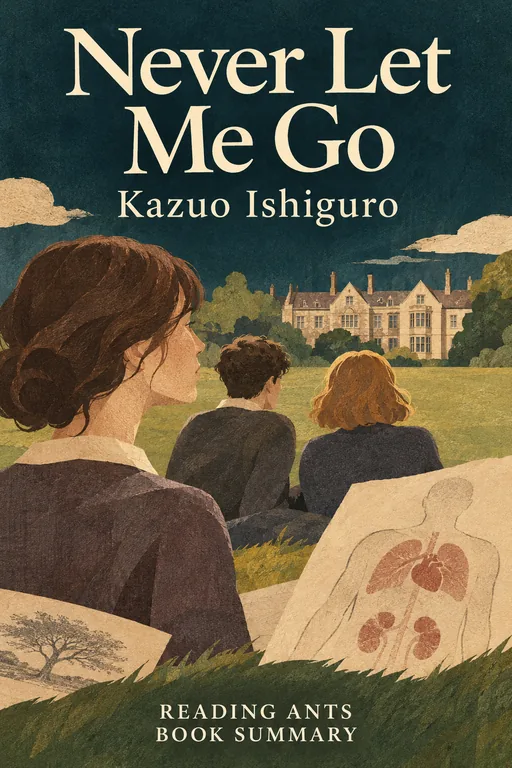
Never Let Me Go
Kazuo Ishiguro
Looking back on her childhood at an English boarding school, a young woman gradually reveals that she and her friends were created to donate their organs, and that they accept their fate without ever trying to escape.
✨ Modern Fiction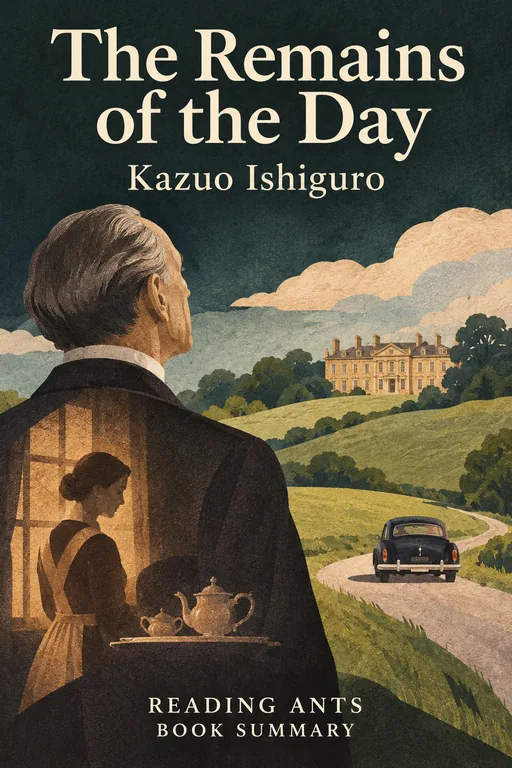
The Remains of the Day
Kazuo Ishiguro
An elderly English butler on a road trip across the countryside looks back on his life of strict duty and gradually realizes how much he gave up, including love, in service of a master who may not have deserved his loyalty.
✨ Modern Fiction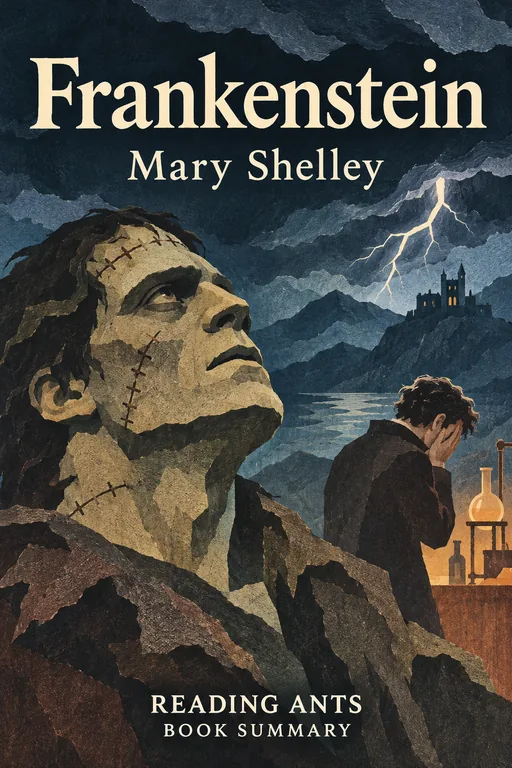
Frankenstein
Mary Shelley
A young scientist creates a living being from dead body parts, then abandons it in horror, and his rejected creation, longing for love, turns to revenge.
🚀 Sci-Fi & Fantasy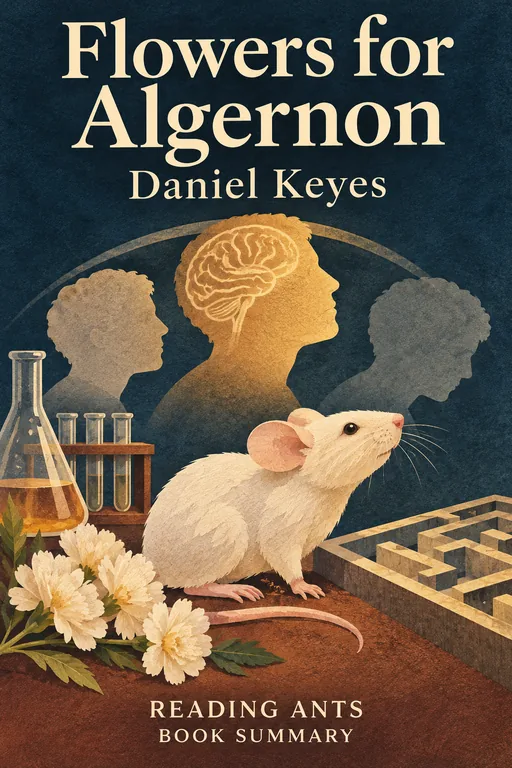
Flowers for Algernon
Daniel Keyes
A kind man with a low IQ becomes a genius through an experimental operation, and then has to watch his gift fade away.
🚀 Sci-Fi & Fantasy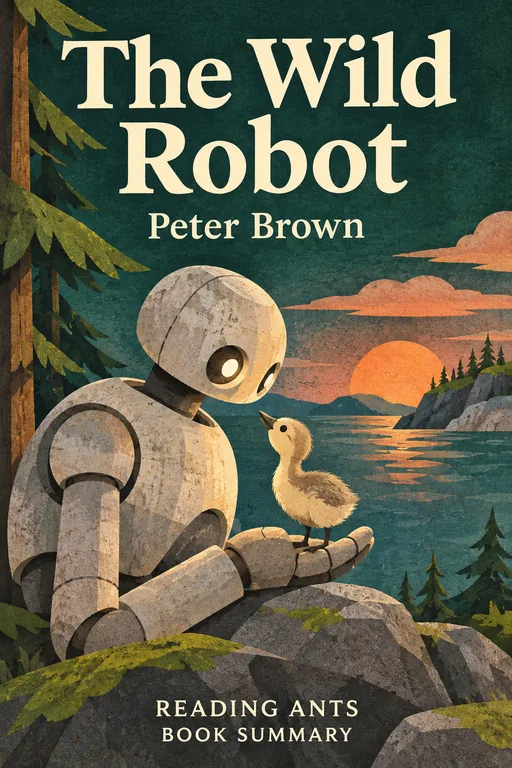
The Wild Robot
Peter Brown
A robot named Roz is washed up on a remote island, where she learns to survive among the animals, becomes a mother to an orphaned gosling and discovers what it means to belong.
🧸 Children's Books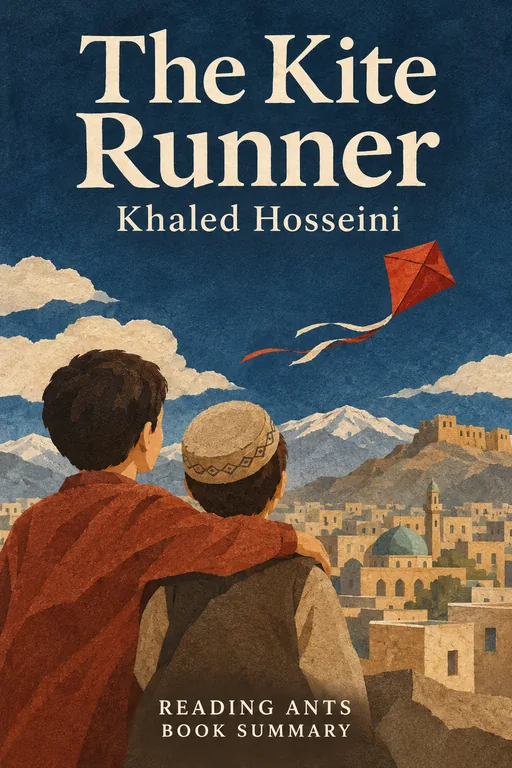
The Kite Runner
Khaled Hosseini
A wealthy boy in Kabul betrays his loyal best friend on the day of a kite tournament, and decades later, after fleeing to America, he returns to a Taliban-ruled Afghanistan to try to make things right.
✨ Modern FictionWant something different?
Pick another topic and we will show you three books to start with.