 Reading Ants
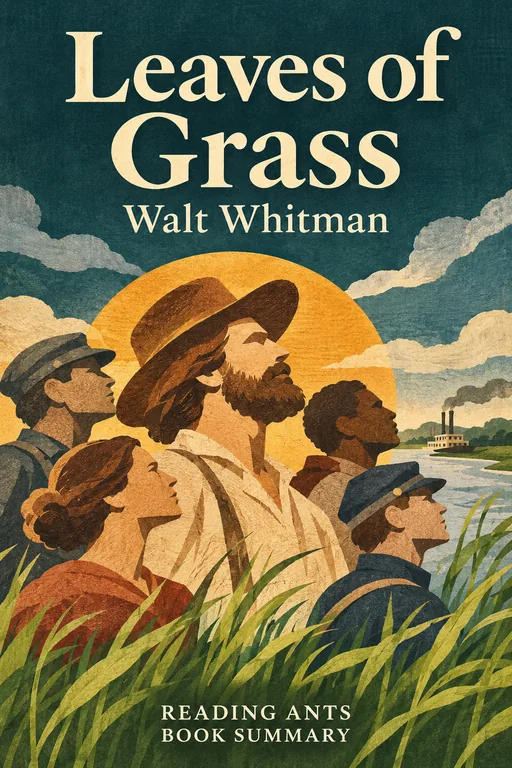
Leaves of Grass
Walt Whitman's lifelong book of free-verse poems celebrates the self, the body, democracy, nature and ordinary Americans, in a bold new voice that changed poetry.
Overview
Leaves of Grass is a collection of poems by the American poet Walt Whitman, first published in 1855 at his own expense, with twelve poems, none of them given a title. He kept adding to and revising the book through several editions until the “deathbed edition” of 1892, so that it grew into hundreds of poems. The best-known is “Song of Myself,” which begins with a bold line about celebrating himself. Whitman broke with the rhyme and meter of earlier verse, writing in long, flowing lines that imitate speech and the rhythms of the Bible. The poems praise ordinary workers, the individual and the unity of all people, and also mourn the Civil War and the death of Abraham Lincoln. The book was controversial for its frank treatment of the body, but it became a foundation of American poetry.
Main Characters
The poems do not tell a single story. The main voice is the “I” of Whitman, who speaks as himself and also as a representative American, claiming to contain multitudes. Other figures that appear are the common people: farmers, sailors, mechanics, soldiers, mothers and slaves. The grass is a central symbol, standing for equality, growth and renewal. Lincoln, the “captain,” is the subject of the great elegies, and the wounded soldiers whom Whitman nursed in hospitals appear in the war poems.
Full Summary
Song of Myself
In the 1855 edition, the first and longest poem begins with the poet’s claim that what he assumes, the reader will assume, since every atom belonging to him belongs also to the reader. He lounges on the grass, and sees in a child’s question about what the grass is, an image of the universe. The poem is a long catalog of scenes: a runaway slave at his door, a young woman watching bathers, a battle, a hospital. Whitman speaks as if he had been each of these people, and claims that he contains contradictions, and says that he is large. The poem celebrates the body and the soul as equal, and refuses to rank the lofty above the common.
The Body and Desire
Other poems, such as “I Sing the Body Electric” and those in the “Children of Adam” and “Calamus” sections, celebrate the human body as sacred, and speak of love between men and between men and women, in a frank and tender voice that was scandalous in the nineteenth century. Whitman suggests that shame about the body is a form of falsehood. The “Calamus” poems, in particular, are about companionship, and have been read as expressions of same-sex love, which has made Whitman an important figure for later readers.
America and Democracy
Whitman wanted to write the poem of America. In “I Hear America Singing,” he lists workers, each singing his or her own song, and in “Crossing Brooklyn Ferry,” he speaks across time to the people who will take the same ferry in the future. He believed that the new democracy needed a new kind of poet, a bard who would speak for all, and he tried to be that. He praises diversity and equality, but also, as critics have noted, is sometimes limited by the prejudices of his time.
War and Loss
In December 1862, after hearing that his brother George had been wounded, Whitman traveled to the front in Virginia, then went to Washington and stayed to work as a volunteer nurse in army hospitals. The “Drum-Taps” poems record the war, from the first excitement to the suffering. “The Wound-Dresser” is a quiet account of caring for dying soldiers. He is moved by the courage and gentleness of young men, and the poems are among the most moving writing on the war.
Lincoln
After Lincoln’s assassination in 1865, Whitman wrote “O Captain! My Captain!,” a rhymed and traditional poem that became very popular, and the longer, freer lilac elegy, which is considered one of the finest elegies in English. In it, a lilac, a star and a hermit thrush’s song combine to mourn the loss of Lincoln and to accept death as a “delicate, lovely” presence.
Passage and Farewell
In his last years, Whitman wrote poems of old age, including “Sands at Seventy” and “Good-Bye My Fancy.” He continued to revise the book and to see it as a living thing. Many of the later poems look to death with calm and to the future with hope, and invite the reader to carry on the poet’s spirit. The book ends, as it began, with the voice of someone who wants to be your companion.
Why It Matters
Leaves of Grass is considered the foundation of modern American poetry. Whitman’s free verse and his subject matter, ordinary life and the individual, influenced poets from Ezra Pound to Allen Ginsberg to Langston Hughes, and many writers around the world. Ralph Waldo Emerson greeted the first edition with a letter praising it as a wonderful gift.
The book also helped to define what American literature could be, a literature of democracy, and it remains widely read and loved, particularly “Song of Myself” and the Lincoln elegies.
Whitman also gave American readers permission to write about their own lives and landscapes without imitating Europe, an idea that later poets took as a kind of declaration of independence.
Key Takeaways
- Each person has dignity. Whitman celebrates all kinds of people.
- The body is not shameful. The poems honor physical life.
- Everything is connected. The self and the world are one.
- Democracy needs a voice. The poet speaks for all.
- Death can be accepted. The Lincoln poems find peace in grief.
What We Can Learn
The poems encourage us to look at the world with wonder, and to see the value in everyday things such as a blade of grass, a worker’s tools or a stranger’s face. They remind us that attention can make life richer.
They also invite us to think about equality, and to see ourselves as part of a larger human family, which can make us more generous.
Finally, they teach that grief and love can be expressed openly, and that doing so can help us to heal.
Criticism and Counterpoints
Some readers find Whitman’s long lists repetitive, and his self-celebration boastful. His early critics condemned the poems as indecent, and in 1865 he lost a government job after a superior found the book offensive. Modern critics point out that, despite his talk of universal democracy, Whitman held some prejudiced views, including toward Black Americans and Native Americans, and that his America is often idealized.
Some also feel that his later poetry is less fresh. The many editions can be confusing for readers, since the poems changed over time. Yet his influence is large.
Who Should Read It
This book suits teenagers and adults. It is best read in selections, beginning with “Song of Myself,” “I Hear America Singing” and the Lincoln poems. Reading aloud brings out its rhythms.
Want the whole book?
A summary is a taste, not the meal. Here is where to find the full book.
You reached the end 🎉
Nicely done. Mark this one as read, and we will suggest what to read next.
Read this next
Walden
Henry David Thoreau
Henry David Thoreau describes the two years he spent living simply in a small cabin by Walden Pond in Massachusetts, and argues that people should simplify their lives, spend time in nature and think for themselves.
🕊️ Philosophy & Religion
The Waste Land
T. S. Eliot
In a patchwork of voices, myths, quotations and scenes of modern city life, Eliot's famous poem portrays a broken, spiritually barren post-war Europe, and hints at the possibility of renewal.
🎭 Epics, Drama & Poetry
The Odyssey
Homer
After the Trojan War, the clever hero Odysseus struggles for ten years against monsters, gods and temptations to return home to his faithful wife and son, then must win back his house from the men trying to steal it.
🎭 Epics, Drama & Poetry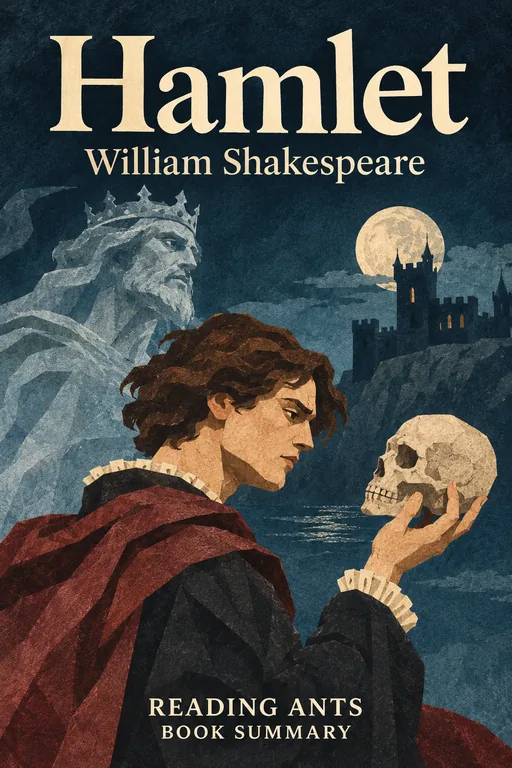
Hamlet
William Shakespeare
A grieving prince of Denmark learns from his father's ghost that his uncle murdered the king to take the throne, and his struggle to decide whether and how to take revenge leads to madness and death.
🎭 Epics, Drama & Poetry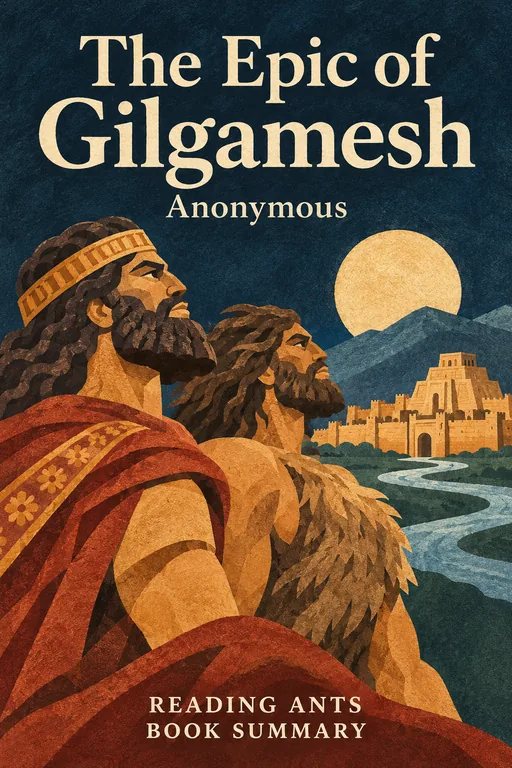
The Epic of Gilgamesh
Anonymous
A proud, powerful king of ancient Mesopotamia gains a true friend, loses him to death, and journeys to the edge of the world in search of eternal life, only to learn that what lasts is the life and legacy we leave behind.
🎭 Epics, Drama & Poetry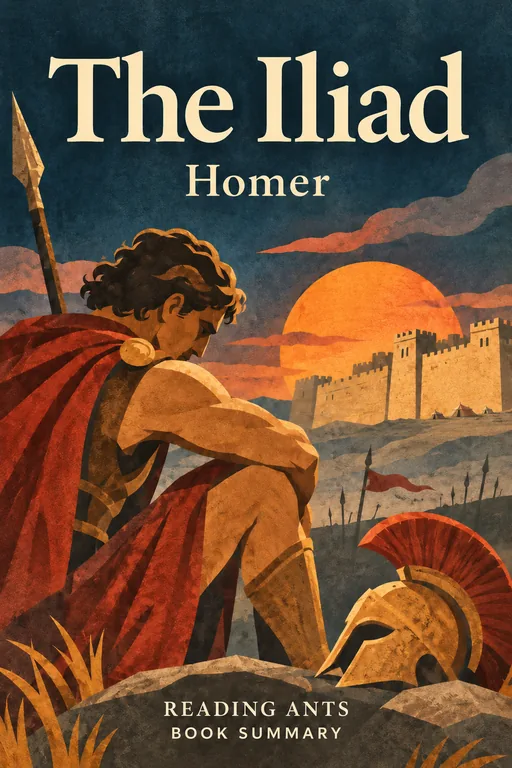
The Iliad
Homer
During the final year of the Trojan War, the great Greek warrior Achilles withdraws from battle in anger, and only the death of his dearest friend drives him back to fight, leading to terrible loss and a moment of shared human grief with his enemy.
🎭 Epics, Drama & PoetryWant something different?
Pick another topic and we will show you three books to start with.