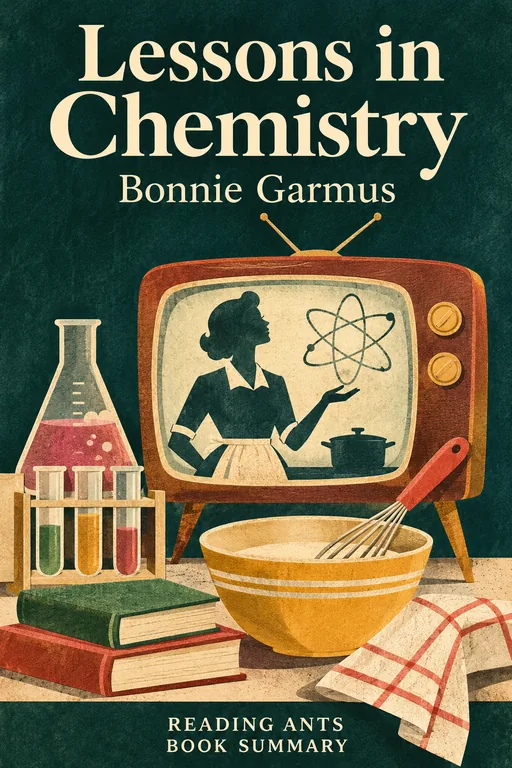
Lessons in Chemistry
In 1960s California, a brilliant chemist named Elizabeth Zott, pushed out of her field by sexism, becomes the unlikely host of a television cooking show, where she teaches women chemistry and the confidence to change their lives.
Overview
Lessons in Chemistry is a debut novel by Bonnie Garmus, published in 2022, which became a worldwide bestseller. It was adapted into an Apple TV+ miniseries in 2023, starring Brie Larson. The story is set in the late 1950s and early 1960s, an era when women in science were often sidelined. Elizabeth Zott is a scientist who refuses to accept the limits placed on her, and who treats cooking as chemistry. The novel is comic and moving, with a sharp tone and a large cast, and addresses sexism, grief and the struggle to be taken seriously.
Main Characters
- Elizabeth Zott: a precise, stubborn, brilliant chemist who does not conform.
- Calvin Evans: a famous, awkward research chemist who becomes her partner.
- Madeline (Mad) Zott: Elizabeth’s precocious daughter.
- Harriet Sloane: Elizabeth’s neighbor and friend, a lawyer and activist.
- Walter Pine: the producer of the cooking show, who becomes an ally.
- Dr. Donatti: the head of the chemistry department at the lab, who steals her work.
- Six-Thirty: the family’s dog, who understands a surprising number of words.
Full Summary
Hastings
In 1952, Elizabeth Zott works as a chemist at the Hastings Research Institute, where she is the only woman in a lab, and is treated as a secretary. Her colleagues take credit for her ideas. A star scientist, Calvin Evans, who is awkward and has a difficult past, notices her, and realizes that she is more skilled than anyone in the building. They meet over a borrowed beaker, and discover a shared passion for research.
Elizabeth’s dress is plain, her speech is exact, and she corrects colleagues who make mistakes. Her stubborn insistence on proper methods is both comic and admirable, and the men around her find her hard to ignore. The workplace scenes show how a culture of casual sexism worked, and how much it cost.
Calvin
Calvin and Elizabeth fall in love, and begin a partnership of ideas and affection. Calvin, who grew up in institutions and with little family, finds that he can trust her. They live together, adopt a dog, Six-Thirty, and work on a study of abiogenesis, the origin of life. They do not marry, because Elizabeth refuses his proposal, fearing that as her husband he would be given credit for her work. Then Calvin is killed in an accident, while jogging, and she is devastated.
Their love affair is built on shared curiosity, and their conversations are full of scientific references. Calvin’s lonely upbringing makes him cautious. Elizabeth treats him as an equal, which no one has done before, and he blossoms.
Fired
After Calvin’s death, Elizabeth discovers that she is pregnant. When she informs the institute, she is fired, and her research is taken away, because she is unmarried and pregnant. She has no money, and is also dealing with a past sexual assault as a graduate student, after which she was expelled from her doctoral program for refusing to apologize for stabbing her attacker. She gives birth to her daughter, Madeline, and works to support her. She remains determined to continue her scientific thinking.
Supper at Six
By chance, a television producer, Walter Pine, meets Elizabeth and hears about her cooking, and asks her to host a cooking show, Supper at Six. Elizabeth agrees, but refuses to follow the conventions: she dresses simply, speaks directly and treats her audience as intelligent people. She teaches chemistry through recipes, explaining the science of ingredients, and calls on her viewers to take charge of their lives. The show becomes a sensation.
The show’s set is a kitchen with beakers and burners, and Elizabeth ends each episode by telling the mothers watching to take a moment for themselves. She explains the science in plain language, calling her viewers to take their own work seriously.
The Audience
Women across the country tune in, and begin to change their lives. Elizabeth’s frankness inspires them to ask for raises, to leave unhappy marriages and to study science. The studio is uneasy, and tries to make her more feminine, but she refuses. She also begins to develop a relationship with her young daughter, who is gifted, and to discover that her old life is not completely lost.
Resolution
Elizabeth faces pressure from the station and the sponsors, who want her to be more conventional. She is unwilling to compromise, and decides to stand up for her principles. At the station, the executive producer, Phil Lebensmal, fires her and then tries to assault her; she draws a kitchen knife, and he suffers a heart attack. Meanwhile, she learns more about Calvin’s past. In the end, she is able to return to science, and to build a life of her own, with her daughter, friends and her dog.
Why It Matters
Lessons in Chemistry was a publishing phenomenon, topping bestseller lists around the world, and was widely read in book clubs. It was praised for its humor and its feminist message, and for the memorable character of Elizabeth. The television adaptation increased its fame.
The book has also contributed to discussions about the history of women in science and the barriers that they faced, which were often overlooked.
The novel’s humor makes its criticism of workplace sexism easier to take. It also encouraged a conversation about the women scientists whose contributions were overlooked.
Key Takeaways
- Talent can be ignored by prejudice. Elizabeth’s skill is dismissed.
- Science is a way of seeing. She treats cooking as chemistry.
- Persistence can overcome barriers. Elizabeth does not give up.
- Community supports change. Her friends help her.
- Be yourself. She refuses to be a conventional TV host.
What We Can Learn
The novel invites us to think about how bias keeps capable people from using their abilities, and how much is lost when that happens. It encourages us to speak up for fair treatment.
It also shows the value of explaining things clearly and treating others as intelligent, which is part of Elizabeth’s success.
Finally, it reminds us that grief and anger can be channeled into determination and creativity.
It also reminds us that everyday tasks, like cooking, can be opportunities for curiosity and learning, and that teaching someone to do something well is a way of respecting them.
Criticism and Counterpoints
Some critics find the novel’s tone too light for its subject, and its characters, particularly the villains, one-dimensional. Others say that the plot is predictable, and the dog’s ability to understand words is a gimmick. Some readers feel that its picture of the 1960s is oversimplified, and that Elizabeth is too perfect.
A few find the treatment of sexual assault a poor fit with the comic tone. Still, many readers love the book.
Who Should Read It
This book suits mature teenagers and adults. It is funny and easy to read, with some serious themes, including assault. It is a good choice for those who like feminist historical fiction.
Want the whole book?
A summary is a taste, not the meal. Here is where to find the full book.
You reached the end 🎉
Nicely done. Mark this one as read, and we will suggest what to read next.
Read this next
Hidden Figures
Margot Lee Shetterly
Margot Lee Shetterly tells the true story of the Black women mathematicians who worked at NASA's Langley research center and helped America win the space race, despite segregation and sexism.
🔬 Science
A Gentleman in Moscow
Amor Towles
In 1922, a Russian aristocrat, Count Alexander Rostov, is sentenced by the Bolsheviks to house arrest in the Hotel Metropol in Moscow, where he lives for more than thirty years in a tiny attic room and finds meaning in friendship, work and love.
✨ Modern Fiction
The Help
Kathryn Stockett
In 1962 Jackson, Mississippi, a young white woman named Skeeter secretly collects the stories of Black maids who work in white homes, putting them all at risk in the heat of the civil rights movement.
✨ Modern Fiction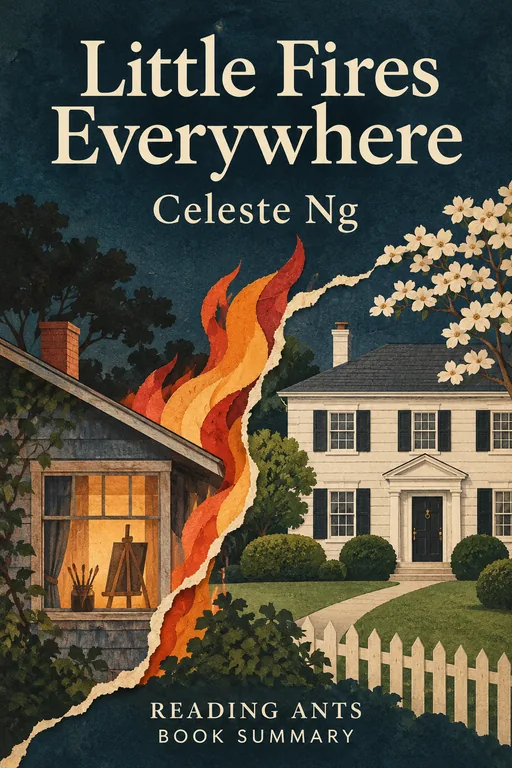
Little Fires Everywhere
Celeste Ng
In the carefully planned suburb of Shaker Heights, Ohio, the rigid Richardson family and the free-spirited artist Mia Warren and her daughter Pearl become entangled, and a custody battle over a baby exposes class, race and the meaning of motherhood.
✨ Modern Fiction
The Kite Runner
Khaled Hosseini
A wealthy boy in Kabul betrays his loyal best friend on the day of a kite tournament, and decades later, after fleeing to America, he returns to a Taliban-ruled Afghanistan to try to make things right.
✨ Modern Fiction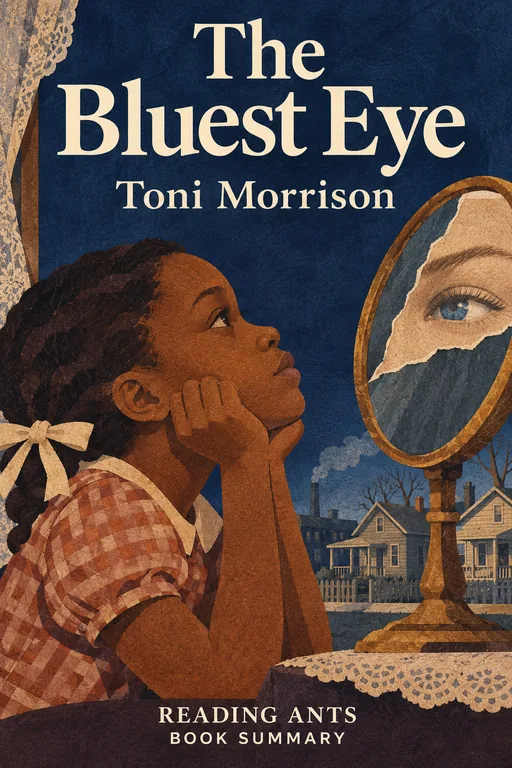
The Bluest Eye
Toni Morrison
In 1940s Ohio, a poor Black girl named Pecola Breedlove, who believes that she is ugly, prays for blue eyes, and the community's failure to protect her leads to tragedy.
✨ Modern FictionWant something different?
Pick another topic and we will show you three books to start with.