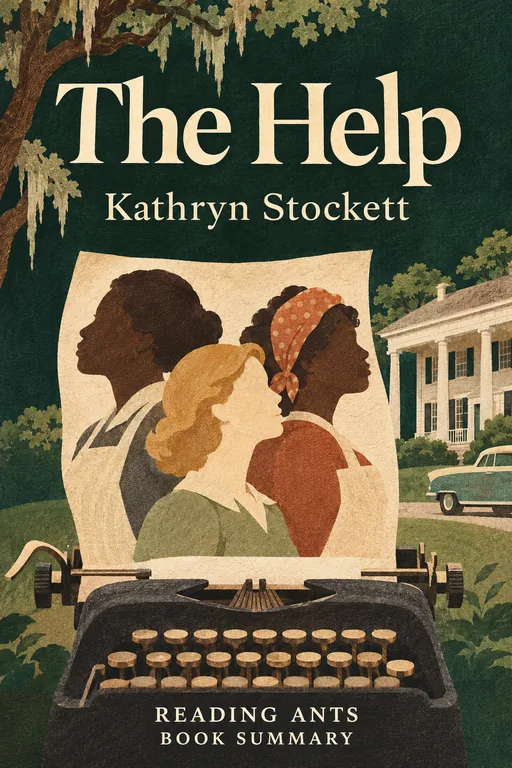
The Help
In 1962 Jackson, Mississippi, a young white woman named Skeeter secretly collects the stories of Black maids who work in white homes, putting them all at risk in the heat of the civil rights movement.
Overview
The Help is a novel by Kathryn Stockett, published in 2009, and it became a huge bestseller, spending years on the lists. It was adapted into a 2011 film that earned several Academy Award nominations and won an Oscar for Octavia Spencer, who played Minny. The story is told by three women: Aibileen and Minny, two Black maids, and Eugenia “Skeeter” Phelan, a young white woman who wants to be a writer. Set against the background of the assassination of Medgar Evers and the early civil rights movement, it examines the relationships between maids and the families that employ them. It has also been widely criticized.
Main Characters
- Aibileen Clark: a Black maid in her fifties, who raises white children and has lost her own son.
- Minny Jackson: a Black maid with a sharp tongue and a talent for cooking, who is fired often.
- Skeeter Phelan: a young white college graduate who wants to be a writer.
- Hilly Holbrook: a powerful, prejudiced socialite who runs the Junior League.
- Celia Foote: a poor white woman, mocked by the town, who hires Minny.
- Elizabeth Leefolt: Aibileen’s employer, a distracted mother.
- Constantine: Skeeter’s maid, who raised her.
Full Summary
Skeeter Returns
In 1962, Skeeter Phelan returns to Jackson, Mississippi, after college, hoping to become a writer. She finds that her beloved maid Constantine, who raised her, has left, and her mother will not explain. Skeeter, who is still unmarried and is considered odd by her friends, gets a job writing a cleaning advice column at the local paper. To write the column, she turns to Aibileen, who works for her friend Elizabeth.
Skeeter’s mother, who is ill, pressures her to find a husband and fix her hair, and her friends are already married with children. Skeeter feels like an outsider among them, but she also feels the pull of her own ambition, which pushes her to look at the world around her more closely.
The Bathroom Initiative
Hilly Holbrook, Skeeter’s friend, starts a campaign to require that white families install separate bathrooms for their Black maids, claiming that they carry diseases. Aibileen and Minny, who are used to the demeaning rules, endure it. Skeeter, disgusted, begins to see the injustice around her. She has an idea: to write a book that tells the maids’ stories in their own words, and to send it to a New York editor.
Aibileen’s Courage
Aibileen, who has been a maid for decades and lost her son after an accident at work, when his white employers left him at a hospital door instead of helping him, agrees to talk to Skeeter, despite the danger. The women meet secretly at night. Aibileen gradually reveals her grief and her love for the white children she cares for, and the limits of that love. Her willingness inspires others, but few are ready to speak.
Aibileen cares for Elizabeth’s small daughter, Mae Mobley, who is neglected by her mother, and she teaches her to believe in herself, telling her daily that she is smart and kind and important. The scenes between them are among the most tender in the book.
Minny and Celia
Minny, who is fired after an argument with Hilly, is hired by Celia Foote, a naïve woman from a poor family, who has married a rich man and is shunned by the Junior League. Celia treats Minny as a friend, which confuses her. Minny helps Celia learn to cook, and discovers that Celia has suffered several miscarriages, which she hides from her husband. Their friendship grows.
The Pie
Minny, in revenge for Hilly’s cruelty, bakes a chocolate pie for her containing a revolting secret ingredient, and Hilly eats it without knowing what is in it. This act, which becomes known as the “terrible awful,” makes Minny feel both vulnerable, because she knows what Hilly could do to her, and powerful, because Hilly can never admit what happened. Around this time, the murder of Medgar Evers in 1963 shakes the community, and the other maids decide that the risk of contributing to Skeeter’s book is worth taking.
The Book
The book, Help, is published anonymously, and the stories cause a sensation in Jackson, though the names are changed. Hilly and others suspect that the town is described, but because the pie story is in the book, Hilly dares not say so publicly. Aibileen is fired by Elizabeth, after Hilly makes a false accusation of theft. But Aibileen faces her with dignity, and leaves. Skeeter finally learns that her mother had dismissed Constantine after an incident at a society luncheon, and that Constantine later died. Skeeter moves to New York for a job, and Aibileen, now free, decides to write.
The stories in the book include cruelty, but also humor, friendship and pride in their work, and the book shows women who are far from passive.
Why It Matters
The Help was a publishing phenomenon, selling over ten million copies, and was widely read in book clubs. It provoked discussion about the lives of Black domestic workers in the Jim Crow South. The film adaptation, with its strong cast, was also a hit.
But it was also a lightning rod for debate about who gets to tell stories of Black women. The Association of Black Women Historians issued a statement criticizing the book and film, and a lawsuit by a real maid who claimed to be the model for a character was dismissed.
Key Takeaways
- Telling stories can challenge injustice. The maids’ voices make a difference.
- Courage involves risk. Aibileen and Minny risk their jobs and safety.
- Prejudice appears in small rules. The bathroom initiative is an example.
- Friendship can cross lines. Minny and Celia become close.
- Whose voice is heard matters. The book raises this question itself.
What We Can Learn
The novel invites us to think about how everyday arrangements, like who cleans a house or who uses a bathroom, reflect and enforce unfair systems, and to consider who has been left out of history.
It also shows that small acts of courage, like telling the truth, can have large effects, and that allies need to listen.
At the same time, discussing the criticism of the book can teach us to ask who is speaking for whom.
It also shows that listening is an act of respect, and that those with power should make room for others to speak for themselves.
Criticism and Counterpoints
Many critics, including historians and Black scholars, argue that the novel presents a white savior narrative, in which a young white woman is the heroine who “gives voice” to Black women, and that it oversimplifies the civil rights movement and uses a stereotyped dialect for Black characters. They say that it presents racism as a matter of individual meanness, not as a system.
Others note that the portrayal of the maids as nurturing and forgiving, and of white women as the main agents of change, reflects an outdated view. Stockett herself has acknowledged the difficulty of writing across racial lines. Still, many readers appreciate the book’s warmth.
Who Should Read It
This book suits teenagers and adults. It is easy to read, and raises important questions. Readers should be aware of the criticism, and may wish to read works by Black authors, such as histories of domestic workers, alongside it.
Want the whole book?
A summary is a taste, not the meal. Here is where to find the full book.
You reached the end 🎉
Nicely done. Mark this one as read, and we will suggest what to read next.
Read this next

To Kill a Mockingbird
Harper Lee
In a small Alabama town in the 1930s, young Scout Finch watches her father, a lawyer, defend a Black man falsely accused of a crime, and learns hard lessons about prejudice, courage and seeing the world through other people's eyes.
📜 Classics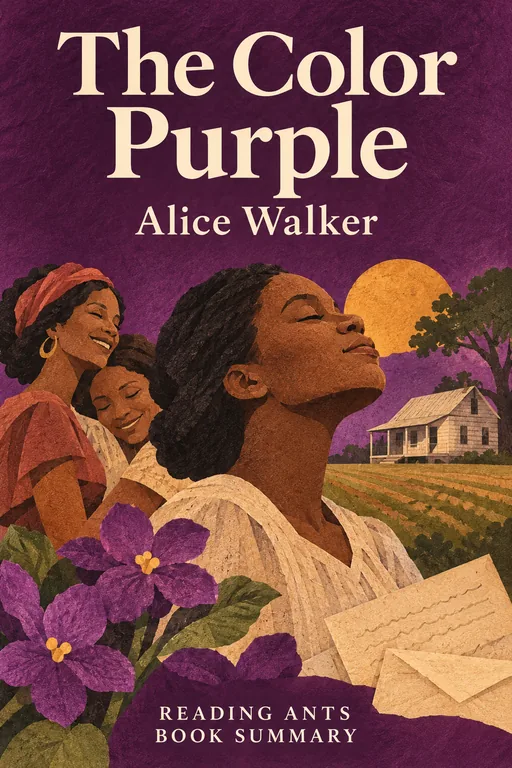
The Color Purple
Alice Walker
Told in letters, the story follows Celie, a poor Black woman in rural Georgia who survives abuse and loss, and through the love of other women finds her voice, her independence and joy.
✨ Modern Fiction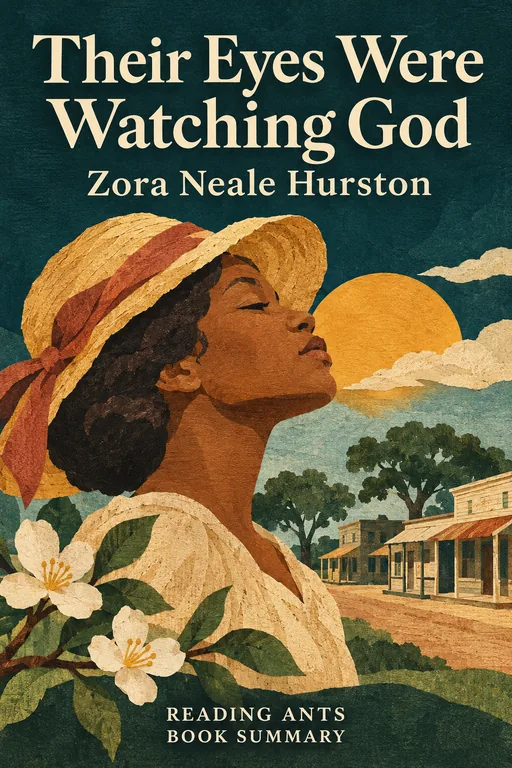
Their Eyes Were Watching God
Zora Neale Hurston
Janie Crawford tells her best friend the story of her three marriages, as she moves from a girl taught to find security to a woman who finds love and her own voice in the Florida of the early twentieth century.
📜 Classics
Hidden Figures
Margot Lee Shetterly
Margot Lee Shetterly tells the true story of the Black women mathematicians who worked at NASA's Langley research center and helped America win the space race, despite segregation and sexism.
🔬 Science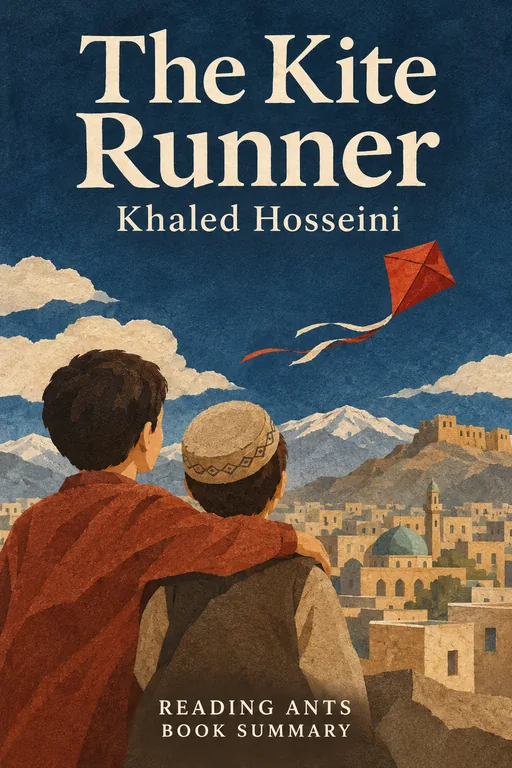
The Kite Runner
Khaled Hosseini
A wealthy boy in Kabul betrays his loyal best friend on the day of a kite tournament, and decades later, after fleeing to America, he returns to a Taliban-ruled Afghanistan to try to make things right.
✨ Modern Fiction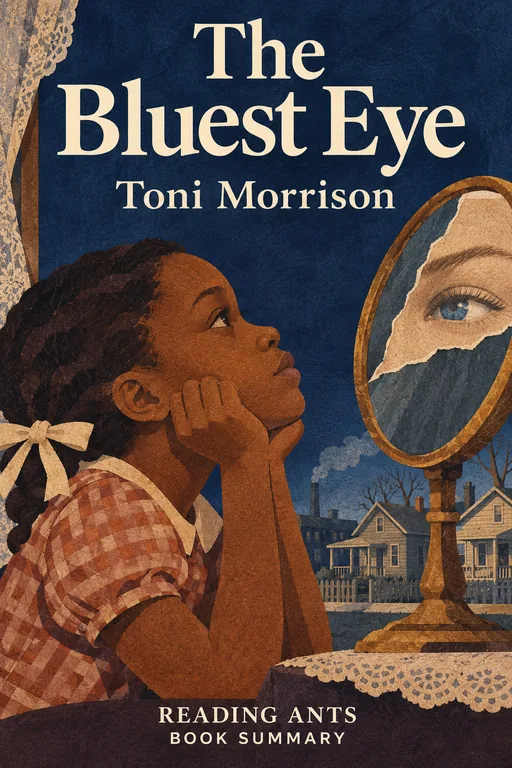
The Bluest Eye
Toni Morrison
In 1940s Ohio, a poor Black girl named Pecola Breedlove, who believes that she is ugly, prays for blue eyes, and the community's failure to protect her leads to tragedy.
✨ Modern FictionWant something different?
Pick another topic and we will show you three books to start with.