Momo
A small, ragged girl with a rare gift for listening fights the mysterious "gray gentlemen," who steal people's time and make them hurried, joyless and cold, and she wins it back for them.
Overview
Momo is a fantasy novel by the German author Michael Ende, published in 1973, whose long German subtitle describes the strange tale of the time thieves and the child who brought their loot back to the people. Ende also wrote The Neverending Story. The setting is a large, unnamed city that feels Italian (Ende called the book a tribute to Italy), and the book is both a children’s adventure and a thoughtful fable about modern life, speed and the value of time. It has been translated into many languages, and is loved by adults as well as children.
Main Characters
- Momo: a small, ragged, mostly barefoot girl with a tangle of dark curls, who lives in an old amphitheater, and who listens.
- Beppo Roadsweeper: a slow, thoughtful old street sweeper, who is Momo’s friend.
- Guido the tour guide (Gigi in some translations): a cheerful storyteller, who invents tales for tourists.
- The gray gentlemen: bald, ash-gray, cigar-smoking agents of the Time-Savings Bank, who steal time.
- Professor Secundus Minutus Hora: the kindly keeper of time, who lives in a mysterious house outside time.
- Cassiopeia: a tortoise who knows what will happen half an hour ahead.
- The children: Momo’s young friends, who play with her.
Full Summary
The girl in the ruins
Momo, a young girl of unknown age, appears in the ruins of an old amphitheater on the edge of a big city. She does not know where she came from. The people of the neighborhood help her, and she soon becomes their friend. She has one gift: she can listen, not just with her ears but with her whole attention, so that people who talk to her find that their ideas become clear, and their worries lighter. Neighbors bring their quarrels to her, the children play more imaginative games when she is there, and her two best friends are Beppo the street sweeper and Guido the storyteller.
The gray gentlemen
One day, strange, bald men dressed all in gray begin to appear in the city, smoking gray cigars. They persuade people to save time, by working faster and giving up things that seem to be a waste: visits to the old, hobbies, songs, friends and play. The men say that they come from the Time-Savings Bank, which will keep the saved time safe and pay it back with interest. In truth, the men live on the time that people save, which they burn away in their cigars, and the time that is “saved” simply vanishes.
The city changes
The people grow more hurried, anxious and irritable. They no longer have time for Momo, and her friends gradually leave her. The gray men take Beppo’s personality away, with the promise that Momo will come back if he saves enough hours, and Guido becomes famous and successful, but loses his imagination and has no time for real stories. Parents send their children to supervised institutions, since they have no time to play with them. Life in the city becomes hectic, sterile and the same everywhere. Momo, whom the gray men cannot easily win over, sees clearly what is happening, and she and her friends try to warn the city, but the gray men stop the adults from listening.
Cassiopeia and Professor Hora
The gray gentlemen decide to catch Momo, who has become a danger to them. One day, a tortoise appears, Cassiopeia, who can see half an hour into the future, and who leads her away from them to a mysterious house outside time, where she meets Professor Hora, the keeper of time, who gives each person their lifetime. He shows her where time comes from, and explains that time is life, and that it lives in the heart. He also tells her the gray men’s secret: the time they take from people is the only thing that keeps them alive.
The hour-lily
When Momo returns to the city, she finds that much time has passed and everything has changed, and the gray men keep her away from her friends. They follow her back to Professor Hora’s house, but cannot get in. To cut off the gray men’s supply of time, Professor Hora decides to stop time itself, and he gives Momo a single hour-lily, a perfect flower of time, to carry. Everyone is frozen except the gray gentlemen, Cassiopeia and Momo. Cut off from new time, the gray men rush to their hidden headquarters, and Momo and Cassiopeia follow. There the stolen hours are stored as flowers in a vault. The gray men fight over the last of their supplies, and many of them vanish, and Momo uses her flower to shut the vault. Without any more time to burn, the last gray men panic and fade away one by one.
Time returns
Momo then opens the vault and releases the stolen hours, which float back to the people from whom they were taken, like flowers. Time starts again. People find themselves with time again, and life in the city grows calmer. The people never know that time had stopped at all. Momo’s own hour-lily crumbles away after she has used it, but not before she has finished her task. Professor Hora wakes from his sleep, and he and Cassiopeia are glad to be together again. Momo is reunited with her friends, and the children are happy. The story ends with a feeling that time is not something to be saved, but to be lived.
Why It Matters
Momo is considered one of the great modern fables for children and adults, and it won the German Youth Literature Prize. Its critique of a culture that values efficiency over friendship, play and attention anticipated many later discussions of busyness, stress and the pace of modern life. The image of the gray men who steal time is the book’s best-known symbol. The book also celebrates the power of listening, and the importance of imagination. It has been adapted for film, stage and opera, and it remains a popular classic.
Key Takeaways
- Listening is a gift. Momo’s attention helps people.
- Time is life. Saving time at the cost of joy is a loss.
- Busyness can empty life. Hurrying makes people cold.
- Small people can change things. A child restores the city.
- Play and friendship matter. They cannot be replaced by efficiency.
What We Can Learn
You can learn from Momo to give your full attention when someone is talking, and to protect time for friends, family and play, even when you feel pressured. The book asks us to think about what we are saving time for, and whether we are saving or losing it. If you read it with a child, you might talk about how it feels to be rushed, and plan some unhurried time together. It shows that kindness and listening can be as powerful as any scheme.
Criticism and Counterpoints
Some readers find the book long and slow in places, with a message that is repeated, and some think the portrayal of the gray men is simple, as obvious villains. Others find the ending too tidy, with the quick restoration of the city. A few critics argue that its critique of modern life is nostalgic and ignores the real benefits of efficiency and technology. Some young readers may find the middle sections sad, as Momo’s friends drift away. However, many feel that its message is more relevant than ever.
Who Should Read It
This book is for children from about eight or nine, and for adults who want a gentle, thoughtful fable. It works as a family read-aloud. Readers who like it may enjoy Ende’s The Neverending Story or Saint-Exupéry’s The Little Prince.
Want the whole book?
A summary is a taste, not the meal. Here is where to find the full book.
You reached the end 🎉
Nicely done. Mark this one as read, and we will suggest what to read next.
Read this next
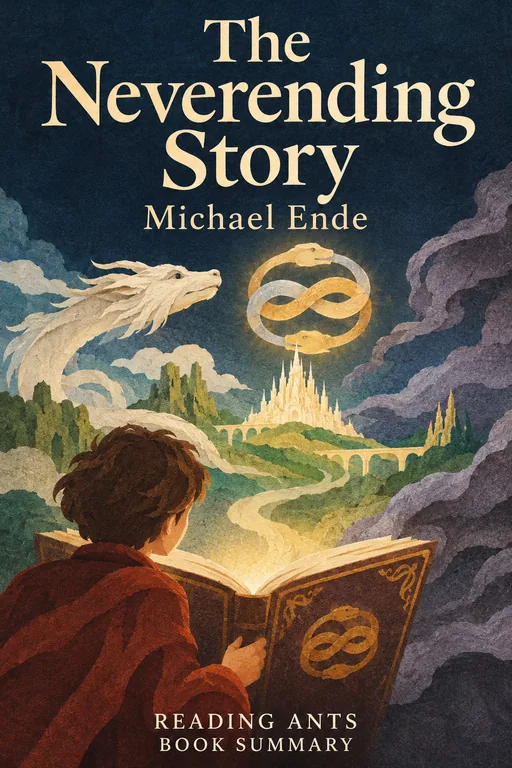
The Neverending Story
Michael Ende
A lonely, bullied boy reads a magical book and discovers that he is part of the story, with the power to save a dying fantasy world, if he can avoid losing himself.
🌍 World Literature
The Little Prince
Antoine de Saint-Exupery
A pilot stranded in the desert meets a small boy from a tiny planet, who teaches him that the most important things in life, like love and friendship, can only be seen with the heart.
🌍 World Literature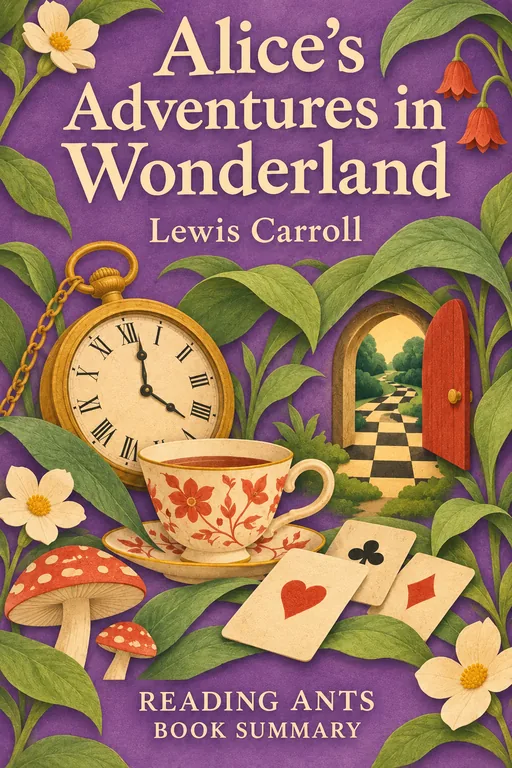
Alice's Adventures in Wonderland
Lewis Carroll
A curious girl follows a white rabbit down a hole into a crazy world where she keeps changing size, meets mad and marvelous creatures, and stands up to a furious Queen.
🧸 Children's Books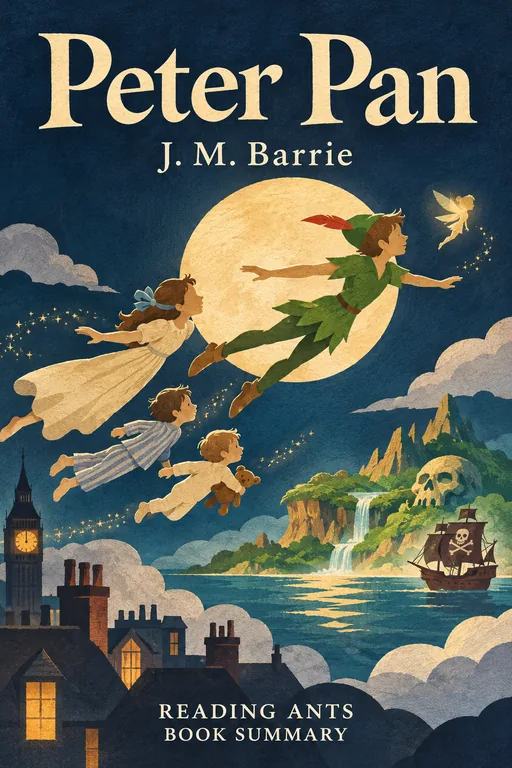
Peter Pan
J. M. Barrie
A magical boy who refuses to grow up flies three London children to Neverland, where they battle pirates led by the villainous Captain Hook, until Wendy realizes they must go home and grow up.
🧸 Children's Books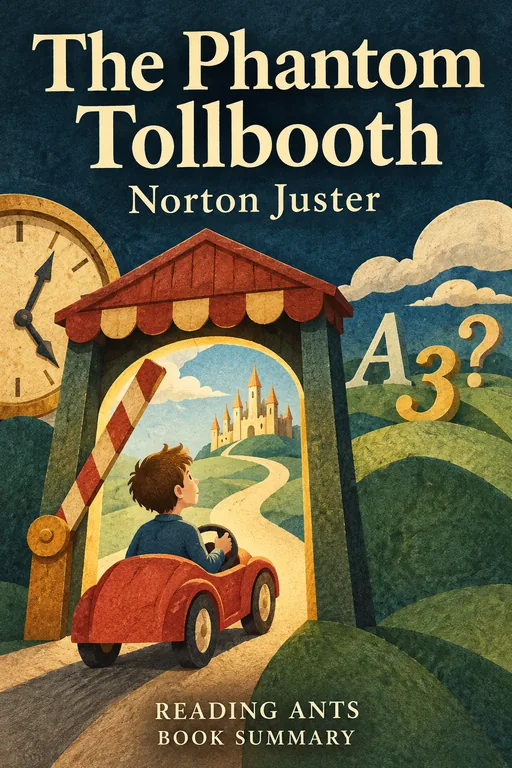
The Phantom Tollbooth
Norton Juster
A bored boy named Milo drives a toy car through a magic tollbooth into a land of puns and riddles, where he sets out to rescue the banished princesses Rhyme and Reason and discovers that learning can be exciting.
🧸 Children's Books
Things Fall Apart
Chinua Achebe
Okonkwo, a proud and fearsome leader in an Igbo village in Nigeria, struggles against his own fears and against the arrival of British missionaries and colonial rulers, who change his world forever.
🌍 World LiteratureWant something different?
Pick another topic and we will show you three books to start with.