 Reading Ants
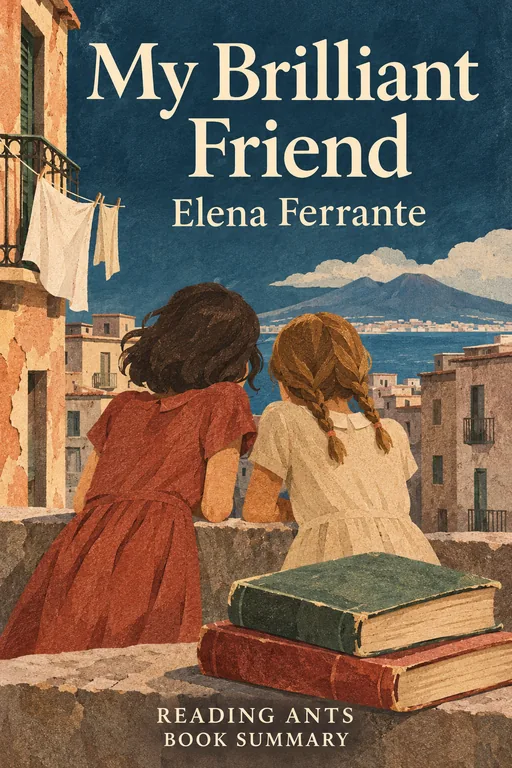
My Brilliant Friend
Original title: L'amica geniale
Two girls growing up in a poor neighborhood of Naples in the 1950s are bound together by friendship, rivalry and a love of learning.
Overview
My Brilliant Friend is the first novel in the “Neapolitan Novels” by the writer who publishes as Elena Ferrante, published in Italian in 2011. It is set in a poor, violent district on the edge of Naples, in the years after the Second World War. It is narrated by Elena Greco, nicknamed Lenu, who looks back on her friendship with Lila Cerullo, a brilliant and fierce girl. The book is about friendship, class, education and the limits placed on girls. It has been a worldwide success.
Main Characters
- Elena (Lenu) Greco: the narrator, a diligent girl who loves school and wants to escape her neighborhood.
- Raffaella (Lila) Cerullo: Lenu’s friend, a daring, clever girl whose talent is not given a chance.
- Nino Sarratore: a handsome boy, whom Lenu admires, and who is also noticed by Lila.
- Stefano Carracci: the son of a rich local man, who falls for Lila.
- Marcello and Michele Solara: sons of a powerful, feared local family.
- Maestra Oliviero: the teacher who recognizes the girls’ talent.
Full Summary
Two Girls and a Doll
The story begins when Lenu, now an old woman, hears that Lila has disappeared. She decides to tell the story of their friendship, from the beginning. They are both about six to eight years old at first, living in a poor area of Naples where violence and fear are common. Their fathers are a doorman and a shoemaker.
Lila and Lenu meet in school. Lila is the best student, and Lenu, who works hard to keep up, becomes her rival and her friend. They grow close after they dare to go up to the house of Don Achille, a man whom the children fear, to ask for their dolls back.
The Teacher and the Books
Their teacher, Maestra Oliviero, sees that the girls are exceptionally talented, and she urges their parents to let them go on to middle school. Lenu’s parents agree, reluctantly, but Lila’s father refuses to pay for her education, and she must work in his shoe shop.
Lila does not give up. She teaches herself Latin and Greek, and reads constantly, in spite of her hard life. She remains Lenu’s inspiration and her competitor. Lenu, who is at middle school and then high school, studies hard to match her friend, though she often feels that she is only a pale copy of Lila. She gets good marks, but she wonders if she is truly clever or just obedient.
At the same time, the girls pay close attention to the adults around them. They see how men in the neighborhood settle disputes with threats, how mothers shout at their children, and how neighbors pass on gossip. The neighborhood is a world in itself, with its own rules and its own heroes and villains.
Growing Up
As the girls reach their teens, they notice changes in themselves and in the neighborhood. Lenu is attracted to Nino Sarratore, who is clever and comes from a family with whom they have a history. She is also uneasy about the attentions of boys, and about Donato Sarratore, Nino’s father, who sexually harasses and assaults her, which leaves her ashamed and distressed.
Lila becomes very beautiful, and the Solara brothers take notice. She hates them, and she does not wish to be controlled by anyone. She works with her brother Rino to design a new kind of shoe, hoping that the family business will become rich.
Shoes and Money
Lila’s shoe designs impress many, but her father and brother do not give her credit. The Solara family, who run a business of lending money, wish to buy the designs. Lila turns to Stefano Carracci, who is kind to her, and who has money.
The pressure on Lila rises, and she must decide how to escape her situation. To help her family, and to take a path out of poverty, she agrees to marry Stefano at sixteen.
The Wedding
On her wedding day, Lila discovers a terrible thing: that Stefano has made a deal with the Solara family, and that Marcello Solara, whom she despises, is wearing the shoes that she made. She realizes that she has been betrayed, and that her marriage will not give her freedom.
Lenu, who is at the wedding, sees all of this and understands that Lila’s future has been decided for her. The book ends at this point, with Lenu looking on, and with the sense that Lila’s marriage will be an unhappy one, a story that is told in later volumes.
Why It Matters
My Brilliant Friend is the first of four novels that together became an international literary event, with millions of readers across the world. The author’s real identity has been kept secret, which added to the mystery. The books were adapted into a television series by HBO and RAI, which began in 2018. The series is praised for its honest portrayal of female friendship, and for its detailed picture of a specific time and place. Many readers say that it describes the complex feelings of friendship and envy better than any other novel.
Key Takeaways
- Friendship can be complicated. Love and envy exist together.
- Class shapes lives. Talent alone is not enough without chance.
- Girls face limits. The story shows how families and communities restrict young women.
- Education offers escape. Learning is a way to a different life, but it has costs.
- Neighborhoods shape us. Violence and loyalty define the girls’ world.
What We Can Learn
The book invites us to look honestly at our own friendships, including feelings that we may be ashamed of, such as jealousy. It shows that these feelings are normal and that friendship can survive them. It also reminds us how lucky we are when someone believes in us, like Maestra Oliviero.
At a wider level, it asks us to think about fairness: who gets a chance to learn, and who does not? Supporting education, especially for girls, is a way to change lives. Finally, the story shows that where we come from stays with us, even if we leave.
Criticism and Counterpoints
Some readers find the book slow, with many characters and a complicated neighborhood to follow. The tone is serious and somewhat bleak, and the violence in the community can be hard to read. Others say that Lenu is an unreliable narrator, and that her view of Lila may be distorted. A few critics have questioned the hype around the series, or have noted that the story is close to a soap opera. Many readers, however, find it gripping.
Who Should Read It
This book is for older teens and adults who like realistic, character-focused novels, and who are interested in friendship and women’s lives. Since it is the first in a series, many readers go on to the others. Those who want a fast plot may find it slow, but those who like deep characters will be rewarded.
Want the whole book?
A summary is a taste, not the meal. Here is where to find the full book.
You reached the end 🎉
Nicely done. Mark this one as read, and we will suggest what to read next.
Read this next
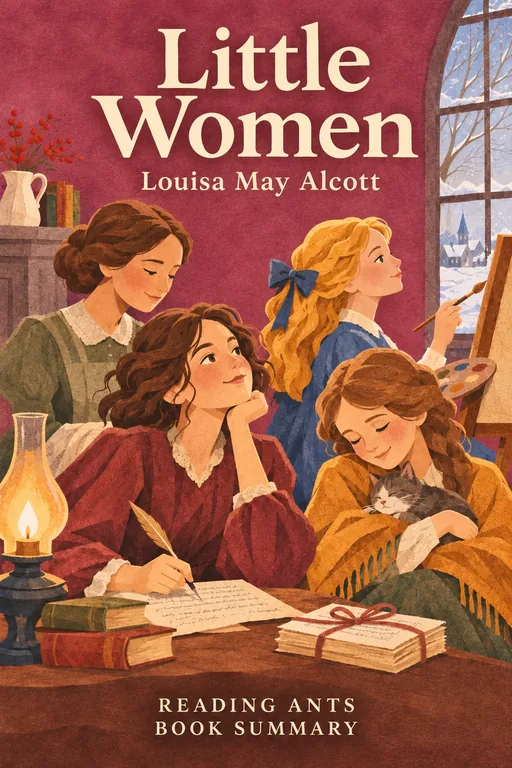
Little Women
Louisa May Alcott
Four very different sisters grow up together in a loving but poor family in New England during and after the American Civil War, learning about love, ambition, loss and finding their own paths in life.
📜 Classics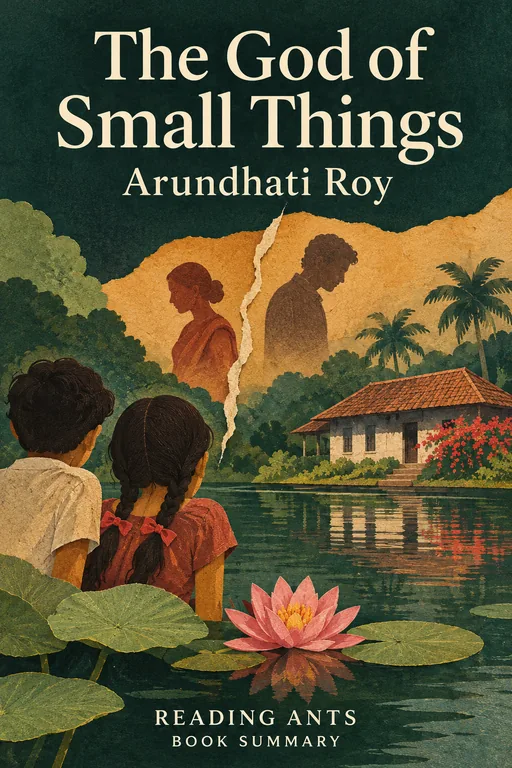
The God of Small Things
Arundhati Roy
In Kerala, India, a pair of twins grows up in a divided family where a forbidden love across caste lines leads to a tragedy that haunts them for the rest of their lives.
✨ Modern Fiction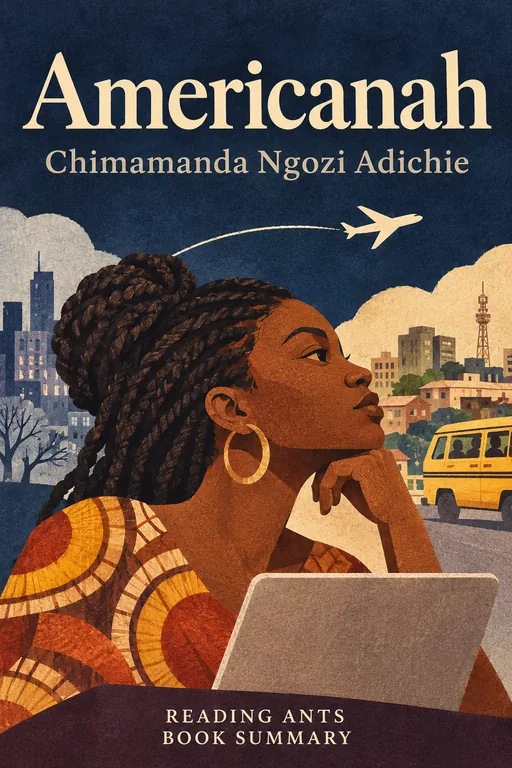
Americanah
Chimamanda Ngozi Adichie
Ifemelu and Obinze, young lovers in Lagos, are separated when she goes to study in America and he struggles in London, and the novel follows their years apart and their return to Nigeria, looking at race, identity and love.
✨ Modern Fiction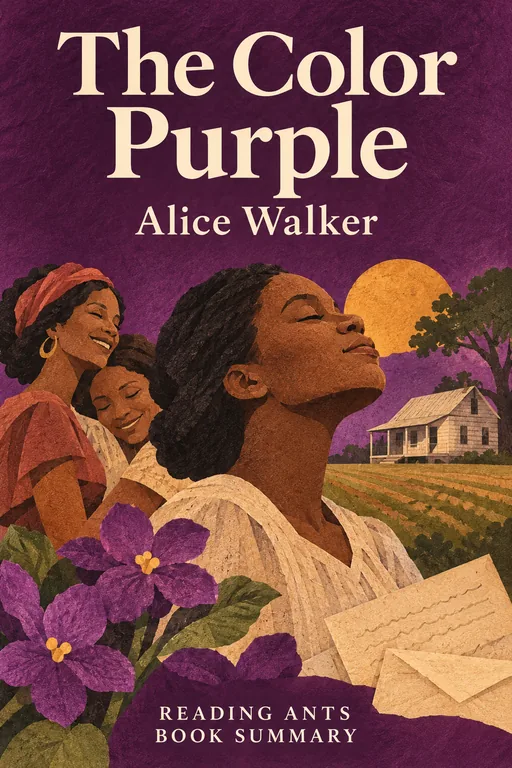
The Color Purple
Alice Walker
Told in letters, the story follows Celie, a poor Black woman in rural Georgia who survives abuse and loss, and through the love of other women finds her voice, her independence and joy.
✨ Modern Fiction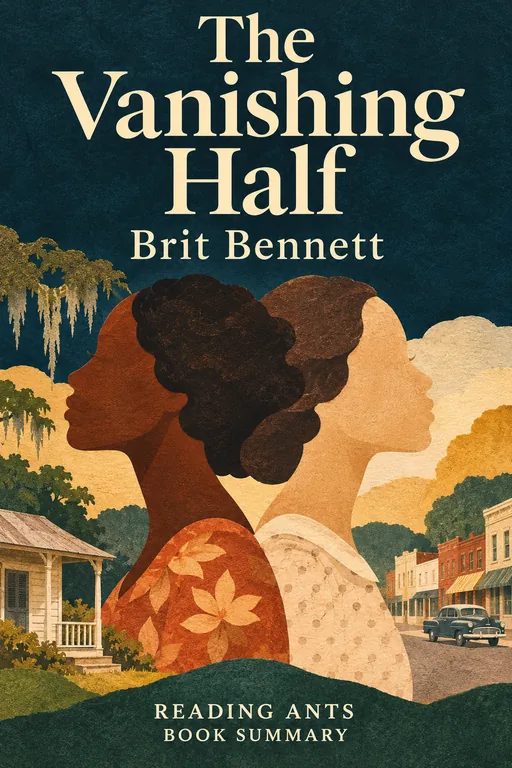
The Vanishing Half
Brit Bennett
Twin sisters from a small Black Louisiana town run away together at sixteen, but one later returns home while the other disappears into a life as a white woman, and their daughters' lives become entangled across the decades.
✨ Modern Fiction
The Little Prince
Antoine de Saint-Exupery
A pilot stranded in the desert meets a small boy from a tiny planet, who teaches him that the most important things in life, like love and friendship, can only be seen with the heart.
🌍 World LiteratureWant something different?
Pick another topic and we will show you three books to start with.