 Reading Ants
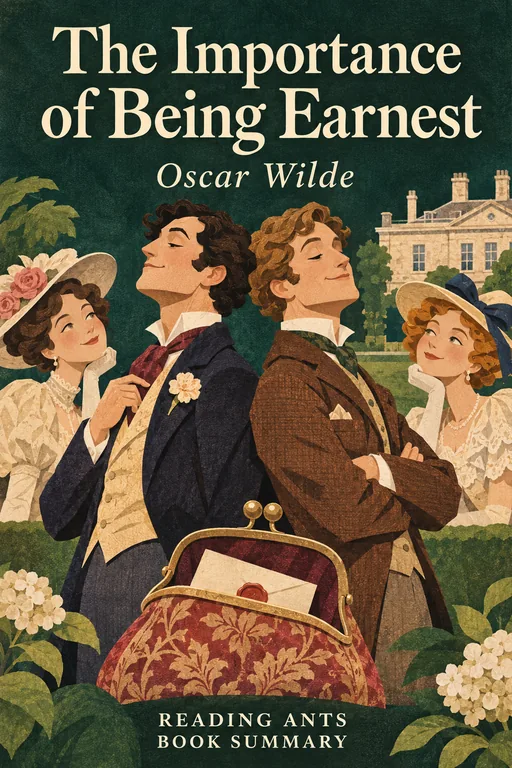
The Importance of Being Earnest
Two wealthy young gentlemen in Victorian England invent fake identities to escape their responsibilities, leading to hilarious romantic confusion when both claim to be named Ernest and a lost handbag reveals a surprising family secret.
Overview
The Importance of Being Earnest, first performed in London in 1895, is Oscar Wilde’s most famous play and one of the funniest comedies in the English language. Subtitled A Trivial Comedy for Serious People, it pokes fun at the manners, marriage customs and snobbery of Victorian high society. Jack Worthing pretends to have a wild younger brother named Ernest so he can escape to London, where he goes by the name Ernest himself. His friend Algernon Moncrieff invents an invalid friend called Bunbury so he can escape boring social duties. When they fall in love with two young women who are determined to marry only a man named Ernest, their lies collide. The title is a pun: “earnest” means sincere and serious, which none of the characters really are.
Main Characters
- Jack Worthing: a respectable gentleman who calls himself Ernest in town.
- Algernon Moncrieff: Jack’s witty, carefree friend.
- Gwendolen Fairfax: Algernon’s cousin, whom Jack loves.
- Cecily Cardew: Jack’s young ward, who lives in the country.
- Lady Bracknell: Gwendolen’s formidable, snobbish mother.
- Miss Prism: Cecily’s governess.
- Dr. Chasuble: the local clergyman, fond of Miss Prism.
- Lane and Merriman: Algernon’s manservant and Jack’s butler, respectively.
Full Summary
Ernest in Town
In his London apartment, Algernon Moncrieff is visited by his friend, whom he knows as Ernest Worthing. Ernest has come to propose to Algernon’s cousin, Gwendolen. Algernon has found a cigarette case belonging to his friend, inscribed with a message from “little Cecily” to her “dear Uncle Jack.” Forced to explain, the friend admits that his real name is Jack. In the country, he is the respectable guardian of a young heiress, Cecily Cardew. To get away to London, he pretends to have a troublesome younger brother called Ernest, whom he must constantly rescue.
Algernon confesses that he does something similar, which he calls “Bunburying”: he has invented a sickly friend named Bunbury, whose sudden illnesses let him escape dull dinners with his aunt.
Lady Bracknell’s Interview
Gwendolen accepts Jack’s proposal, partly because she has always dreamed of marrying a man named Ernest, a name she believes inspires absolute confidence. But her mother, Lady Bracknell, interviews Jack to see if he is a suitable husband. He has money and property, but when she asks about his parents, he admits that he doesn’t know who they are. As a baby, he was found by a kind gentleman in a handbag left in the cloakroom of Victoria Station. Lady Bracknell is appalled and refuses to let Gwendolen marry him unless he finds some relatives.
Algernon in the Country
Curious about Cecily, Algernon goes to Jack’s country house, pretending to be Jack’s wicked brother, Ernest. Cecily, who has long been fascinated by her guardian’s naughty brother, is delighted. It turns out that she has already imagined a whole romance with Ernest in her diary, including their engagement and a broken engagement, and she too has always wanted to marry a man named Ernest. Algernon falls in love with her.
Meanwhile, Jack returns home dressed in mourning, announcing that his brother Ernest has died in Paris, only to discover “Ernest” there, alive and well. Both Jack and Algernon secretly arrange with Dr. Chasuble to be christened Ernest that afternoon.
Tea and Rivalry
Gwendolen arrives unexpectedly and meets Cecily. Each believes she is engaged to Ernest Worthing, and their polite tea party becomes a battle of sugar lumps, cake and cutting remarks. When the two men appear, the truth comes out: neither is named Ernest. The women, outraged, unite against them. Later, they forgive the men when they learn the two were willing to be christened for their sakes.
The Handbag
Lady Bracknell arrives. She approves of Algernon’s engagement to Cecily once she learns that Cecily has a large fortune. But Jack, as Cecily’s guardian, refuses to allow the marriage unless Lady Bracknell lets him marry Gwendolen.
Then Lady Bracknell recognizes Miss Prism. Twenty-eight years ago, Miss Prism was a nursemaid who disappeared with a baby belonging to Lady Bracknell’s sister. Miss Prism confesses that, in a moment of absent-mindedness, she put the three-volume manuscript of a novel she had written in the baby carriage, and the baby in her handbag, which she then left at Victoria Station. Jack rushes off and returns with the very handbag.
The Importance of Being Earnest
Jack, it turns out, is the son of Lady Bracknell’s sister, which makes him Algernon’s older brother. Searching through army records, he discovers that he was named after his father, General Ernest John Moncrieff. His name really is Ernest. Gwendolen happily accepts him, and the play ends with three happy couples: Jack and Gwendolen, Algernon and Cecily, and Dr. Chasuble and Miss Prism. Jack declares that he now realizes the vital importance of being Earnest.
Why It Matters
The Importance of Being Earnest is often considered the greatest comedy in the English language since Shakespeare. Its witty dialogue, full of clever paradoxes and epigrams, has made it endlessly quotable, and it is performed constantly around the world, in theaters, schools and films. Lady Bracknell’s horrified cry about the handbag is one of the most famous lines in theater.
The play’s first run in 1895 was a huge success, but it ended soon after when Wilde was arrested, tried and imprisoned for homosexual relationships, which were then illegal in Britain. His career and health were destroyed, and he died a few years later. Today, the play is celebrated both for its brilliance and as part of the history of how society treated people like Wilde.
Key Takeaways
- Society values appearances over substance. Characters care more about names and status than truth.
- Double lives create chaos. Jack’s and Algernon’s lies lead to ridiculous confusion.
- Seriousness is often silly. The play mocks the people who take trivial things seriously.
- Wit can reveal truth. Wilde’s jokes expose real hypocrisy.
- Love conquers obstacles, with luck. Coincidence allows the lovers to marry.
What We Can Learn
The play encourages us to laugh at the pretensions of society, and at ourselves. Taking ourselves too seriously, or caring too much about appearances, can make us look foolish.
It also shows the trouble that lies and fake excuses can cause. Jack’s and Algernon’s “Bunburying” leads to endless complications. Being honest, even when it’s inconvenient, usually saves us trouble in the end.
Finally, it teaches the value of good humor. Wilde shows that comedy can be a clever way to point out unfairness and hypocrisy in society.
Criticism and Counterpoints
When it first appeared, some critics, including George Bernard Shaw, felt the play was brilliant but heartless, all wit with no real emotion or message. Some readers today still find its characters shallow and its plot too dependent on absurd coincidences.
Others argue that this is precisely the point: the play is a satire, deliberately trivial, mocking the seriousness of Victorian society. Scholars have also noted possible hidden meanings, such as connections between the theme of double lives and Wilde’s own life as a gay man in a hostile society.
Who Should Read It
This play suits readers from about 12 upward and is great fun to read aloud or watch performed. It is short, witty and accessible. Anyone who enjoys clever comedy and wordplay will find it a delight.
Want the whole book?
A summary is a taste, not the meal. Here is where to find the full book.
You reached the end 🎉
Nicely done. Mark this one as read, and we will suggest what to read next.
Read this next
The Picture of Dorian Gray
Oscar Wilde
A beautiful young man wishes that his portrait would grow old instead of him, and as he lives a life of selfish pleasure and cruelty, his face stays perfect while the painting reveals the ugliness of his soul.
📜 Classics
Pygmalion
George Bernard Shaw
A phonetics professor, Henry Higgins, bets that he can turn a poor London flower seller, Eliza Doolittle, into a lady by teaching her to speak properly, but Eliza shows that she already has a mind and a will of her own.
🎭 Epics, Drama & Poetry
Pride and Prejudice
Jane Austen
Quick-witted Elizabeth Bennet and the proud, wealthy Mr. Darcy badly misjudge each other, and only by facing their own faults do they find their way to love.
📜 Classics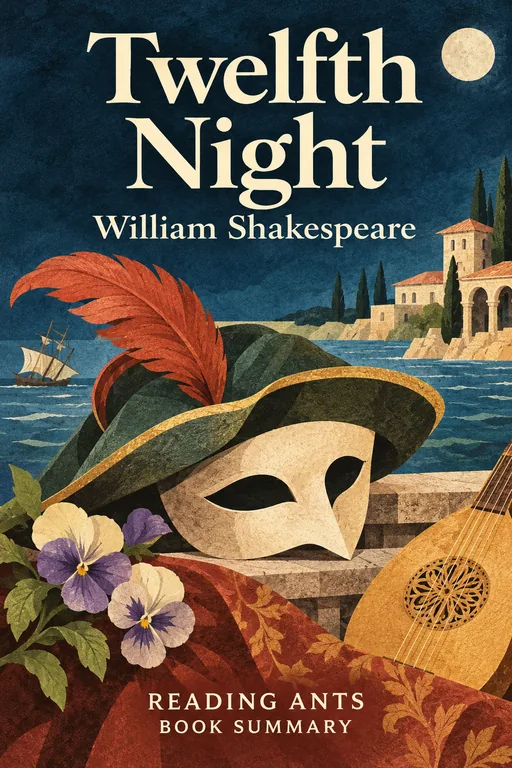
Twelfth Night
William Shakespeare
After a shipwreck, a young woman named Viola disguises herself as a man and serves a duke, falls in love with him, and becomes tangled in a love triangle that is only resolved by the return of her twin brother.
🎭 Epics, Drama & Poetry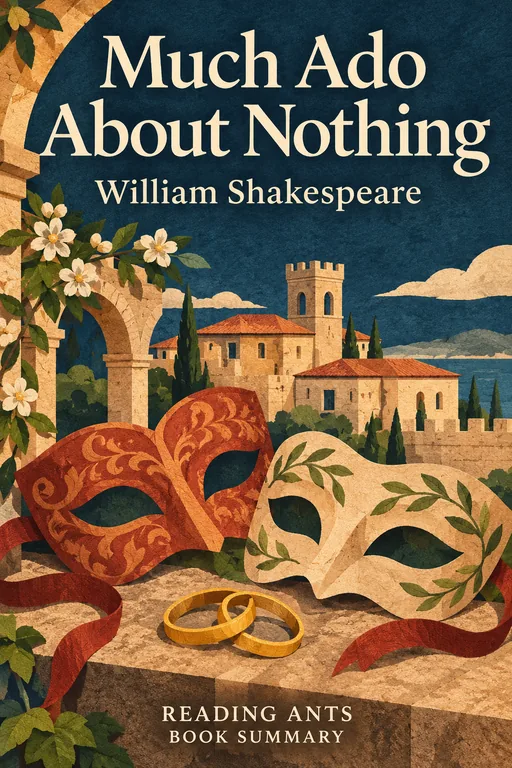
Much Ado About Nothing
William Shakespeare
Two pairs of lovers in Messina, the witty rivals Beatrice and Benedick and the young couple Hero and Claudio, are tricked by their friends and enemies, in a comedy of wit, deception and reconciliation.
🎭 Epics, Drama & Poetry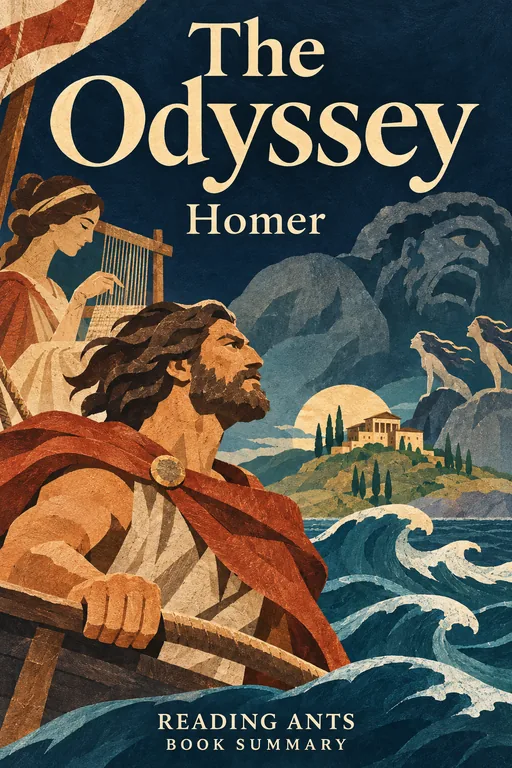
The Odyssey
Homer
After the Trojan War, the clever hero Odysseus struggles for ten years against monsters, gods and temptations to return home to his faithful wife and son, then must win back his house from the men trying to steal it.
🎭 Epics, Drama & PoetryWant something different?
Pick another topic and we will show you three books to start with.