 Reading Ants
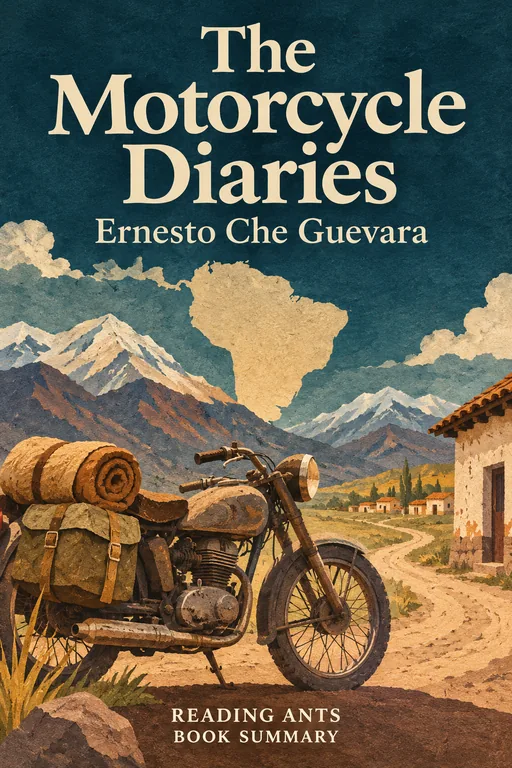
The Motorcycle Diaries
Original title: Diarios de motocicleta
The young Ernesto Guevara, who later became known as Che, records the journey through South America that he made in 1952 with his friend Alberto Granado, a trip of adventure and humor that opened his eyes to poverty and injustice.
Overview
The Motorcycle Diaries is based on notes that Ernesto Guevara wrote during his 1952 journey, when he was a twenty-three-year-old medical student from Argentina. He and his friend Alberto Granado, a biochemist, set out from Buenos Aires on a battered motorcycle, with the plan to travel through the continent. The diaries were reworked later, and published only in 1993, long after he had become famous as a revolutionary in Cuba. They show the young man before his fame, who is witty, curious and idealistic. A film based on the book appeared in 2004.
Full Summary
Setting Out
In January 1952, the friends leave Buenos Aires on a 1939 Norton motorcycle, which they have named La Poderosa, the mighty one. They are cheerful and short of money, with only a few belongings and vague plans. The journey begins with visits to family and friends along the way, and short stays in towns, where they try to charm their way into meals and beds. Ernesto suffers from asthma, and has to use medicine, but he refuses to let it stop him.
The Breakdown and the Road
As they cross Argentina and enter Chile, the old motorcycle breaks down repeatedly, and finally gives out entirely. The two men continue on foot, by hitchhiking on trucks and by catching rides on boats. They sleep where they can, sometimes in fire stations or in the homes of strangers, and find work now and then. They have a playful spirit, and they invent stories to get help, sometimes pretending to be experts on leprosy. The loss of the motorcycle turns the journey into something more humble and more revealing.
Mines and Miseries
In northern Chile, the two visit the huge Chuquicamata copper mine, which was then run by American companies, and Ernesto asks how many workers died in building it. They also meet a poor couple, persecuted as communists, who are traveling in search of work. The meeting with the couple affects Ernesto deeply. He sees the exploitation of the workers and the wealth that flows to foreign companies. Throughout the trip, he notices the poverty of the indigenous peoples, the sickness and the lack of medical care, and begins to see these problems as part of a larger system.
Peru and the Ruins
In Peru, they travel through the Andes, and visit the ancient Inca city of Cuzco and the mountaintop ruins of Machu Picchu. Ernesto is moved by the achievements of the Inca civilization, and by the contrast with the situation of the indigenous people today, who live in poverty. He writes about the history of the conquest, and about the need for the continent to unite. The young men also spend time in Lima, where they meet doctors working in leprosy clinics.
The Leper Colony
The travelers then go to a leprosy hospital in the Peruvian Amazon, where they spend a few weeks. They work with the patients, and are impressed by the doctors and nuns. Ernesto and Alberto treat the patients as people, shaking hands and playing football with them, which is unusual at the time. The patients give them a farewell gift, a raft, on which they float down the Amazon River to Colombia. This episode shows the young men’s compassion and their wish to be useful.
Parting and Beginning
After several months, the friends part ways in Venezuela, where Alberto decides to stay and work in a leprosy clinic, and Ernesto heads home to Argentina, by way of a stop in Miami, to finish his medical studies. He writes that the journey has changed him, and that he can no longer be the person he was before. He feels a sense of responsibility to the poor of Latin America. The book ends with the sense of a young man on the threshold of a new life, though the diaries do not describe his later career.
Why It Matters
The Motorcycle Diaries is a popular travel narrative, and has become a classic among young readers. It is valued for its youthful energy, its humor and its descriptions of landscapes and people. It is also read for what it shows about the origins of Che Guevara’s political awakening, and so gives insight into a man who later became a symbol, loved by some and hated by others. The film adaptation introduced the story to millions. The book is part of the tradition of journey stories, in which travel changes the traveler, and invites readers to ask how an experience of poverty and inequality can lead to action.
Key Takeaways
- Travel changes perspective. The journey opened Ernesto’s eyes to injustice.
- Friendship makes adventure. Alberto’s humor and loyalty carry the trip.
- Compassion is practical. The young men treated leprosy patients with dignity.
- Poverty is a system, not just bad luck. He began to see the roots of suffering.
- Youth is a time of change. The diaries show a person in formation.
What We Can Learn
If you travel, or even if you walk through a different part of your own city, try to look at the people you meet with attention and respect. Notice who has a voice, and who does not. Keep a notebook of your impressions, and revisit it later to see how you have changed. At the same time, remember that a young person’s view is limited, and that real change takes careful thought and patience. Think about what you can do, in a concrete way, to help people in need, as the young doctors tried to do at the leprosy colony.
Criticism and Counterpoints
Some critics say that the diaries present a romantic picture of a young man who would later be involved in violence and in authoritarian rule, and that they have been used to build a cult of personality. Others note that the text was edited later and shaped by what Guevara became. Historians point out that the account is one-sided, with the attitudes of the time, including some attitudes that many readers now find outdated. Others defend it as an authentic and charming record of youth. The film made changes to the story, and readers may want to compare them.
Who Should Read It
This book is for readers who enjoy travel writing and coming-of-age stories, and who are curious about the early life of a famous historical figure. It is lively and easy to read. Those looking for a full biography or a political assessment of Guevara should read other works as well.
Want the whole book?
A summary is a taste, not the meal. Here is where to find the full book.
You reached the end 🎉
Nicely done. Mark this one as read, and we will suggest what to read next.
Read this next
Kon-Tiki
Thor Heyerdahl
Thor Heyerdahl tells how he and five companions sailed a raft of balsa logs across the Pacific Ocean in 1947, to test his theory that ancient South Americans could have settled the islands of Polynesia.
👤 Real Lives
Seven Years in Tibet
Heinrich Harrer
Austrian mountaineer Heinrich Harrer tells how, after escaping a prison camp in British India during World War II, he crossed the Himalayas into Tibet and spent nearly seven years there, about five of them in Lhasa, where he befriended the young Dalai Lama.
👤 Real Lives
On the Road
Jack Kerouac
A young writer named Sal Paradise hitchhikes and drives across America and into Mexico with his exuberant, restless friend Dean Moriarty, searching for kicks, meaning and a sense of belonging.
📜 Classics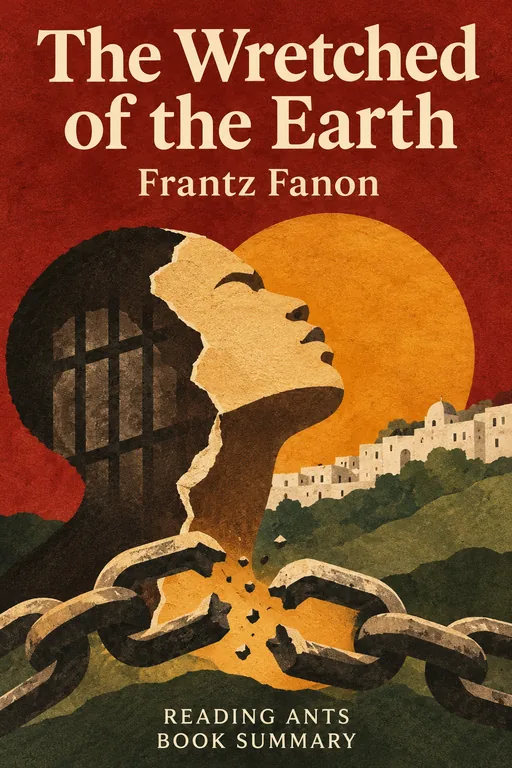
The Wretched of the Earth
Frantz Fanon
Frantz Fanon, a psychiatrist who joined the Algerian struggle for independence, analyzes how colonialism damages both societies and minds, and argues that liberation will involve violence and must lead to a genuinely new humanity.
⚖️ Politics & Society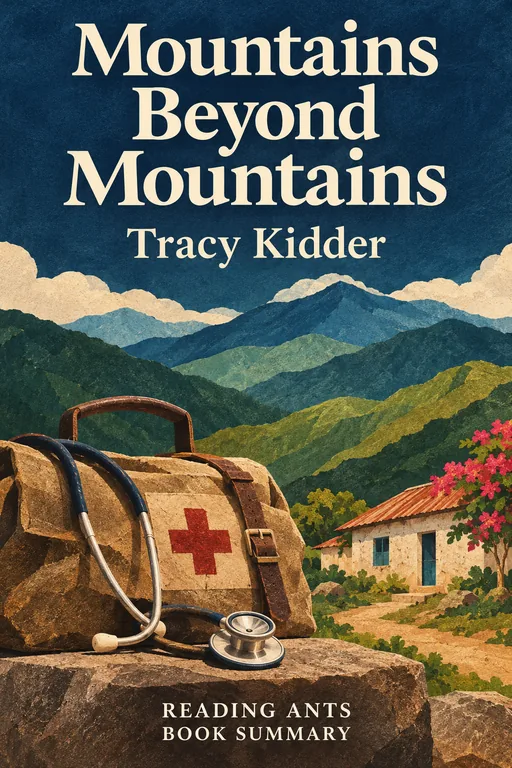
Mountains Beyond Mountains
Tracy Kidder
Tracy Kidder follows the American doctor Paul Farmer, who devoted his life to bringing high-quality medical care to the poorest people in Haiti and elsewhere, and who challenged the world to treat poor patients as worthy of the best.
🍎 Health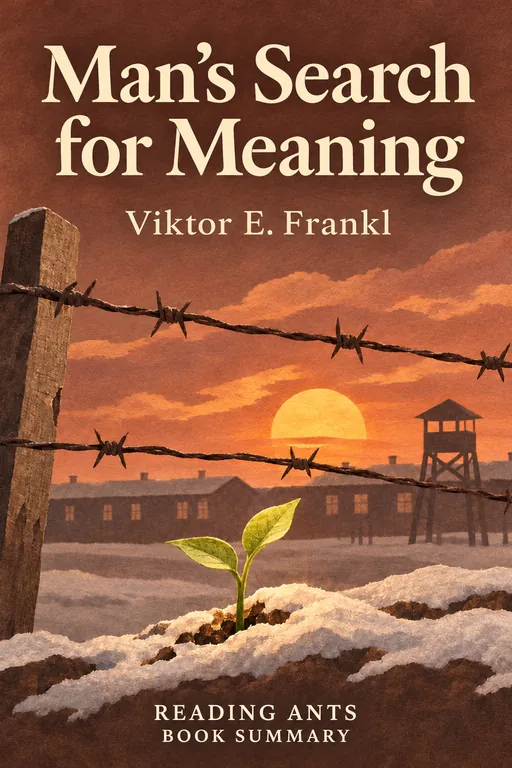
Man's Search for Meaning
Viktor E. Frankl
A psychiatrist who survived the Nazi concentration camps explains that even in the worst suffering, people can choose their attitude, and that finding a reason to live is what gives us the strength to endure.
👤 Real LivesWant something different?
Pick another topic and we will show you three books to start with.