The Right Stuff
Tom Wolfe tells the story of the test pilots who pushed the limits of flight in the 1940s and 1950s, and the seven astronauts who became America's first space heroes, in a vivid style that explores what it takes to have "the right stuff."
Overview
The Right Stuff was published in 1979 by Tom Wolfe, a leading figure in the New Journalism, a style that used the techniques of fiction in reporting. He became curious about why men would volunteer to be shot into space, and spent years interviewing pilots, astronauts and their families. The book begins with the culture of military pilots, turns to the test pilots at Edwards Air Force Base in California, and then moves to the Mercury program, the first American effort to put men into space. It won the National Book Award for nonfiction, and was made into a film in 1983. Wolfe’s style is exuberant and ironic.
Full Summary
1. A fraternity of fliers
The idea: Wolfe opens with the culture of military pilots, in which men risked their lives in dangerous aircraft, and wives waited for the dreaded visit of a chaplain. He describes the invisible code that he calls “the right stuff,” a mixture of courage, skill and the ability to keep cool in a crisis, without admitting to fear. It is an unspoken pyramid of status, in which pilots are always proving themselves, and those who show weakness drop out. It is a brotherhood and a kind of religion.
In real life: Teams in dangerous jobs often develop an unwritten code of toughness.
2. Yeager breaks the sound barrier
The idea: The hero of the first part is Chuck Yeager, a pilot from West Virginia, who, in October 1947, flew the experimental Bell X-1 faster than the speed of sound, which many people thought was a barrier that would destroy any aircraft. He did so with broken ribs, from a horse-riding accident a couple of days earlier, which he told only a few people. His plain speech and his calm in crises became the model of the right stuff. Test pilots later tried to set new speed and altitude records, often at great risk.
In real life: Doing something that others say is impossible, quietly, can set a standard.
3. Pushing the envelope at Edwards
The idea: Wolfe describes the daily life of test pilots at a remote desert base in the Mojave, where pilots flew rocket planes and prototypes, and many died. The phrase “pushing the envelope,” which means taking an aircraft beyond its designed speed and altitude limits, belongs to this world, where pilots explored what aircraft could do. He portrays the wives, who lived with the constant fear, and the role of the pilots’ pride. He also shows that, unlike the astronauts later on, the test pilots’ work was often done far from the public eye.
In real life: Testing something to its limits is how you learn what it can do.
4. The Mercury Seven are chosen
The idea: After the Soviet Union launched Sputnik in 1957, the United States rushed to catch up in the space race. NASA selected seven men, from among military test pilots, to be astronauts in the Mercury program: Alan Shepard, Gus Grissom, John Glenn, Scott Carpenter, Wally Schirra, Gordon Cooper and Deke Slayton. They underwent a battery of demanding medical and psychological tests. Wolfe argues that the astronauts were at first seen less as pilots than as passengers, and that this clashed with the pride of men who believed that a pilot should fly his craft. He recounts the debate over who should ride the first rockets, in which a chimpanzee was sent up first, and the scorn of test pilots such as Yeager for the idea of riding in a capsule.
In real life: A skilled person may resent being treated as a passenger in a machine.
5. Becoming heroes: the press and the public
The idea: The astronauts were made into national heroes by the press, and especially by Life magazine, which bought their stories. Wolfe describes how they were presented as clean-cut family men, though some were different. Alan Shepard became the first American in space in 1961, on a short flight, and John Glenn was the first American to orbit the Earth in 1962, to great acclaim. In 1961, Gus Grissom’s capsule sank after splashdown, and he was criticized, though it was not clear that he had caused it.
In real life: Public image can differ from the people behind it.
6. The final contest and legacy
The idea: The book follows the Mercury program through Gordon Cooper’s long final flight in 1963, in which electrical failures knocked out his automatic controls and he had to guide his return to Earth largely by hand, which showed the cool of a true pilot. Wolfe treats the right stuff as an enduring code of the pilots who came before and alongside the astronauts. The final point is that the astronauts, despite the doubts about their role, did the job with courage and became a part of national history, and that the code of the right stuff endures.
In real life: Staying calm when equipment fails is a rare skill.
Why It Matters
The Right Stuff is considered a classic of American nonfiction, and one of the best accounts of the early space age. It popularized the phrase “the right stuff,” brought the test-pilot world and its talk of “pushing the envelope” to a wide audience, and became one of the best-known examples of New Journalism, which showed that nonfiction can read like a novel. The book gave readers a human picture of the astronauts, with humor and a sense of the stakes. It also stimulated interest in the history of flight and the space program. The film version brought it a wider audience, and the book is still widely read.
Key Takeaways
- Courage is often unspoken. The right stuff is shown in action.
- Test pilots pushed the limits. Their risks expanded what aircraft could do.
- The space race was also a human story. The astronauts were men with doubts and pride.
- Image and reality differ. The press shaped the heroes.
- Calm under pressure is rare. It earns lasting respect.
What We Can Learn
You can think about what qualities you admire in people who work in dangerous or demanding jobs, such as calm, skill and honesty, and try to build them in yourself. Notice how public images are created, and ask how they differ from reality. Be curious about the history of flight and space, and visit a museum if you can. At the same time, remember that bravado has costs, and that safety culture, and speaking up about fear, can save lives. Respect those who do hard jobs for others.
Criticism and Counterpoints
Some critics say that Wolfe took liberties, re-creating the thoughts of real people, as New Journalism often did. The film’s portrayal of Grissom panicking was also criticized, as later investigations did not support it, and the film is harsher on him than the book is. Others note that the book focuses on male pilots and the wives who waited for them, and that its view of masculinity is narrow and dated. It also covers only the Mercury program, not the whole space program, so it is more a work of literary journalism than a strict history. Still, it is admired for its energy.
Who Should Read It
This book is for readers who like adventure, history and bold writing, including older teenagers. It is long and a bit exuberant. Those who want a careful technical history of the space program may prefer other works.
Want the whole book?
A summary is a taste, not the meal. Here is where to find the full book.
You reached the end 🎉
Nicely done. Mark this one as read, and we will suggest what to read next.
Read this next
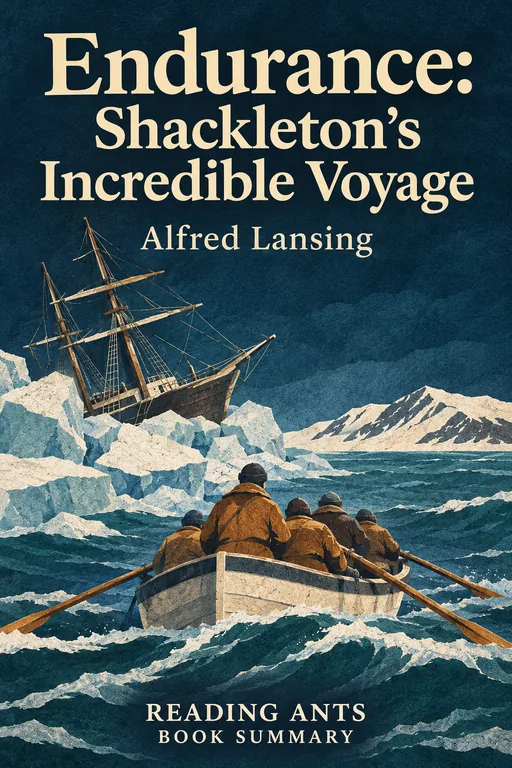
Endurance: Shackleton's Incredible Voyage
Alfred Lansing
Alfred Lansing tells how Ernest Shackleton's ship was crushed by Antarctic ice in 1915, and how he led his twenty-seven companions through nearly two years of cold, hunger and danger, until all twenty-eight men were brought home alive.
🏛️ History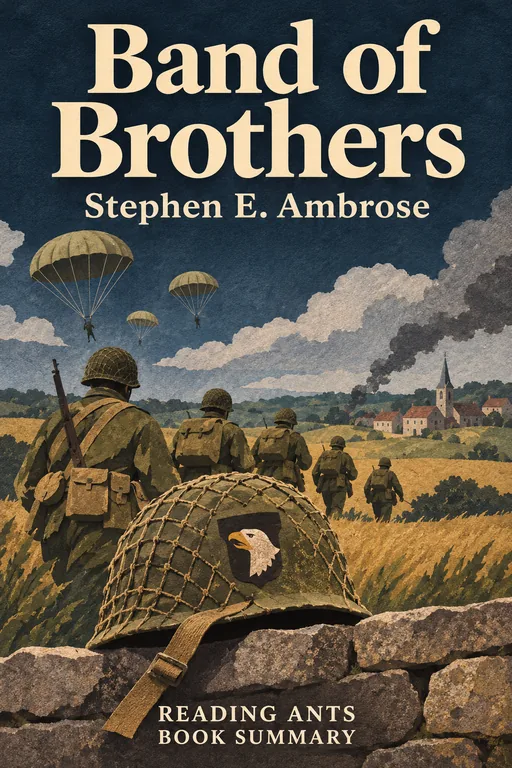
Band of Brothers
Stephen E. Ambrose
Historian Stephen Ambrose follows a single company of American paratroopers, from training in the United States through the fighting in Europe to the end of the Second World War, and shows how the men's bond carried them through.
🏛️ History
Into Thin Air
Jon Krakauer
Jon Krakauer, a journalist who climbed Mount Everest in 1996, recounts the storm that killed eight people on the mountain over a single day and night, and reflects on what went wrong and on his own survivor's guilt.
🏛️ History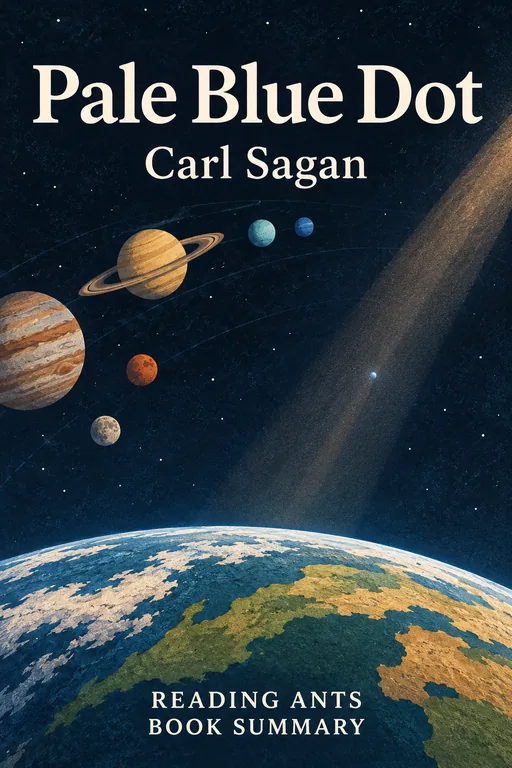
Pale Blue Dot
Carl Sagan
Carl Sagan reflects on a photograph of Earth taken from far out in space, in which our planet is a tiny speck, to argue that humanity should be humble, care for our fragile world and aim to explore the solar system and beyond.
🔬 Science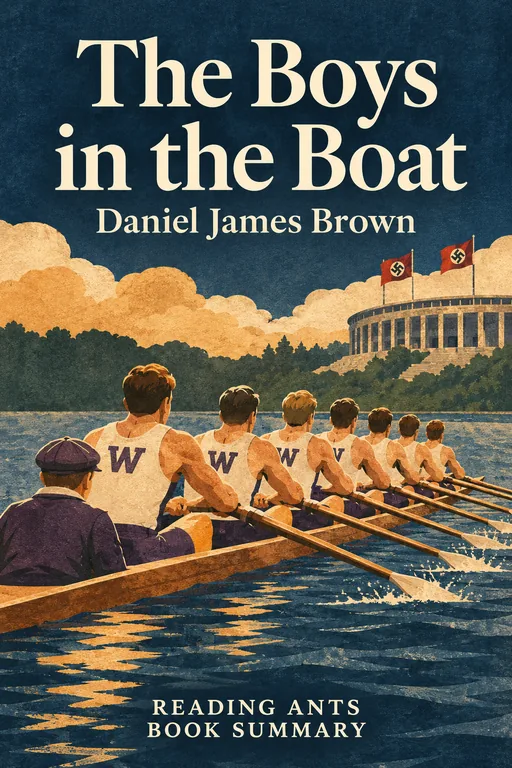
The Boys in the Boat
Daniel James Brown
Daniel James Brown tells how a group of working-class young men from the University of Washington learned to row as one and won the gold medal for the United States at the 1936 Berlin Olympics, with the story of Joe Rantz at its heart.
🏛️ History
A Brief History of Time
Stephen Hawking
One of the world's greatest physicists explains, with almost no math, what we know about the origin, structure and fate of the universe, from the Big Bang to black holes and the nature of time itself.
🔬 ScienceWant something different?
Pick another topic and we will show you three books to start with.