 Reading Ants
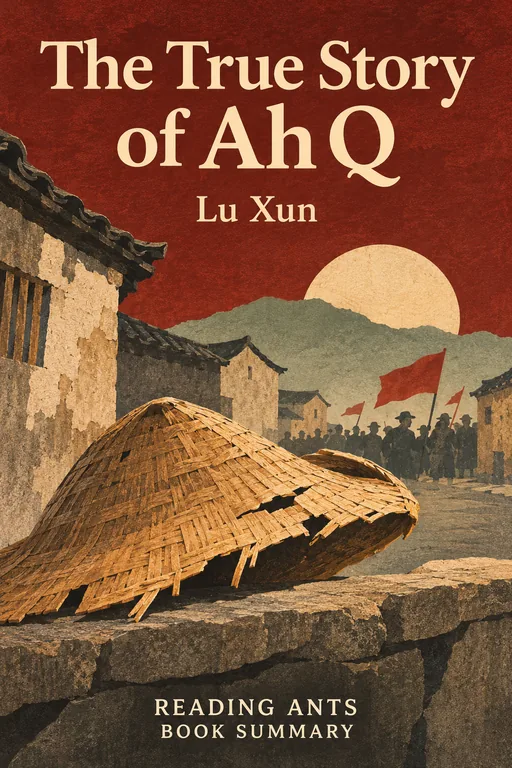
The True Story of Ah Q
Original title: 阿Q正传
A poor, foolish village laborer in China comforts himself with imaginary victories in the face of constant humiliation, and meets an unjust and absurd end in the confusion of the 1911 revolution.
Overview
The True Story of Ah Q is a novella by the Chinese writer Lu Xun, published in installments in 1921 and 1922. It is set in a small village in southern China, around the time of the 1911 revolution, which overthrew the last imperial dynasty, the Qing. The narrator pretends to write a serious biography of a man who has no family name, no home and no education. The story is a satire: it laughs at Ah Q, but it also laughs at all of Chinese society, and at the habits that, in Lu Xun’s view, kept the country weak.
Main Characters
- Ah Q: a poor day laborer, who lives in a temple and does odd jobs, and who is proud, lazy and foolish.
- Mr. Zhao: the richest man in the village, a landowner.
- Whiskers Wang and Young D: other poor villagers, who are Ah Q’s rivals.
- The little nun: a young woman in a nearby convent, whom Ah Q teases.
- The Zhao family’s maid: a servant, whom Ah Q harasses, with serious consequences.
- The “False Foreign Devil”: the son of a rich man, who has studied abroad and joins the revolution.
Full Summary
A Man Without a Name
The narrator begins by saying that he does not know Ah Q’s real name, or where he comes from, which makes it hard to write his biography. Ah Q lives in the village temple and does any work that is offered. He is poor, but proud, and he has a bald patch from a sore on his head, which he hates to hear mentioned.
When other villagers mock him, Ah Q has a trick: he tells himself that he has won in spirit. If he is beaten, he says that he was beaten by his son, and he feels superior. This “spiritual victory” is the key to his character.
Humiliations
Ah Q is bullied by everyone: by the villagers, by the rich Zhao family, and by a man with a stick. Once, he boasts that he is related to the Zhao family, and is beaten and fined for his impudence. After each defeat, he finds a way to turn it into a victory.
When he wins a fight against a weaker opponent, he feels brave, and when he teases a young nun, he feels great. The humor is dark: his tricks help him to avoid the truth, and so he never changes.
Trouble
Ah Q becomes bolder, and he makes advances on a maid in the Zhao household, which leads to a scandal. He is beaten, and he is forced to pay compensation to the family. The villagers now avoid him, and he cannot find work.
He goes into town, where he works as a thief’s helper, and he sees the world a little. When he returns, he is welcomed by the villagers for his new stories, and for a short time he is a hero. But when they learn that he is a petty thief, they turn on him again.
Revolution
News of the revolution reaches the village. The rich are alarmed, and Ah Q, who has no idea what it means, thinks that revolution might be a good thing, since it will frighten the rich. He fantasizes about taking their belongings and women.
But the revolution, in the village, is a joke. The same old people take power, wearing a new badge, and nothing changes. When Ah Q goes to join the revolutionaries, he is turned away by the “False Foreign Devil,” who does not allow him to be part of it.
The Arrest
One night, the Zhao house is robbed. Ah Q has nothing to do with it, but the authorities need to find a culprit, and he is a convenient choice. He is arrested, and taken to court.
At the trial, he cannot sign his name, and is told to draw a circle. He tries to make it perfectly round, but his hand shakes, and he feels ashamed that it is not round enough.
The Execution
Ah Q is condemned to death, and paraded through the town. The crowd, which has come to see the show, is disappointed that he is shot rather than beheaded, and that he does not sing an opera line as condemned men are expected to. As he is led to the execution, he realizes that he is going to die, and for the first time, he feels fear. He sees in the eyes of the crowd something even more menacing than the eyes of a hungry wolf that he once met.
Afterwards the villagers decide that he must have been a bad man, since he was shot, while the townspeople complain that the show was a poor one, and the story ends.
Why It Matters
Lu Xun is regarded as the founder of modern Chinese literature, and Ah Q is his most famous work. The story was widely read, and the term “Ah Q-ism” became a common phrase for self-deception, for comforting oneself with an imaginary victory. The novella was part of a movement to reform Chinese society and culture, and it criticized what Lu Xun saw as the weaknesses of the national character. It has been translated into many languages. It was also studied in Chinese schools, and it remains a touchstone in discussions of Chinese identity.
Key Takeaways
- Self-deception is comforting but harmful. Ah Q’s “spiritual victories” prevent him from facing reality.
- Cruelty can be casual. The villagers bully Ah Q for fun.
- Revolutions can change little. The old powers stay in place with new names.
- The crowd can be heartless. The onlookers treat his death as entertainment.
- Injustice thrives on indifference. No one tries to save him.
What We Can Learn
The story encourages us to notice our own habits of self-deception. When we lose, do we learn from it, or tell ourselves a story to feel better? It is more helpful to face the truth, and then to try to improve.
It also teaches that bullying and indifference are real problems, and that we have a responsibility to treat the weak with fairness. Finally, it reminds us that real change, in a society or in a person, requires more than new slogans.
Criticism and Counterpoints
Some critics say that Lu Xun’s portrait of Ah Q is too harsh and unfair to the poor, and that it puts the blame for China’s weakness on the ordinary people, rather than on the powerful or on foreign pressure. Others note that the story’s treatment of women is limited. The story is also tied closely to a historical moment, and some references are hard to follow. Still, it is considered a masterpiece of irony.
Who Should Read It
This book is for readers of all ages from about thirteen who like satire and short stories. It is short and can be read in an hour. It is a good first book for anyone interested in modern Chinese literature.
Want the whole book?
A summary is a taste, not the meal. Here is where to find the full book.
You reached the end 🎉
Nicely done. Mark this one as read, and we will suggest what to read next.
Read this next
Dead Souls
Nikolai Gogol
A smooth-talking traveler roams the Russian provinces buying the names of dead serfs, and the landowners who sell them reveal how foolish and greedy people can be.
🌍 World Literature
Candide
Voltaire
A trusting young man travels through a world of war, disaster, greed and cruelty, slowly learning that cheerful theories matter less than useful work and care for others.
🌍 World Literature
Animal Farm
George Orwell
The animals of an English farm overthrow their cruel human owner to create a fair society, but the clever pigs who lead them slowly become just as tyrannical as the humans they replaced.
📜 Classics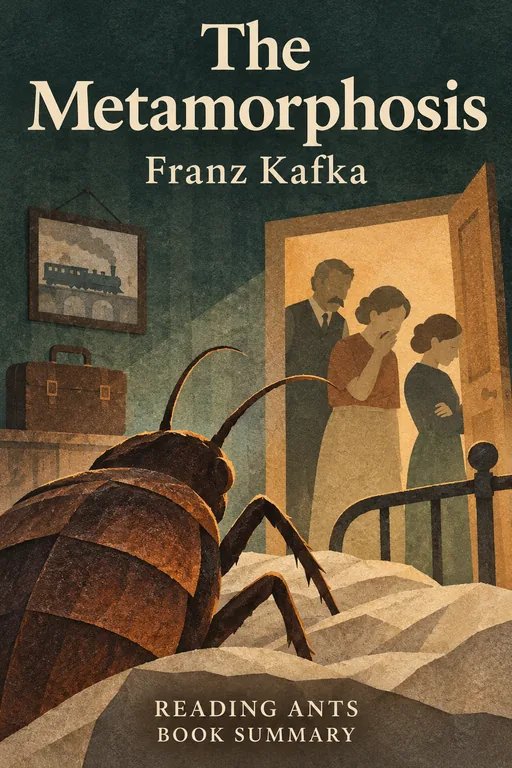
The Metamorphosis
Franz Kafka
A hardworking traveling salesman wakes one morning to find himself transformed into a monstrous insect, and his family's love for him slowly turns to disgust and neglect.
🌍 World Literature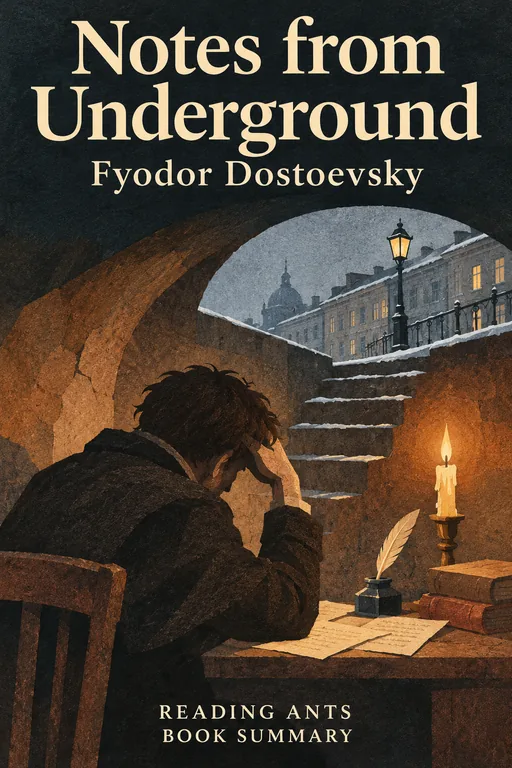
Notes from Underground
Fyodor Dostoevsky
A bitter, lonely former clerk who lives in a squalid underground existence writes an angry confession about his own spite, his contempt for the world and a humiliating episode from his past.
🌍 World Literature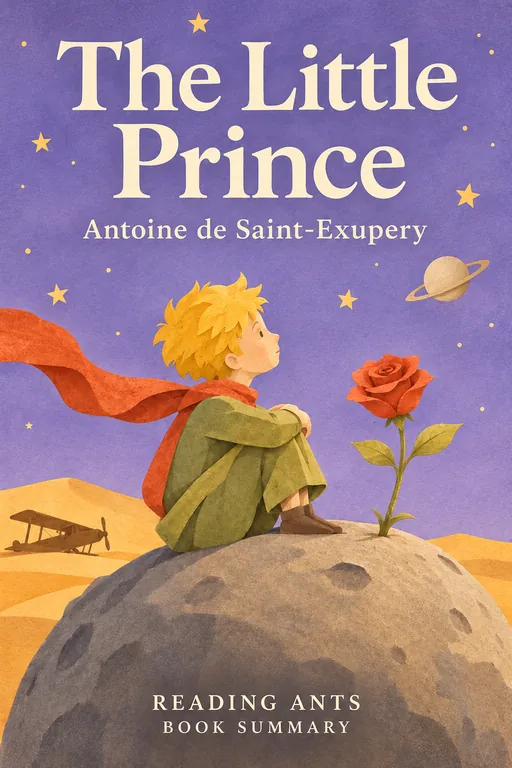
The Little Prince
Antoine de Saint-Exupery
A pilot stranded in the desert meets a small boy from a tiny planet, who teaches him that the most important things in life, like love and friendship, can only be seen with the heart.
🌍 World LiteratureWant something different?
Pick another topic and we will show you three books to start with.