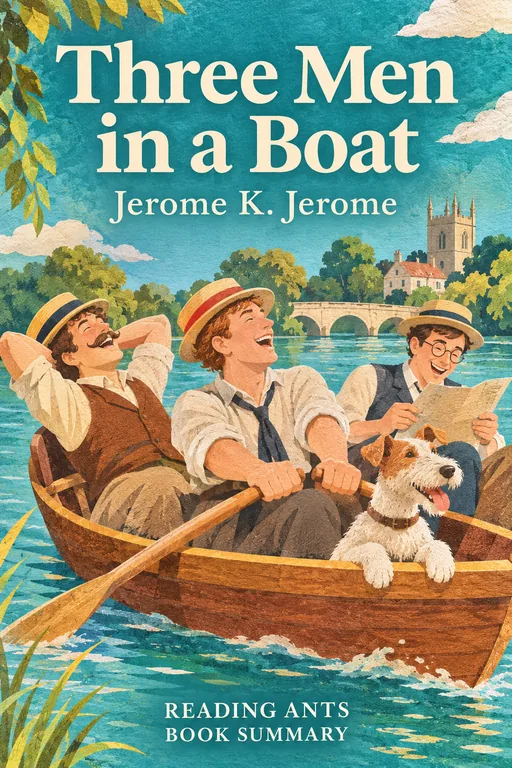
Three friends and a fox terrier take a two-week rowing holiday up the Thames, and, through a series of comic mishaps and digressions, they show that the best-laid plans for rest and relaxation usually end in cheerful chaos.
Overview
Three Men in a Boat (To Say Nothing of the Dog) is a comic novel by Jerome K. Jerome, published in 1889. It was first meant to be a serious guide to the River Thames, with local history along the route, but the comic parts took over and it became a humorous tale. The narrator, J., and his friends George and Harris are three young Londoners who feel that they need a break, and decide to row from Kingston upon Thames to Oxford. The book has remained in print for over a century and is still considered one of the funniest in English.
Main Characters
- J.: the narrator, a hypochondriac, who loves to tell stories and digress.
- George: a bank worker, who is always sleepy and sometimes surprisingly sensible.
- Harris: a self-confident friend who is full of ideas that rarely work.
- Montmorency: the fox terrier, who is mischievous, unimpressed by the river and loves a fight.
- Uncle Podger: a relative remembered for turning a simple task into disaster.
- The lock keepers and boatmen: the people the three meet on the river.
- The weather: a constant source of trouble.
Full Summary
Three invalids
The book opens with J., George and Harris sitting in J.’s rooms, smoking and complaining about their health. J. recalls that he once read a medical book and found that he had every disease except housemaid’s knee. The three decide that they are overworked and need a holiday. Harris suggests a sea trip, but J. objects with stories of seasick passengers, and George proposes a boating trip up the Thames instead, promising fresh air and exercise. Montmorency, the dog, is the only one who does not like the idea, but he is outvoted. They agree to camp out on fine nights and stay at inns on wet ones.
Packing and Uncle Podger
The friends make a list of everything that they will take, and J. relates the story of his Uncle Podger, who would turn even the hanging of a picture into a family disaster, with the whole household sent to fetch tools and holding the ladder. The point is that J., George and Harris, likewise, make heavy weather of a simple task. They pack too much, argue about food, and find that packing is its own comedy, with Montmorency making things worse. The next morning J. and Harris set off for Kingston to begin the trip, since George, who works at a bank, will join them farther up the river at Chertsey.
The river and the camping
Setting off, they row past Hampton Court, where Harris tells the story of the time he led a country cousin into the famous maze and got a whole crowd of people lost. On the first night, they learn how hard it is to rig the boat’s canvas cover over its hoops, and they sleep aboard under it. George buys a banjo, and his attempts to play it are a running joke. Montmorency finds adventures of his own, including a confrontation with a huge, battered tom cat in Marlow, in which the dog comes off worse. J. reflects on the pleasures and miseries of life on the water.
Mishaps and digressions
Every small task turns into comedy. They have difficulty opening a tin of pineapple, since they have forgotten the opener, and they try to open it with all sorts of tools, until the tin is thoroughly battered and the exasperated friends hurl it into the river. Sailing is no better: J. tells of a boyhood sail on the Yare with a friend, which ended with the boat stuck in a mud bank until an old fisherman towed them back. The friends have more luck being towed by a steam launch, which belongs to some friends of J., for part of the way to Streatley. J. also tells funny stories about fishing, in which an angler tells tall tales of his catch, and about a stuffed trout in a riverside pub that one person after another claims to have caught, until George slips from a chair, clutches the glass case and brings it crashing down, and the trout shatters into pieces, because it was plaster. He also adds pieces of history about the places they pass.
A taste of the past
Along the way, Jerome mixes humor with moments of quiet beauty. He describes the river on a sunny morning, the villages, the old houses and the ruins of Medmenham Abbey, and Runnymede, where the Magna Carta was sealed in 1215. The author’s mood becomes thoughtful for a time, as he wonders about the past. But he quickly returns to farce, as the friends face days of rain or an unpleasant meal. The balance of nostalgia and comedy gives the book its charm.
The return
The friends reach Oxford and spend two pleasant days there, with Montmorency fighting every dog in town. Then the rain sets in. They row back down the river through two miserable wet days, with George’s mournful banjo tune as the only entertainment. Rather than endure more of it, they leave the boat at Pangbourne and sneak off to London by train, where they have a large supper. Their holiday has not gone as planned, but they have enjoyed it, and the book ends with Harris toasting three men well out of a boat.
Why It Matters
Three Men in a Boat sold in huge numbers and is still read as a comic classic. Its light, conversational style of humor, based on exaggeration, self-mockery and digression, has been widely admired, and P. G. Wodehouse, for one, referred to its plaster trout joke in a novel of his own. It also captures a moment in Victorian life, when holidays on the Thames were popular. Its slight, affectionate view of ordinary people’s failings has helped it remain fresh, and it has been adapted for television, radio and film.
Key Takeaways
- Plans rarely go as expected. Cheerful chaos is part of life.
- Friendship makes trouble bearable. The three friends enjoy each other’s company.
- Humor comes from everyday failures. Simple tasks become comic when handled poorly.
- Digression can delight. Jerome’s tangents make the book rich.
- Nature restores us. The river offers rest, even when things go wrong.
What We Can Learn
You can learn from the three friends to laugh at your own mistakes, and to treat a trip that goes wrong as a source of stories, not of misery. The book shows that holidays are about companionship and the experience, and not about perfect results. It also invites you to pay attention to the beauty of places that you pass through, whether a river or a street. Try telling a funny story about a recent mishap, and notice how humor can turn irritation into a shared joke, as Jerome does.
Criticism and Counterpoints
Some readers find the book’s humor dated, with Victorian references and jokes that need explanation, and feel that some digressions and anecdotes drag. Others note that the sentimental passages on history and nature interrupt the comedy and feel out of place. The characters have been criticized as stereotypes of the middle-class English male of the time, and the book has little to say about women or about people of other classes. Critics also point out that the structure is loose and episodic. Still, the warmth and wit of the narrator keep many readers charmed.
Who Should Read It
This book is for readers from about ten or twelve who enjoy comedy, for fans of British humor, and for anyone looking for a light read. It works well read aloud. Those who like the book may enjoy the sequel, Three Men on the Bummel.
Want the whole book?
A summary is a taste, not the meal. Here is where to find the full book.
You reached the end 🎉
Nicely done. Mark this one as read, and we will suggest what to read next.
Read this next
The Wind in the Willows
Kenneth Grahame
A shy Mole, a kindly Water Rat, a gruff Badger and a boastful Toad share riverside adventures in the English countryside, in a story about friendship, home and the madness of Mr. Toad's passion for motorcars.
🧸 Children's Books
The Adventures of Tom Sawyer
Mark Twain
Tom Sawyer, a mischievous, imaginative boy in a small Mississippi River town, tricks his friends into doing his chores, witnesses a murder, runs off to be a pirate and eventually finds treasure in a cave.
📜 Classics
Around the World in Eighty Days
Jules Verne
A precise English gentleman wagers that new railways and steamships can carry him around the world in eighty days, while delays, rescues and a mistaken detective threaten his schedule.
🌍 World Literature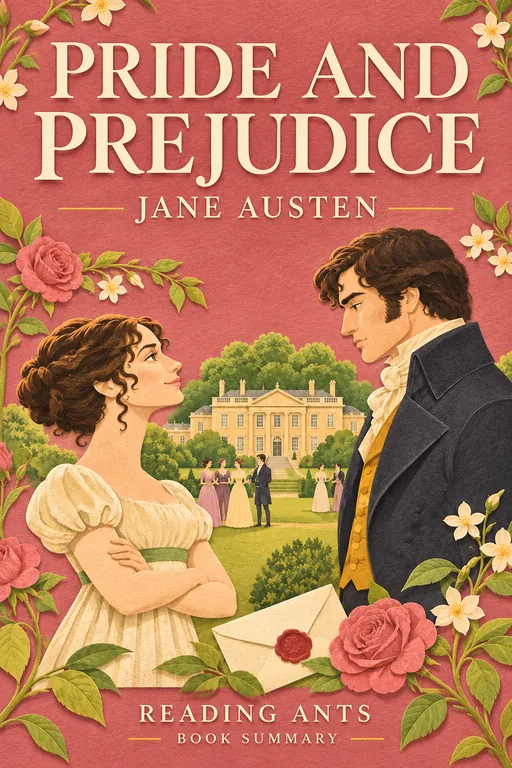
Pride and Prejudice
Jane Austen
Quick-witted Elizabeth Bennet and the proud, wealthy Mr. Darcy badly misjudge each other, and only by facing their own faults do they find their way to love.
📜 Classics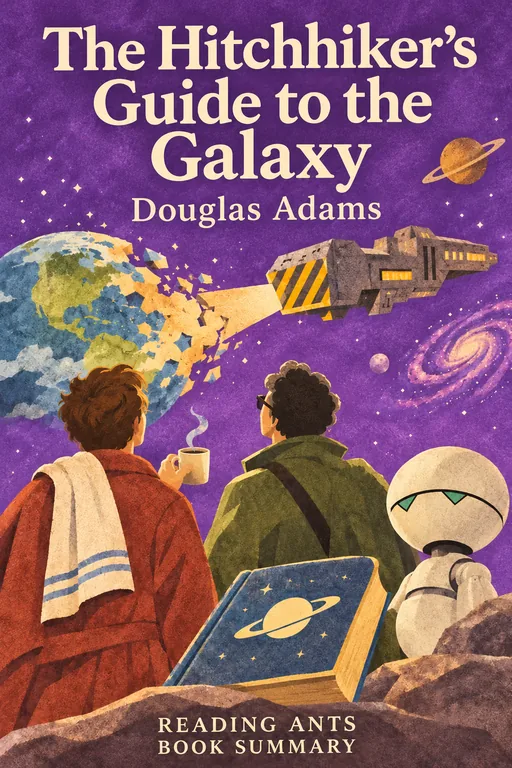
The Hitchhiker's Guide to the Galaxy
Douglas Adams
Moments before Earth is demolished to make way for a hyperspace bypass, an ordinary Englishman is rescued by his friend, who turns out to be an alien, and begins a hilarious journey through space in search of the meaning of life.
🚀 Sci-Fi & Fantasy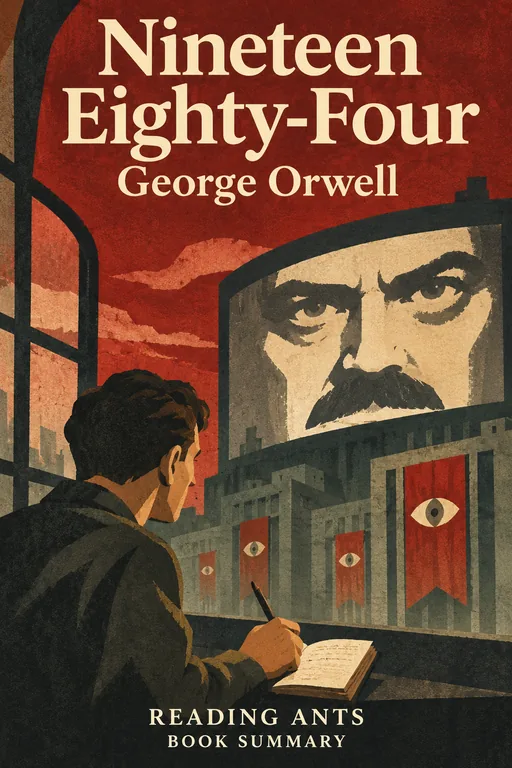
Nineteen Eighty-Four
George Orwell
In a future Britain ruled by an all-seeing Party, one man secretly rebels by keeping a diary and falling in love, and discovers just how completely a totalitarian state can crush the human mind.
📜 ClassicsWant something different?
Pick another topic and we will show you three books to start with.