 Reading Ants
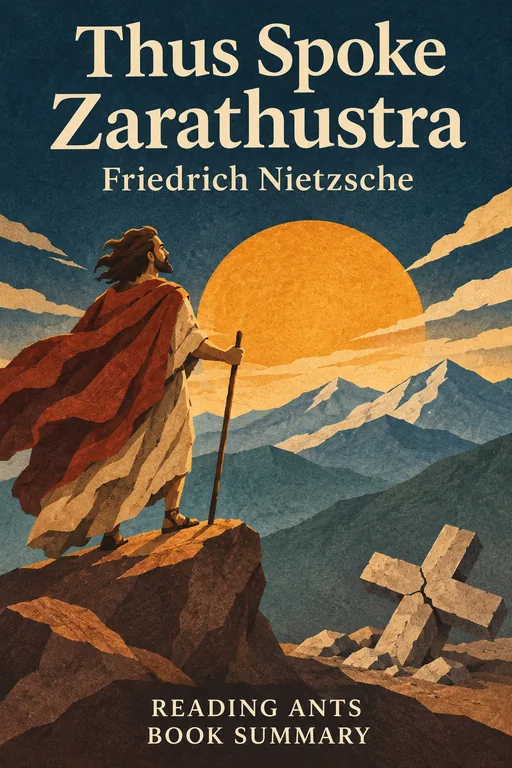
Thus Spoke Zarathustra
Original title: Also sprach Zarathustra
In poetic speeches given by a wandering prophet named Zarathustra, Nietzsche announces the death of the old religious worldview and urges humans to create new values and overcome themselves.
Overview
Thus Spoke Zarathustra: A Book for All and None is a philosophical work by Friedrich Nietzsche, a German philosopher who lived from 1844 to 1900. It was written in four parts between 1883 and 1885 (the fourth was at first only privately printed). Instead of an ordinary essay, Nietzsche wrote in the style of a sacred book, with a prophet, Zarathustra, who leaves his mountain solitude to teach people. The name comes from Zoroaster, the ancient Persian prophet, but Nietzsche’s Zarathustra is a different, invented figure. The book is full of symbols, parables and songs, and it presents some of Nietzsche’s best-known ideas, such as the Overman, the death of God and eternal recurrence.
Full Summary
1. Zarathustra comes down the mountain
The idea: After ten years alone in the mountains, Zarathustra feels full of wisdom, like a bee with too much honey, and decides to share it. On his way down he meets an old hermit who has not heard that God is dead. When he reaches a town, he announces to the crowd in the marketplace the Overman (or “Superman,” Übermensch), a being who surpasses the human, just as humans have surpassed apes. He says that people must remain faithful to the earth and not to otherworldly hopes. The crowd, who are waiting for a tightrope walker, laugh at him. Later the walker falls to his death, and Zarathustra carries away the body.
In real life: New ideas are often met with laughter or confusion before they are understood.
2. The three metamorphoses and the new values
The idea: In one of the best-known speeches, Zarathustra describes three transformations of the spirit: the camel, which kneels and takes on heavy burdens, standing for obedience; the lion, which fights and says “no” to the old rules, standing for freedom; and the child, which is innocent, creative and says “yes,” standing for new beginnings. The path to creating new values leads from duty, to rebellion, to playful creation.
In real life: Many people go from following their elders’ rules, to rejecting them, and finally to building their own sense of what matters.
3. Against the preachers of the afterlife and the state
The idea: In many speeches, Zarathustra criticizes those who look down on the body and on this world, who speak of a better life after death and who teach contempt for life. He also attacks the modern state as the coldest of monsters, and the herd mentality that makes people follow the crowd. He praises the person who stands alone and who creates, and warns against the noise of the marketplace and the flies of popularity.
In real life: Many of us feel pressure to follow trends, and Nietzsche asks us whether we truly want what we say we want.
4. The last man and the will to power
The idea: Zarathustra warns that if humanity does not aim higher, it will become the last man, a comfortable, small and conformist creature who wants only safety and pleasure and who blinks at any suggestion of greatness. Against this, he teaches the will to power, a drive toward growth, mastery and self-overcoming, found in all living things. Nietzsche’s use of this idea is complex, and it is not simply about dominating others.
In real life: A person who seeks only comfort may avoid failure, but also misses the satisfaction that comes from difficult achievement.
5. Eternal recurrence
The idea: The deepest thought in the book is eternal recurrence: the idea that everything that happens will return again and again, infinitely. Zarathustra struggles with this thought, because it includes even small and painful things. It acts as a test: could you love your life so much that you would want to live it again exactly as it was? Nietzsche presents it as a way to affirm life fully.
In real life: Asking “Would I be glad to repeat this day forever?” can help us notice what we value or want to change.
6. Loneliness, compassion and the final temptation
The idea: In later parts, Zarathustra withdraws into solitude, has visions and meets a group of “higher men,” people who are searching but who are broken or confused. He teaches them but realizes that they are not ready. He wrestles with a final temptation, pity for the suffering of those higher men. At the end, a lion appears as a sign that his true children are coming, and Zarathustra goes forward to his work.
In real life: Teachers and leaders sometimes find that helping others too much can keep them from growing.
Why It Matters
Nietzsche wrote that his book was for all and for none, and it has been among the most influential and most misunderstood works of philosophy. Writers, artists and thinkers of the twentieth century, from existentialists to psychologists, were deeply affected. The composer Richard Strauss wrote an orchestral piece inspired by it, whose opening became famous through film.
The book also shaped how modern people think about religion, meaning and individual freedom. Its idea that we must make our own values after the decline of traditional belief set the stage for later philosophical debates.
Key Takeaways
- Create your own values. Do not just follow what you are told.
- Overcome yourself. Growth requires effort and change.
- Be faithful to the earth. Value this life and body.
- Avoid becoming the last man. Comfort without aim makes life small.
- Affirm life fully. Eternal recurrence asks whether we love our lives.
What We Can Learn
The book challenges us to ask what we truly believe, as opposed to what we inherited. Even if we end up agreeing with tradition, questioning it makes our choice our own.
It also encourages us to value effort and difficulty. Nietzsche suggests that growth often comes from struggle, which invites us to see obstacles not just as problems, but as chances to develop.
Finally, the book can be read as a call to be honest with ourselves. Many of its speeches expose how people hide behind comfortable beliefs, and facing that honestly is a step toward a more authentic life.
Criticism and Counterpoints
The book has been heavily misread. Because of ideas like the Overman and the will to power, it was later claimed by the Nazis, partly thanks to the editing and promotion by Nietzsche’s sister, Elisabeth Förster-Nietzsche. Most scholars hold that Nietzsche despised German nationalism and antisemitism and that these uses distorted his views.
Other critics argue that the style is overblown and unclear, and that Nietzsche gives little guidance on how to build new values, or how to distinguish self-overcoming from arrogance. His elitist tone and his dismissive remarks about women, the weak and the masses trouble many readers. It is a book that rewards slow, skeptical reading.
Who Should Read It
This book suits mature teenagers and adults with an interest in philosophy and literature. It is poetic and often puzzling, and a guide or introduction is helpful. It contains strong criticism of religion that some readers may find challenging.
Want the whole book?
A summary is a taste, not the meal. Here is where to find the full book.
You reached the end 🎉
Nicely done. Mark this one as read, and we will suggest what to read next.
Read this next
Beyond Good and Evil
Friedrich Nietzsche
Nietzsche challenges the assumptions of earlier philosophers and moralists, argues that our values are shaped by hidden drives and perspectives, and calls for free spirits who dare to question good and evil themselves.
🕊️ Philosophy & Religion
The Myth of Sisyphus
Albert Camus
Camus asks whether life is worth living in a universe without clear meaning, and answers that we should accept the absurd, live with full passion and revolt, and imagine Sisyphus as happy.
🕊️ Philosophy & Religion
The Republic
Plato
Plato, through the character of Socrates, asks what justice is and imagines an ideal city, arguing that a just person and a just state are ruled by wisdom, with reason guiding the whole.
🕊️ Philosophy & Religion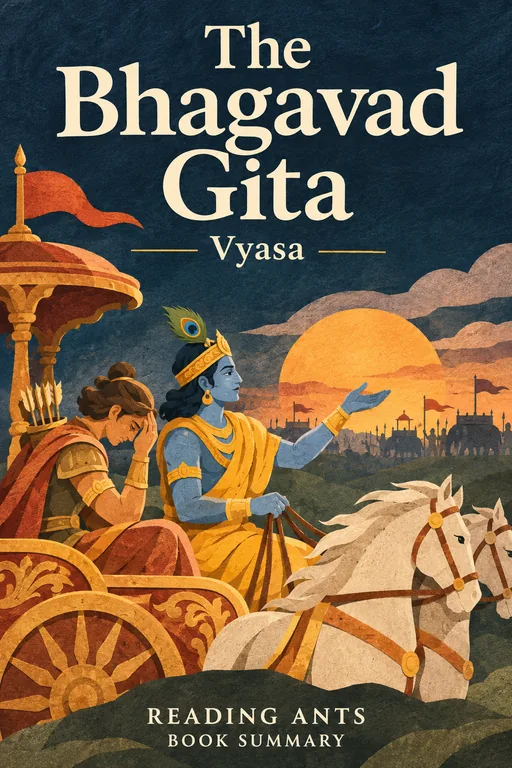
The Bhagavad Gita
Vyasa
On the eve of a great battle, the warrior Arjuna despairs, and the god Krishna, serving as his charioteer, teaches him about duty, the soul, selfless action and devotion.
🕊️ Philosophy & Religion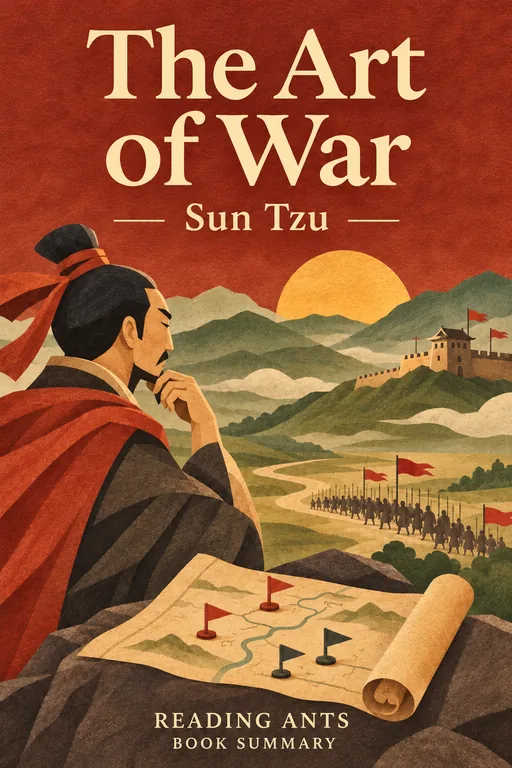
The Art of War
Sun Tzu
The greatest victory is the one won without fighting, achieved through careful planning, knowing both yourself and your opponent, and using deception, flexibility and timing.
🕊️ Philosophy & Religion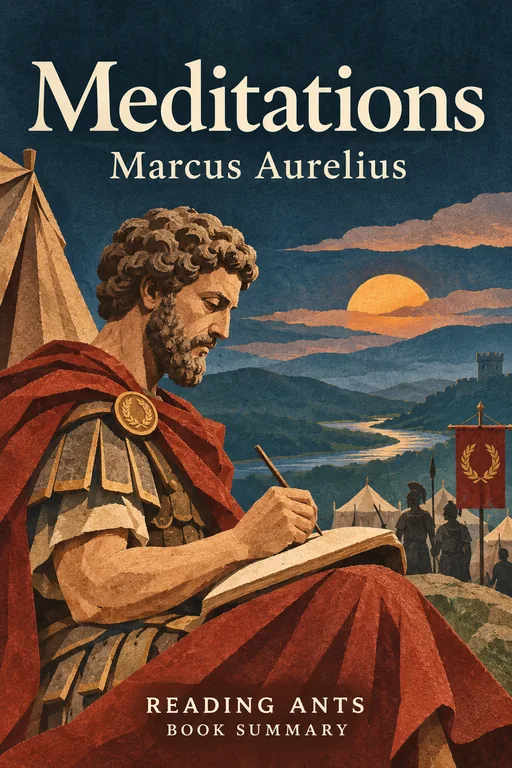
Meditations
Marcus Aurelius
The private notebook of a Roman emperor, reminding himself daily to accept what he cannot control, to act with justice and kindness, and to remember that life is short.
🕊️ Philosophy & ReligionWant something different?
Pick another topic and we will show you three books to start with.