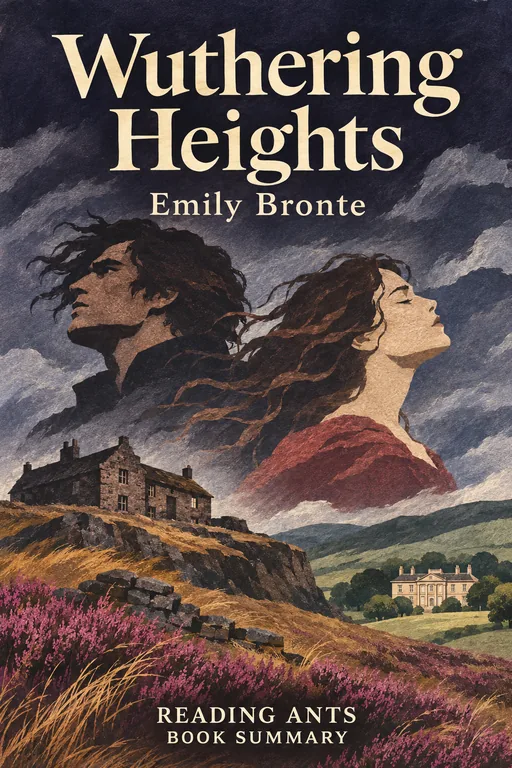
Wuthering Heights
On the wild Yorkshire moors, an orphan named Heathcliff falls into a fierce, all-consuming love with Catherine Earnshaw, and when she marries another man, his bitterness drives a revenge that poisons two families for a generation.
Overview
Wuthering Heights is the only novel by Emily Brontë, sister of Charlotte and Anne. Published in 1847, it tells a dark, passionate story set in two houses on the bleak moors of northern England: Wuthering Heights, a rough farmhouse battered by the wind, and Thrushcross Grange, an elegant estate in the valley. The story is told mainly by Nelly Dean, a housekeeper who has served both families, to a visitor named Mr. Lockwood. It follows Heathcliff, a mysterious foundling brought to Wuthering Heights as a child, his intense bond with Catherine, and the cruelty that grows from their separation. At first shocking to readers, it is now considered one of the greatest novels in English.
Main Characters
- Heathcliff: a dark, brooding orphan, passionate and vengeful.
- Catherine (Cathy) Earnshaw: a wild, proud girl who loves Heathcliff.
- Edgar Linton: a gentle, refined gentleman who marries Catherine.
- Isabella Linton: Edgar’s sister, who marries Heathcliff.
- Hindley Earnshaw: Catherine’s brother, who mistreats Heathcliff.
- Nelly Dean: the housekeeper who tells most of the story.
- Mr. Lockwood: a visitor who rents Thrushcross Grange.
- Catherine Linton: Catherine and Edgar’s daughter.
- Hareton Earnshaw: Hindley’s son.
- Linton Heathcliff: Heathcliff and Isabella’s sickly son.
Full Summary
A Ghostly Visit
In 1801, Mr. Lockwood rents Thrushcross Grange and visits his landlord, Heathcliff, at Wuthering Heights. He finds a grim household: the rude, gloomy Heathcliff, a sullen young woman named Catherine, and a rough young man named Hareton. Snowed in for the night, Lockwood sleeps in an old bed and dreams that a ghostly girl named Catherine Linton is tapping at the window, begging to be let in. When he cries out, Heathcliff rushes in and, sobbing, opens the window, calling for Catherine to come back.
Curious, Lockwood asks the housekeeper, Nelly Dean, to tell him the history of the two houses.
Heathcliff and Catherine
Years earlier, Mr. Earnshaw, the owner of Wuthering Heights, returned from a trip to Liverpool with a dark, ragged orphan boy whom he named Heathcliff. His daughter Catherine quickly became Heathcliff’s inseparable companion, and the two ran wild together on the moors. But Catherine’s brother, Hindley, hated Heathcliff for taking his father’s affection. When Mr. Earnshaw died, Hindley became master of the house and treated Heathcliff like a servant.
One day, Catherine is bitten by a dog at Thrushcross Grange and stays with the wealthy Linton family for five weeks. She returns as a fine young lady, attracted to the comforts and manners of the Lintons, and especially to the gentle Edgar Linton.
The Separation
Catherine accepts Edgar’s proposal. She tells Nelly that she loves Heathcliff more than anything, that they are made of the same soul, but that marrying him would degrade her. Heathcliff overhears only the part about degradation and disappears that night.
Three years later, Heathcliff returns, mysteriously wealthy and educated, but filled with bitterness. Catherine, now married to Edgar, is overjoyed. Heathcliff begins his revenge. He lends Hindley money for gambling and drinking and gains control of Wuthering Heights. To hurt Edgar, he courts and elopes with Edgar’s sister Isabella, then treats her cruelly.
Catherine’s Death
The tension between Heathcliff and Edgar tears Catherine apart. She falls into a fever, starving herself in a frenzy. During one last passionate meeting, she and Heathcliff embrace, blaming each other for their suffering. That night, Catherine gives birth to a daughter, also named Catherine, and dies. Heathcliff is wild with grief, and begs her ghost to haunt him.
Isabella escapes Heathcliff and flees to the south of England, where she gives birth to a son, Linton. Hindley dies, and Heathcliff becomes master of Wuthering Heights, raising Hindley’s son, Hareton, as an uneducated laborer, just as Hindley once treated him.
The Next Generation
Years pass. Young Catherine Linton grows up happily at the Grange with her father, Edgar. When Isabella dies, her sickly son Linton is brought to Edgar, but Heathcliff demands his son. To seize the Grange as well, Heathcliff schemes to marry Linton to young Catherine. He traps Catherine at Wuthering Heights and forces the marriage while her father lies dying. Edgar dies, and soon after, Linton dies too. Heathcliff now owns both houses, and young Catherine is left trapped at the Heights.
Love and Peace
Back in the present, Lockwood leaves and returns months later to find things changed. Young Catherine and Hareton, at first hostile, have grown fond of each other. She is teaching him to read, and they plan to marry.
Heathcliff has lost his desire for revenge. He sees Catherine’s eyes in both young people’s faces and becomes obsessed with joining his lost love. He stops eating and sleeping and is found dead in Catherine’s old bed by the open window. He is buried beside her. Local people claim to see their ghosts walking on the moors, but Lockwood, passing their graves on a quiet evening, wonders how anyone could imagine unquiet sleep for those resting in that peaceful earth.
Why It Matters
Wuthering Heights shocked many readers when it was published in 1847 under the pen name “Ellis Bell,” because of its violence, cruelty and wild passion. Emily Brontë died the following year, at thirty. Today it is considered one of the greatest English novels, admired for its intense emotion, its complex structure of stories within stories and its powerful sense of landscape.
Heathcliff and Catherine have become symbols of obsessive, destructive love. The novel has been adapted many times for film, television and music, including Kate Bush’s famous 1978 song. It continues to fascinate readers and critics, who debate whether it is a love story, a revenge tragedy or a study of how cruelty passes from one generation to the next.
Key Takeaways
- Obsessive love can destroy. Heathcliff and Catherine’s passion brings misery to everyone.
- Revenge poisons the avenger. Heathcliff’s vengeance leaves him empty.
- Cruelty passes down. Mistreatment repeats across generations until someone breaks the cycle.
- Social class shapes choices. Catherine marries Edgar partly for status, though she says she loves him, differently from Heathcliff.
- Love and kindness can heal. Young Catherine and Hareton end the cycle of hatred.
What We Can Learn
The novel shows how harmful it is to let anger and resentment control our lives. Heathcliff spends decades seeking revenge, and it never brings him peace. Letting go of grudges frees us to live better lives.
It also teaches that how we treat children matters. Hindley’s cruelty to Heathcliff, and Heathcliff’s cruelty to Hareton, create a chain of pain. Kindness, patience and education, like Catherine teaching Hareton to read, can break that chain.
Finally, it reminds us to be honest about our feelings. Much of the tragedy comes from a single overheard sentence and choices made for the wrong reasons.
Criticism and Counterpoints
Many readers find Wuthering Heights hard to enjoy at first, because almost every character is selfish, cruel or violent, and the story is told through layers of narrators that can be confusing. Some critics have called it unpleasant or morally troubling, especially its portrayal of domestic abuse and its seeming romanticizing of Heathcliff.
Modern critics have also discussed Heathcliff’s mysterious origins and dark appearance, noting that he is treated as an outsider partly because of race and class, which some see as an important but under-explored theme. Supporters argue that the novel doesn’t celebrate cruelty but exposes it, and that its raw power is what makes it unforgettable.
Who Should Read It
This book suits older teens and adults who enjoy dark, passionate stories and are ready for disturbing characters. Its structure and dialect can be challenging, so a family tree helps. Readers seeking a gentle romance should look elsewhere.
Want the whole book?
A summary is a taste, not the meal. Here is where to find the full book.
You reached the end 🎉
Nicely done. Mark this one as read, and we will suggest what to read next.
Read this next
Jane Eyre
Charlotte Bronte
A poor, plain but fiercely independent orphan becomes a governess, falls in love with her brooding employer, discovers his terrible secret, and refuses to give up her self-respect even for love.
📜 Classics
Rebecca
Daphne du Maurier
A shy young woman marries a wealthy widower and moves to his great estate, Manderley, where she is haunted by the memory of his first wife, Rebecca, and slowly learns the truth about her death.
📜 Classics
Frankenstein
Mary Shelley
A young scientist creates a living being from dead body parts, then abandons it in horror, and his rejected creation, longing for love, turns to revenge.
🚀 Sci-Fi & Fantasy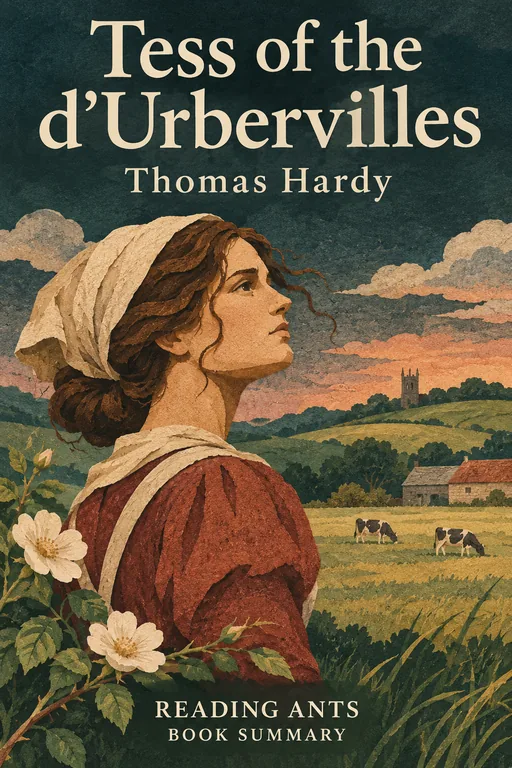
Tess of the d'Urbervilles
Thomas Hardy
A poor country girl named Tess Durbeyfield is wronged by one man and abandoned by another, and her struggle to live honestly against harsh social rules ends in tragedy.
📜 Classics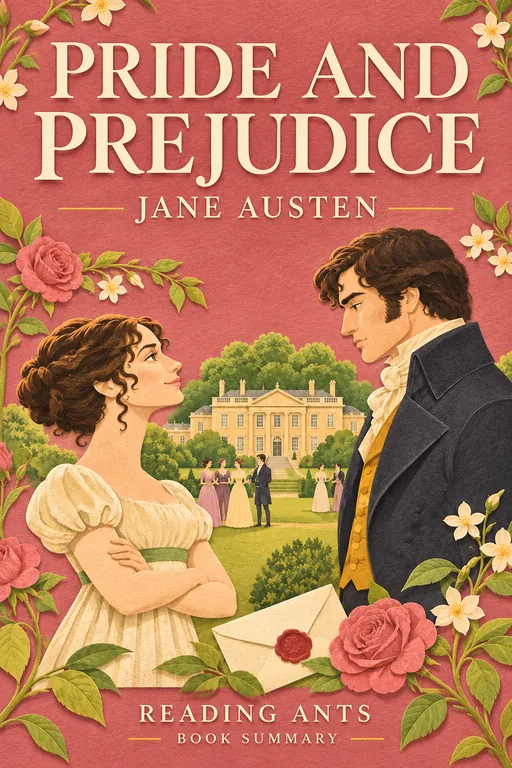
Pride and Prejudice
Jane Austen
Quick-witted Elizabeth Bennet and the proud, wealthy Mr. Darcy badly misjudge each other, and only by facing their own faults do they find their way to love.
📜 Classics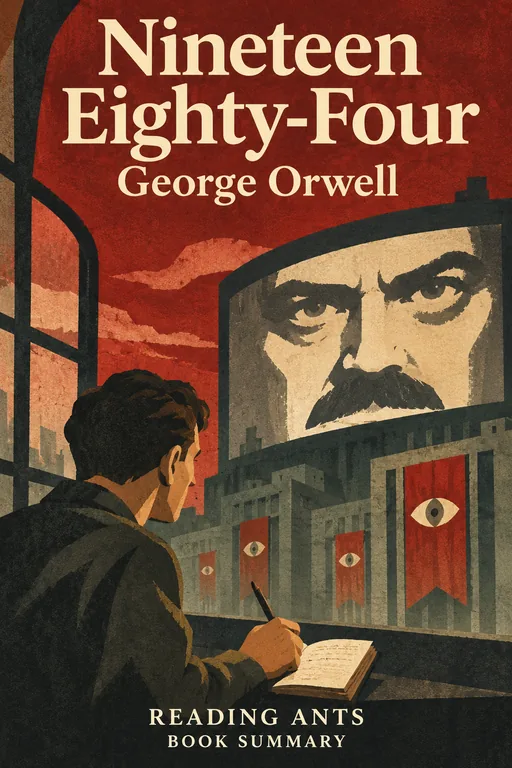
Nineteen Eighty-Four
George Orwell
In a future Britain ruled by an all-seeing Party, one man secretly rebels by keeping a diary and falling in love, and discovers just how completely a totalitarian state can crush the human mind.
📜 ClassicsWant something different?
Pick another topic and we will show you three books to start with.