 Reading Ants
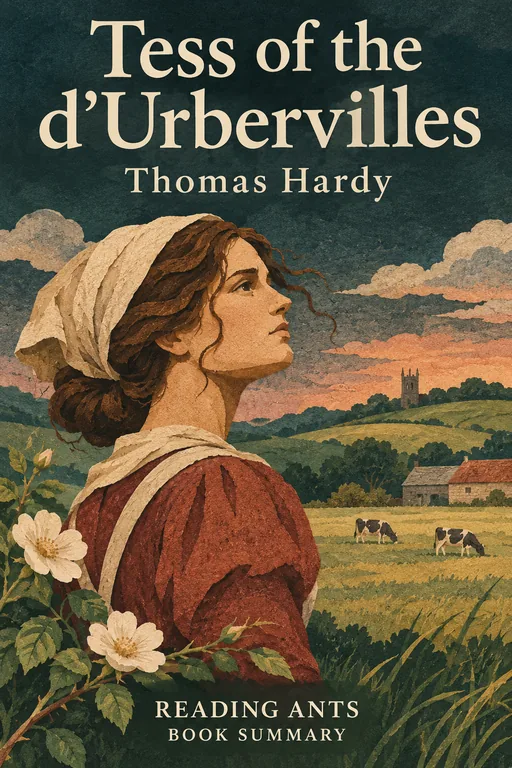
Tess of the d'Urbervilles
A poor country girl named Tess Durbeyfield is wronged by one man and abandoned by another, and her struggle to live honestly against harsh social rules ends in tragedy.
Overview
Tess of the d’Urbervilles: A Pure Woman Faithfully Presented is a novel by Thomas Hardy, published in 1891 after being serialized in a magazine. It is set in the rural southwest of England, in a fictional region that Hardy calls Wessex, which spans several real counties, and follows Tess from a poor village family to a farm, a dairy, a marriage and a final crisis. Hardy’s subtitle was meant to challenge Victorian ideas of sexual morality, and the book was condemned by some critics when it appeared. It remains one of his best-known works, and its picture of nature, chance and social cruelty is powerful and moving.
Main Characters
- Tess Durbeyfield: a beautiful, hardworking, honest young woman from a poor family.
- John Durbeyfield: her vain, idle father, who is told that he descends from a noble family.
- Alec d’Urberville: a wealthy young man who is a predator and later a preacher.
- Angel Clare: a clergyman’s son who is idealistic and learns farming.
- Joan Durbeyfield: Tess’s mother.
- Liza-Lu: Tess’s younger sister.
- Marian and Izz Huett: Tess’s friends at the dairy and the farm.
Full Summary
A Noble Name
On a country road, John Durbeyfield, a poor villager, meets a parson who tells him that the family name is a corruption of d’Urberville, an ancient and noble line. John becomes vain, and when his horse is killed in an accident that Tess feels responsible for, her parents send her to claim kinship with a rich family named d’Urberville, who live nearby, though they have only bought the name. Tess, who feels guilty, goes reluctantly to work on their estate, where Alec, the young heir, notices her.
Alec
Alec pursues Tess and, after a night in the woods, she is ruined by him, in a scene that Hardy leaves unclear between seduction and force. Tess returns home, and gives birth to a baby, whom she names Sorrow. When the baby falls ill, Tess baptizes him herself, because her father will not let the clergyman visit, and he dies; the parson later refuses him a full church burial. She tries to rebuild her life by working as a dairymaid at a farm far away.
Talbothays
At the Talbothays Dairy, Tess is happy for the first time. She meets Angel Clare, a young man from a religious family who has chosen to learn farming instead of becoming a priest. He falls in love with her, and sees her as a fresh and natural girl. Tess loves him but fears telling him her past. She puts off accepting his proposal, and finally agrees to marry him, hoping that confession will not matter.
The Wedding Night
On their wedding night, Angel confesses that he once had an affair with a stranger in London, and Tess forgives him, relieved, and tells him of her own past. Angel, who has idealized her, cannot accept it. He says that she is no longer the woman he loved, and, after a few days, he leaves for Brazil to try farming there, and gives her little money. Tess is left alone, hurt and proud.
Hardship
Tess goes home and then takes hard, poorly paid work at a harsh farm, Flintcomb-Ash, where she digs turnips in freezing weather. She does not ask Angel’s family for help, because she is too proud. When her father dies, her family loses their home and is homeless. Alec reappears as a preacher, and then abandons his religion, and he presses Tess to live with him, offering to support her family. In desperation, she agrees.
Angel Returns
Angel, sick and wiser, returns from Brazil, having realized that he judged her unfairly. He finds Tess living as Alec’s mistress, and she tells him that it is too late. Overcome by despair and anger, she stabs Alec to death and runs after Angel, who forgives her. They flee together across the countryside, spending a few happy days hiding in an empty house, and finally resting at Stonehenge.
The End
At dawn, police surround the stones, and Tess accepts her arrest, asking only to be allowed to sleep a little longer. She is tried and hanged at Winchester. Angel and Tess’s younger sister, Liza-Lu, watch from a hill as a black flag is raised, and Hardy ends with the remark that the “President of the Immortals” had finished his sport with Tess. Angel and Liza-Lu walk away together, holding hands.
Why It Matters
Tess of the d’Urbervilles is among the most admired Victorian novels. It challenged accepted ideas about sexual purity and the “fallen woman,” by presenting a woman who is wronged and judged more harshly than the men involved. It was controversial, and Hardy was attacked, but it sold well. He later turned to poetry, in part because of the hostile reaction to his next novel, Jude the Obscure.
The novel’s vivid landscapes and its sense of fate have made it a favorite for adaptations, including Roman Polanski’s 1979 film Tess and several television versions. It also remains a staple of literary study for its themes of class, nature and gender.
Key Takeaways
- Society punishes women more than men. Tess is condemned while Alec is not.
- Class and money shape fates. The family’s poverty leads to Tess’s hardships.
- Chance and fate have great power. An accident with a horse sets events moving.
- Idealizing a person is dangerous. Angel loves an idea of Tess, not Tess herself.
- Nature is beautiful and indifferent. The landscapes mirror Tess’s moods but do not help her.
What We Can Learn
The novel invites us to question moral judgments that fall unequally on different people. Tess is called “fallen,” while the man who harmed her faces no penalty, and the book asks us to look at who is being blamed and why.
It also teaches that love without understanding can be cruel. Angel’s love is real but conditional, and his rejection shows how people can be hypocrites without noticing. We can learn to examine whether we apply the same standards to ourselves that we apply to others.
Finally, it shows how poverty limits choices. Tess’s decisions are made under pressure, and reading her story may encourage more compassion for people whose options are narrow.
Criticism and Counterpoints
Some readers find the plot too driven by coincidence and fate, and think that Hardy is too pessimistic, arranging for Tess to suffer at every turn. Others criticize his portrayal of Tess as a victim who is rarely allowed to act, and find the ambiguity about what happens with Alec troubling, since it can look like a fashionable excuse for rape.
Some find that Angel’s treatment is too lenient, as he is forgiven by the narrative despite his harshness. A few modern readers also dislike the long descriptions or Hardy’s habit of commenting on the story. Still, the book is widely appreciated.
Who Should Read It
This book suits mature readers. It is long and slow in places, and contains sexual violence, an infant’s death and a murder. It can be rewarding for those who enjoy classic novels and want to think about class and gender.
Want the whole book?
A summary is a taste, not the meal. Here is where to find the full book.
You reached the end 🎉
Nicely done. Mark this one as read, and we will suggest what to read next.
Read this next
Far from the Madding Crowd
Thomas Hardy
An independent young woman inherits a farm in rural Wessex and is courted by three very different men, a steady shepherd, a lonely landowner and a dashing soldier, with consequences that bring both heartbreak and, in the end, a quiet happiness.
📜 Classics
The Scarlet Letter
Nathaniel Hawthorne
In seventeenth-century Boston, a young woman named Hester Prynne is forced to wear a scarlet letter A for adultery, and she bears her shame with dignity while the secret father of her child, a respected minister, is eaten alive by guilt.
📜 Classics
Jane Eyre
Charlotte Bronte
A poor, plain but fiercely independent orphan becomes a governess, falls in love with her brooding employer, discovers his terrible secret, and refuses to give up her self-respect even for love.
📜 Classics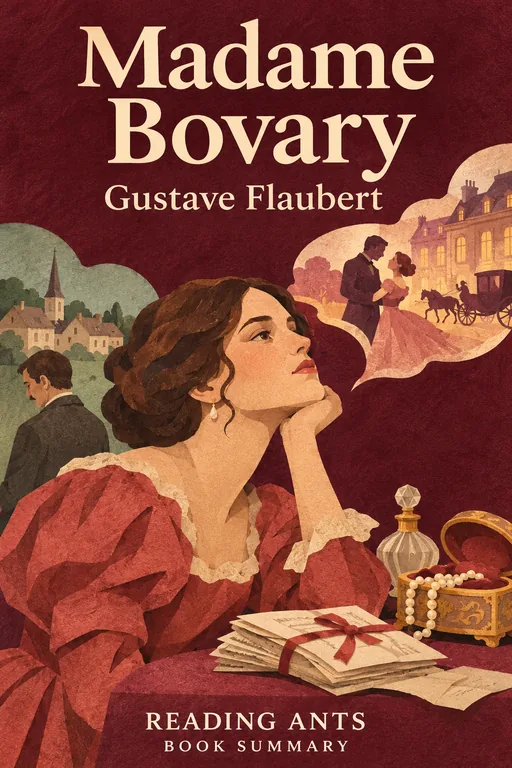
Madame Bovary
Gustave Flaubert
A romantic young woman, bored by her provincial marriage to a kind but dull doctor, seeks excitement in love affairs and luxury, and is crushed by debt and disillusion.
🌍 World Literature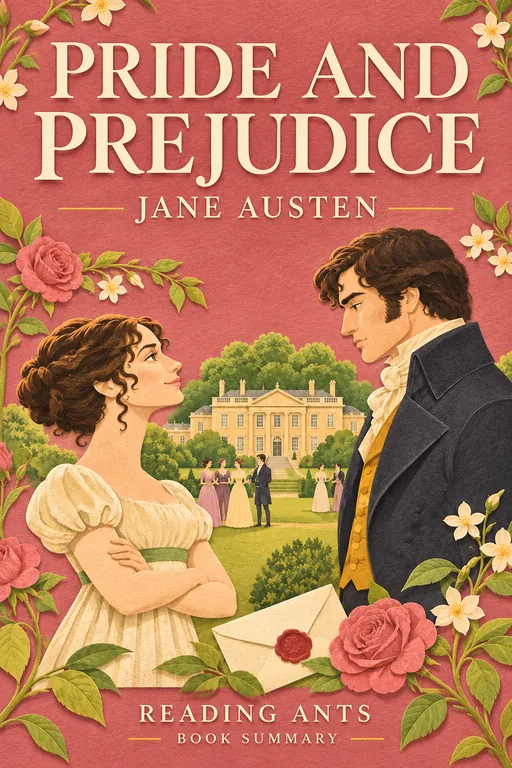
Pride and Prejudice
Jane Austen
Quick-witted Elizabeth Bennet and the proud, wealthy Mr. Darcy badly misjudge each other, and only by facing their own faults do they find their way to love.
📜 Classics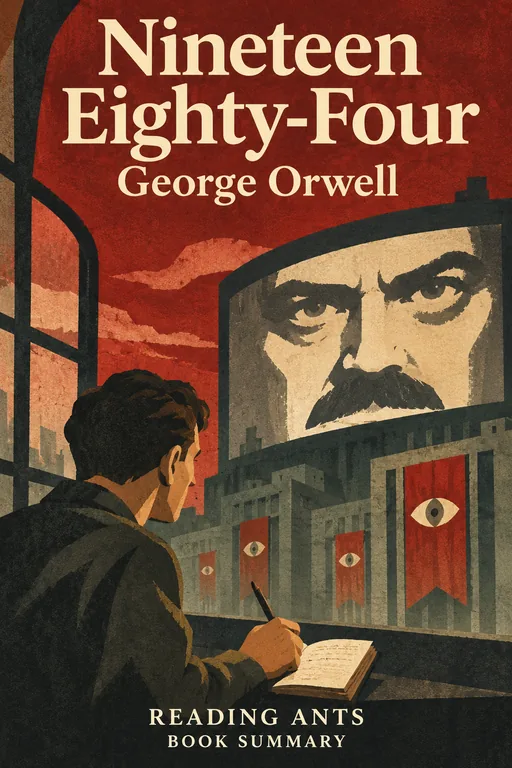
Nineteen Eighty-Four
George Orwell
In a future Britain ruled by an all-seeing Party, one man secretly rebels by keeping a diary and falling in love, and discovers just how completely a totalitarian state can crush the human mind.
📜 ClassicsWant something different?
Pick another topic and we will show you three books to start with.