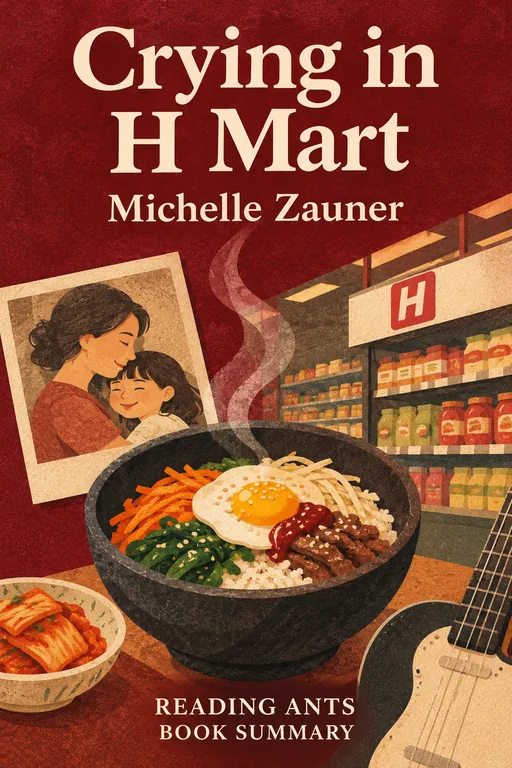
Crying in H Mart
Musician Michelle Zauner remembers her Korean mother, their complicated bond, her mother's death from cancer, and how cooking Korean food helped her to feel close to the person she lost.
Overview
Crying in H Mart is a memoir by Michelle Zauner, who performs as the indie musician Japanese Breakfast. It began as an essay in The New Yorker, about crying in H Mart, a chain of Asian supermarkets, as she looked for the foods that her mother used to cook. It was published in 2021 and became a bestseller. Zauner is Korean American, with a Korean mother and a white American father. She grew up in Oregon, feeling caught between cultures. The book weaves together childhood memories, the months of her mother’s illness, and her own struggle to find her identity afterward.
Full Summary
Growing Up Between Two Worlds
Michelle grows up in Eugene, Oregon, one of the few Asian American children in her town. Her mother, Chongmi, who is Korean, is strong-willed and demanding, filled with love but also high expectations. Her father, Joel, is an American man. Michelle grows up in a mostly white town and feels most connected to her Korean heritage through food, which she learns from her mother as a way into that side of her identity. She often disobeys her parents, and she longs for her mother’s approval at the same time.
Summers in Seoul and Food as Love
Every other summer or so, Michelle and her mother visit Seoul to see her mother’s family, including her aunt Nami and her grandmother. When Michelle is fourteen, her grandmother dies. She remembers the markets, the street food and the meals around a table, and the sense that food is how her mother’s family shows love. Her mother does not say “I love you” often, but she shows it by cooking and packing meals. Zauner describes Korean dishes in loving detail, along with the rituals around them.
Teenage Years and Conflict
As a teenager, Michelle clashes with her mother. She falls into depression in high school and skips classes, and her mother grows jealous when Michelle admires a friend’s mother. After watching a concert DVD of the band the Yeah Yeah Yeahs, Michelle asks for a guitar, learns it, writes songs and plays at local venues, which her mother disapproves of because she hopes Michelle will not pursue music. The two say painful things to each other. Michelle then goes to Bryn Mawr College in Pennsylvania, to her mother’s disappointment.
The Diagnosis
After Michelle has graduated and is playing in a Philadelphia band, she learns in 2014 that her mother has a serious cancer. She leaves her life to return to Eugene and take care of her mother. A family friend, Kye, also comes to help. After a band tour, the family flies to Seoul as her mother wishes, but her mother is hospitalized on arrival, and later Michelle and her father move her to a hospital in Eugene. Wanting her mother to see her wedding, Michelle marries her partner, Peter Bradley, while her mother is still alive. Through that summer she helps with medicine, hospital visits and meals, and stays close by her mother’s side. She and her father cope with fear and exhaustion. In this period, she and her mother grow closer than they have been, in a way that is intimate and painful.
Final Months
The treatment is hard, and the cancer progresses. Chongmi loses her hair, and her energy, and finds it difficult to eat. Michelle tries to cook the foods that her mother craves, though the chemotherapy leaves her mother unable to stomach them. Her mother dies on October 18, 2014, when Michelle is twenty-five. A funeral follows. Soon after, Michelle and her father travel to Vietnam hoping to ease their grief, but the trip strains their relationship. Zauner writes about all of this with honesty.
Cooking Her Way Back
After her mother’s death, Michelle feels lost, and she is drawn to the foods that remind her of her mother. In the aisles of H Mart, she can suddenly be overcome by tears. After moving to Brooklyn with Peter, she starts to cook Korean dishes herself, learning from videos by the Korean American cook Maangchi, as a way of keeping her mother’s presence alive and connecting with her heritage. She also records songs about her loss, and the album, released as Japanese Breakfast, is more successful than she expected. Near the end, on a tour stop in Seoul, she spends time with her aunt Nami, and the two sing together at karaoke. It is not a neat resolution: music, cooking and trips to Korea help, but the loss remains.
Why It Matters
Crying in H Mart became a bestseller and touched many readers, who recognized in it their own losses and their own experiences of living between cultures. The vivid food writing makes the book a sensory experience, and the honest depiction of a mother-daughter relationship is both loving and critical. It has been praised for how it combines grief and identity, and it won the 2021 Goodreads Choice Award for memoir. The book also inspired reflections on how food keeps memory alive. It is often read as both a memoir of grief and a story about identity and belonging. For many readers, it offers comfort in times of loss.
Key Takeaways
- Food carries memory. Familiar dishes can bring back a loved one.
- Love has many languages. Chongmi expressed love through cooking.
- Grief takes time. It does not follow a neat path.
- Identity can be complicated. Growing up between cultures brings both belonging and distance.
- Caring for someone is a gift. The months of caring brought mother and daughter closer.
What We Can Learn
Think about the dishes in your own family, and what stories belong to them, and consider learning to cook one with a parent or grandparent while you can. Pay attention to how people close to you show love, even if it is not in words. If you are grieving, give yourself time, and talk to someone about it, since sharing memories can help. And if you feel like an outsider in some part of your life, remember that it is possible to claim your heritage in your own way. Writing down family recipes and stories is a good way to keep them.
Criticism and Counterpoints
Publishers Weekly found the prose lyrical but at times overwrought, and a review in The Atlantic felt that the long sketches of meals slow the book’s momentum at points. The book is also one Korean American’s very personal perspective, and does not represent all Korean or Korean American experience. As a memoir, it shows her mother and father only through the author’s own eyes and memory. Most critics have praised its honesty and emotional force.
Who Should Read It
This book is for readers who like memoirs, food writing and honest stories about grief, and for anyone who has lost someone. It includes descriptions of illness and strong feelings, and some strong language. It may be hard for those who are currently grieving, though many find comfort in it.
Want the whole book?
A summary is a taste, not the meal. Here is where to find the full book.
You reached the end 🎉
Nicely done. Mark this one as read, and we will suggest what to read next.
Read this next
The Year of Magical Thinking
Joan Didion
Joan Didion writes with precision and restraint about the year after her husband's sudden death, when she also faced her daughter's grave illness, and she examines how grief can warp thinking and time.
👤 Real Lives
When Breath Becomes Air
Paul Kalanithi
Paul Kalanithi, a young neurosurgeon, writes about facing terminal lung cancer at thirty-six and asks what makes a life meaningful when time is short.
👤 Real Lives
Wild
Cheryl Strayed
At twenty-six, grieving her mother's death and her own reckless choices, Cheryl Strayed sets out alone to walk hundreds of miles of the Pacific Crest Trail, and finds a way back to herself along the way.
👤 Real Lives
Educated
Tara Westover
A girl raised by survivalist parents in the mountains of Idaho, with no school, no birth certificate and no doctors, teaches herself enough to reach university and eventually earns a PhD from Cambridge, at the painful cost of her family.
👤 Real Lives
Man's Search for Meaning
Viktor E. Frankl
A psychiatrist who survived the Nazi concentration camps explains that even in the worst suffering, people can choose their attitude, and that finding a reason to live is what gives us the strength to endure.
👤 Real Lives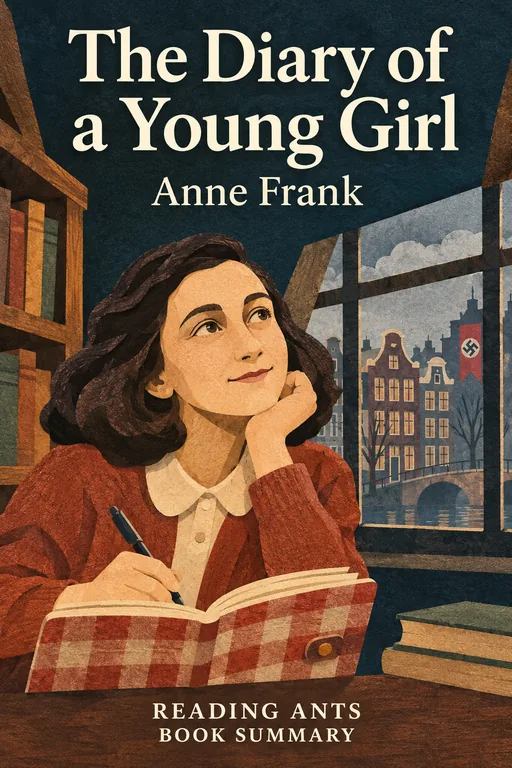
The Diary of a Young Girl
Anne Frank
A Jewish teenage girl hiding from the Nazis in a secret apartment in Amsterdam records two years of fear, family quarrels, first love and big dreams in a diary that became one of the most famous books in the world.
👤 Real LivesWant something different?
Pick another topic and we will show you three books to start with.