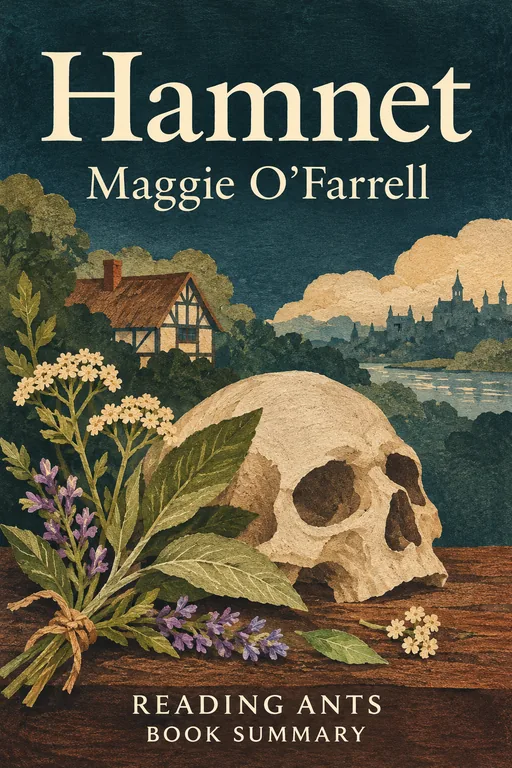
Hamnet
The imagined story of Agnes, the wife of William Shakespeare, and of the death of their eleven-year-old son Hamnet from plague, a grief that, the novel suggests, inspired the play *Hamlet*.
Overview
Hamnet is a novel by Maggie O’Farrell, published in 2020, which won the Women’s Prize for Fiction in 2020 and the National Book Critics Circle Award. It is set in Stratford-upon-Avon and London in the late sixteenth century. It centers on Agnes, as the novel calls Anne Hathaway, a gifted woman who knows herbs and healing and who is said to have a wild streak. The playwright himself is never named, and is called only “the Latin tutor,” then “her husband,” as a way of focusing on the family. It is a story of love, loss and the way that art can transform grief.
Main Characters
- Agnes (Anne Hathaway): a wise, independent woman with a gift for plants and for sensing things.
- The husband (William Shakespeare): a young Latin tutor who becomes a playwright, never named in the book.
- Hamnet: the twin son, a gentle and imaginative boy.
- Judith: Hamnet’s twin sister, who falls ill.
- Susanna: their older sister.
- John and Mary Shakespeare: the husband’s father and mother.
- Bartholomew: Agnes’s brother, who supports her.
Full Summary
The Tutor and the Hawk
The novel opens in 1596, with Hamnet searching the empty Stratford house for help for his ill sister Judith, and then moves back in time to 1580, to a young Latin tutor, who is unhappy, looking for a place to belong. He meets Agnes, a young woman who is rumored to be half-wild, who keeps a hawk and gathers herbs in the forest. They are drawn to each other, and begin a courtship, which is frowned upon by his family. She becomes pregnant, and they marry. Agnes gives birth to Susanna, and then to twins, Hamnet and Judith.
Agnes’s gift is for seeing: she can sense a person’s illness or future, which makes her a stranger in the town. She grows medicinal plants, and her wildness attracts and frightens the young tutor, who has never met anyone like her. Their courtship takes place in the woods and fields, away from watching eyes.
Marriage and Absence
Over the years, the husband feels trapped in Stratford, and is drawn to London and the theater. He works, at first, as an actor and writer, and begins to be successful. Agnes remains in Stratford with the children, and in the house of her in-laws. They grow apart, but their love remains. The twins are close, in a bond that is almost mystical, and they look so alike that they sometimes swap places.
The Stratford house is crowded, and Agnes bears the strain of living with her husband’s parents, including a violent father-in-law and a cold mother-in-law. She builds a world for the children in the garden and the orchard, and the twins, as small children, are full of imagination.
The Plague
In 1596, plague arrives in Stratford, carried, in the novel’s account, by fleas on goods from far away, and Judith falls ill. She is feverish, with swellings, and Agnes does everything she can, using her knowledge of herbs, as the town prays. Hamnet, who is devoted to his sister, tries to save her by switching places with her, in a childish attempt to fool Death. He lies in her bed, while she recovers. But Hamnet falls ill, and dies, at eleven.
Grief
Agnes is crushed by grief. She mourns, and, in her sorrow, turns away from her husband, who is not there when his son dies. When he comes home, she is angry and cold, and they struggle to speak to each other. The family has to bury Hamnet, and the household is silent. Agnes, who could heal others, was unable to save her own child, and she is tormented by it.
In the long months that follow, Agnes keeps her son’s clothes and his smell, and tells herself that she should have taken the illness into her own body. Her anger at her husband is also a form of love, because she needs someone to share the burden.
The Play
The husband returns to London, and, in his own grief, writes a play. Agnes hears of it, and, to her surprise, learns that it is a tragedy about a prince called Hamlet, which is, she realizes, a version of her son’s name. At first, she is furious. She goes to London to see the play, and sees it performed at the Globe, with the husband playing the ghost of the father.
Understanding
In the final scenes, Agnes watches the performance, and sees on stage her husband, as the dead father’s ghost, speaking to a young man playing Hamlet, and she sees in this a father’s wish to let his son live in place of the dead, a reading that is the novel’s imagining and not established biography. She understands that he has found a way to give Hamnet life, and she is moved. The play gives her a sense of release, and of forgiveness. The novel ends with Agnes reaching out to the actor, in a gesture of acceptance and love.
Why It Matters
Hamnet was one of the most acclaimed novels of 2020, winning several major awards, and was followed by a stage adaptation and a 2025 film directed by Chloé Zhao. It offered a fresh perspective on Shakespeare by focusing on his family, especially his wife, who has long been overlooked in the traditional story.
The novel has also been praised as a portrait of grief and as a reminder that history is often more imaginative when it is told from the point of view of the women left out of the record.
Key Takeaways
- Grief can transform a person. Agnes and her husband mourn in different ways.
- Art can be a way to process loss. Hamlet is born of sorrow.
- Marriage involves distance and return. The couple drift and reunite.
- Women’s stories matter. Agnes is brought to the center.
- Love persists after death. Hamnet is remembered.
What We Can Learn
The novel suggests that people grieve in different ways, and that a partner’s way of mourning may be hard to understand. This can help us be patient with others who are suffering.
It also shows how creative work can come from pain and become a gift to others.
Finally, it invites us to look again at the figures that history has overlooked, and to imagine their lives.
It also reminds us that people who seem to be strong, like healers and caregivers, may need care themselves, and that we should check on them.
Criticism and Counterpoints
Some critics find the novel too sentimental, or its prose too lyrical, particularly in its descriptions of nature. Others point out that most of its picture of Agnes is imagined, and that little is known about the real woman, and that the link between Hamnet’s death and the play, though plausible, is speculative.
Some historians dislike the way that the novel treats Shakespeare as an absent husband. Others find that the final scene is too neat. Still, many are moved.
Who Should Read It
This book suits teenagers and adults. It deals with the death of a child, and is sad, but has a consoling ending. It is a good read for those who love Shakespeare and historical fiction.
Want the whole book?
A summary is a taste, not the meal. Here is where to find the full book.
You reached the end 🎉
Nicely done. Mark this one as read, and we will suggest what to read next.
Read this next
Wolf Hall
Hilary Mantel
Thomas Cromwell, the blacksmith's son who rises through intelligence and nerve to become Henry VIII's chief minister, steers through the court politics of the king's wish for a divorce and a new wife, Anne Boleyn.
✨ Modern Fiction
Hamlet
William Shakespeare
A grieving prince of Denmark learns from his father's ghost that his uncle murdered the king to take the throne, and his struggle to decide whether and how to take revenge leads to madness and death.
🎭 Epics, Drama & Poetry
A Midsummer Night's Dream
William Shakespeare
Four young lovers lost in an enchanted forest near Athens, a group of clumsy amateur actors and a quarreling fairy king and queen all get tangled up in magical mix-ups on a midsummer night, until love is set right.
🎭 Epics, Drama & Poetry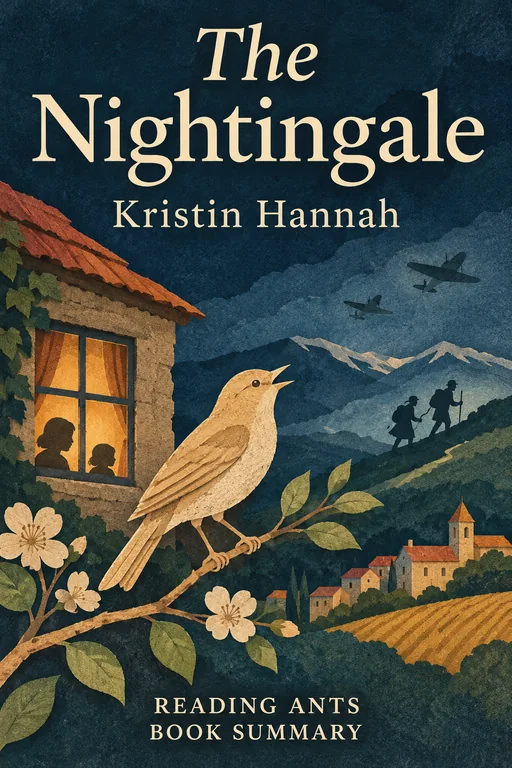
The Nightingale
Kristin Hannah
Two French sisters, the cautious Vianne and the rebellious Isabelle, take very different paths during the German occupation of France in World War II, one protecting her child and Jewish children at home, the other guiding Allied pilots over the Pyrenees.
✨ Modern Fiction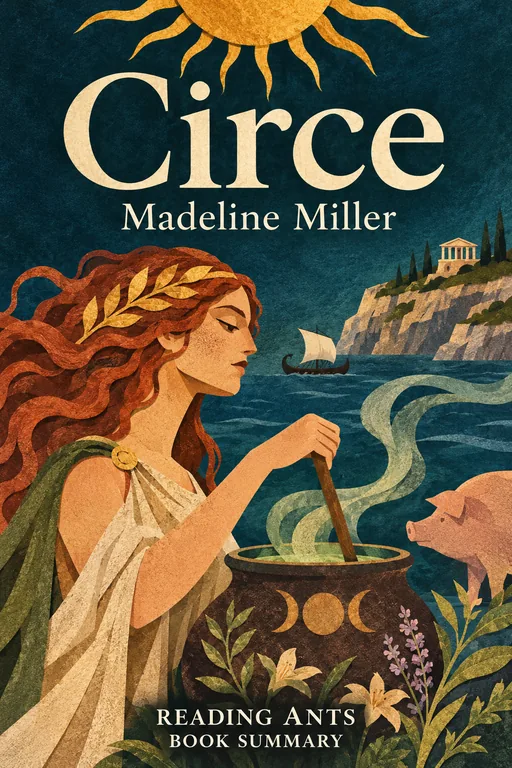
Circe
Madeline Miller
The witch Circe, a minor figure in Homer's *Odyssey*, tells her own story: born to the sun god and exiled to a lonely island, she learns the craft of witchcraft, meets famous heroes and monsters, and finally chooses mortality.
✨ Modern Fiction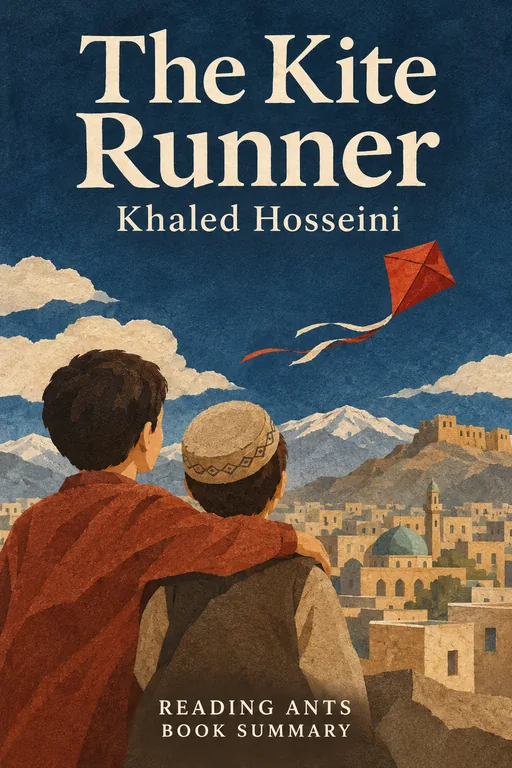
The Kite Runner
Khaled Hosseini
A wealthy boy in Kabul betrays his loyal best friend on the day of a kite tournament, and decades later, after fleeing to America, he returns to a Taliban-ruled Afghanistan to try to make things right.
✨ Modern FictionWant something different?
Pick another topic and we will show you three books to start with.