 Reading Ants
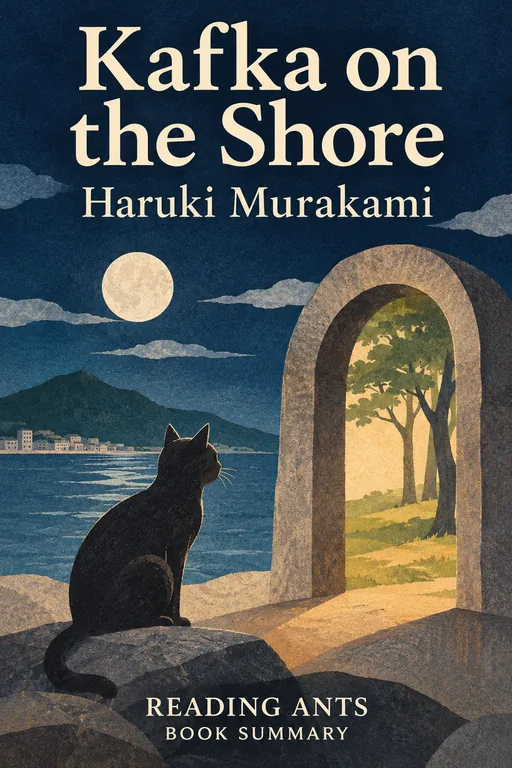
Kafka on the Shore
Original title: 海辺のカフカ
A fifteen-year-old runaway and an elderly man who can talk to cats follow two strange paths that slowly draw together, in a story about fate, memory and the doors between worlds.
Overview
Kafka on the Shore is a novel by the Japanese writer Haruki Murakami, published in 2002. It is set in Tokyo and in the town of Takamatsu on the island of Shikoku, in the early 2000s. The chapters alternate between two stories. One is about a teenager who calls himself Kafka Tamura, and who runs away from home. The other is about Nakata, an old man who lost his ability to read and think after a mysterious childhood event, but who can speak with cats. Realistic scenes mix with dreamlike ones, and many questions are never answered.
Main Characters
- Kafka Tamura: a fifteen-year-old boy, strong and lonely, who runs away from his father.
- Crow: Kafka’s imaginary alter ego, who speaks to him and urges him on.
- Nakata: an old man, who is simple and gentle, who can talk with cats.
- Hoshino: a young truck driver who helps Nakata.
- Miss Saeki: the middle-aged woman who runs a small private library.
- Oshima: the helpful, clever young man who works at the library.
- Johnnie Walker: a mysterious man who kills cats.
Full Summary
The Boy and the Prophecy
On his fifteenth birthday, Kafka leaves his home in Tokyo, where he lives with his famous sculptor father. His mother left when he was small, and took his older sister with her. His father has told him that he will one day kill his father and sleep with his mother and sister, as in the Greek myth of Oedipus. Kafka decides to run away.
On the bus to the town of Takamatsu, he meets Sakura, a friendly young woman who becomes a kind of friend to him. In Takamatsu he finds a quiet private library, which is run by Miss Saeki, and he starts to spend his days reading there. He is befriended by Oshima, who works at the library, and who helps him to find shelter.
The Man Who Talks to Cats
In the other story, Nakata is an old man who lives in Tokyo, helping to find lost cats. As a child, he was part of a group of schoolchildren who fell unconscious during the Second World War, in a strange incident in the mountains. All of them recovered, but Nakata lost his memory and his ability to read.
When he is asked to find a lost cat, he meets Johnnie Walker, a man who cuts open cats to steal their souls. Nakata, horrified and enraged, stabs him, as Walker has provoked him to do. He realizes that something has happened, and he leaves Tokyo in a daze.
The Journey
Nakata sets out on a journey, though he does not know why. He hitches a ride with Hoshino, a truck driver, who becomes his friend. The pair travel across the country, and Nakata seems to be guided by some force. Meanwhile, odd events occur: fish and leeches fall from the sky.
Hoshino takes care of the old man, and learns from him. He is drawn into the mystery, and finds that he has begun to see the world differently.
Miss Saeki
Kafka learns that Miss Saeki, who is in her fifties, had a lover in her youth, who died. She is a lonely woman, who lives with her memories. Kafka wonders whether she may be his mother, and he feels a strong attachment to her. Whether Miss Saeki is his mother, or Sakura is his sister, is never settled.
Kafka and Miss Saeki begin a sexual relationship, in which he, still a boy, comes under the spell of his fantasies. At the same time, Kafka learns that his father has been found stabbed to death in Tokyo, on a night when Kafka himself woke up with blood on his shirt and no memory of what had happened. He fears that in a dream or a trance, he may have done it.
The Other World
Kafka goes into the forest near Oshima’s remote mountain cabin, where he discovers an unreal world, a town that may be a place where the dead wait. There, he sees a young Miss Saeki, who has been waiting for him, and the soldiers who have stepped out of the war. He learns to accept what has happened, and the nature of his fate.
Nakata meets Miss Saeki and agrees to destroy her written memories, and after this she dies. Nakata and Hoshino, who is helped by a strange figure, Colonel Sanders, find a stone that serves as a doorway to the other world. They open it, and Nakata dies, as his task is done. A monstrous creature comes out of him, Hoshino kills it, and then he closes the entrance.
The Return
Kafka decides to leave the forest and return to the world. He takes a train to Tokyo. He is changed, as he has accepted his past, and his responsibility. He now sees that he will have to live with what he has done, and what has been done to him.
The book ends with Kafka sleeping on the train, as he thinks that he has become one of the toughest fifteen-year-olds in the world.
Why It Matters
Kafka on the Shore is one of Murakami’s best-known novels, and it won the World Fantasy Award in 2006. It has been translated into dozens of languages, and it helped to confirm Murakami as one of the world’s most widely read living novelists. Like many of his books, it blends everyday scenes with surreal ones, and it is full of references to music, literature and myth. It has also been adapted for the stage, and has a strong following among readers. Many of them are drawn by the way that the book mixes classical music, jazz, cats, libraries and ancient myth, and by the feeling that, even when the story cannot be solved, it gives them something to think about for a long time.
Key Takeaways
- Fate and choice interact. Kafka tries to escape a prophecy, but moves toward it.
- The past stays alive. Memory and loss shape the characters’ lives.
- Worlds overlap. The ordinary world and the strange one are close.
- Kindness matters. Nakata’s simple goodness has a power of its own.
- Growing up means facing yourself. Kafka must accept his past.
What We Can Learn
The book invites us to accept that not everything can be explained, and that mystery is part of life. We can learn to be open to strange events and to follow our intuition.
It also shows that a person who is gentle and sincere, like Nakata, can be an important force for good. And it encourages us to find our own strength when facing the pain of our past. Finally, it suggests that reading and music can be a refuge and a source of understanding.
Criticism and Counterpoints
Some readers find the plot confusing, and are frustrated by the lack of clear answers. The book’s treatment of sex, especially between a teenager and an older woman, has been criticized, as has its portrayal of women, who often seem to exist for the sake of the male characters. The violent scenes and the use of Oedipus are seen by some as shocking without being meaningful. Others feel that Murakami repeats themes found in his other books.
Who Should Read It
This book is for older readers who like strange, dreamlike stories, and who enjoy puzzles. It is long, and some scenes are explicit. Readers who want clear explanations, or who dislike surreal stories, may not enjoy it.
Want the whole book?
A summary is a taste, not the meal. Here is where to find the full book.
You reached the end 🎉
Nicely done. Mark this one as read, and we will suggest what to read next.
Read this next
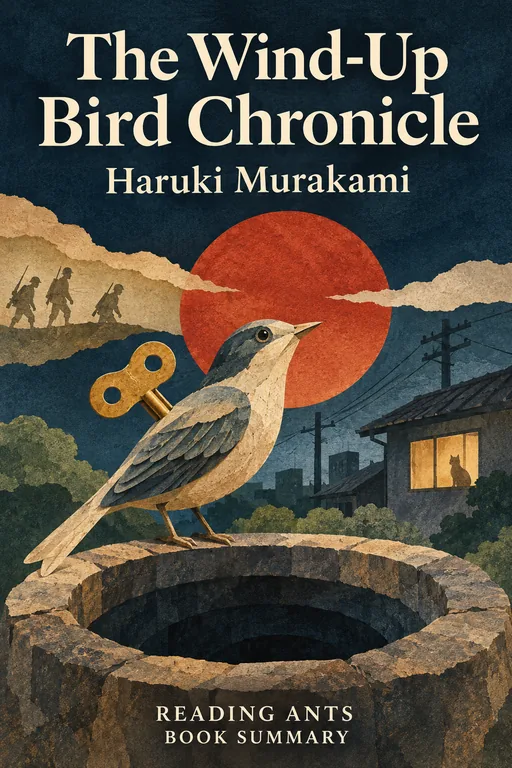
The Wind-Up Bird Chronicle
Haruki Murakami
When his cat and then his wife disappear, an ordinary, unemployed Tokyo man is drawn into a strange world of hidden wells, lost memories and Japan's forgotten wartime past.
🌍 World Literature
Norwegian Wood
Haruki Murakami
Remembering his student years, Toru Watanabe struggles between a grief-bound love for fragile Naoko and the imperfect possibility of life represented by energetic Midori.
🌍 World Literature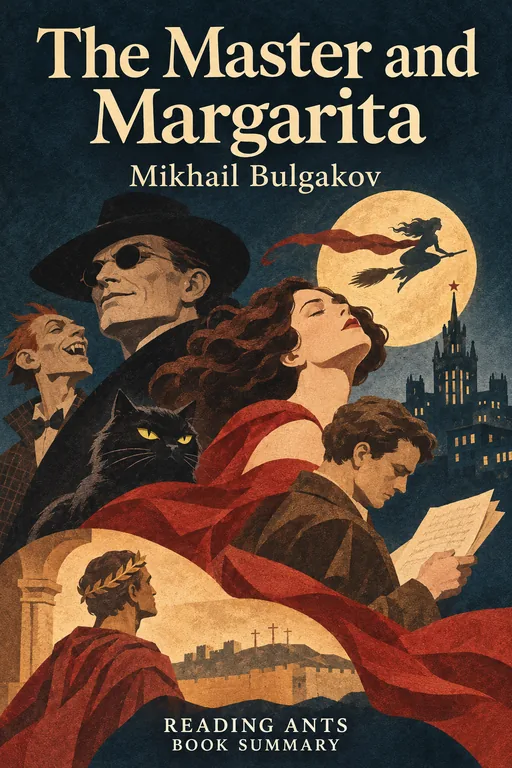
The Master and Margarita
Mikhail Bulgakov
The Devil arrives in 1930s Moscow with a cat, a fanged assistant and a naked witch, and turns the city upside down, while a persecuted writer and his devoted lover try to save a novel about Pontius Pilate from oblivion.
🌍 World Literature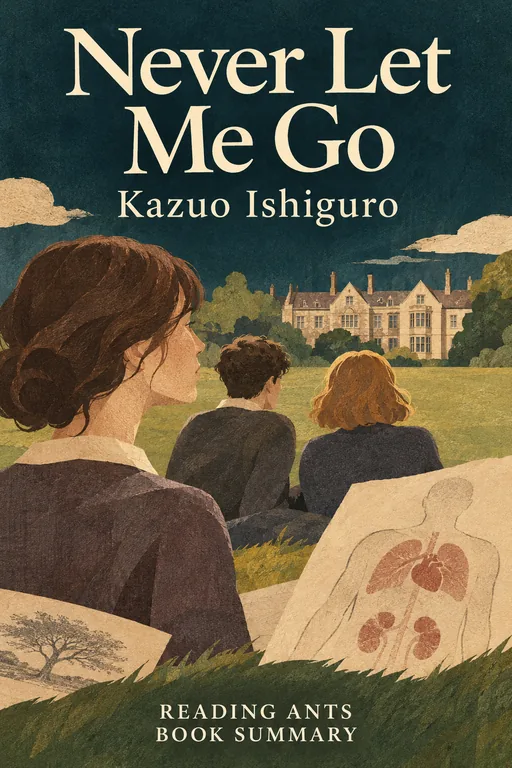
Never Let Me Go
Kazuo Ishiguro
Looking back on her childhood at an English boarding school, a young woman gradually reveals that she and her friends were created to donate their organs, and that they accept their fate without ever trying to escape.
✨ Modern Fiction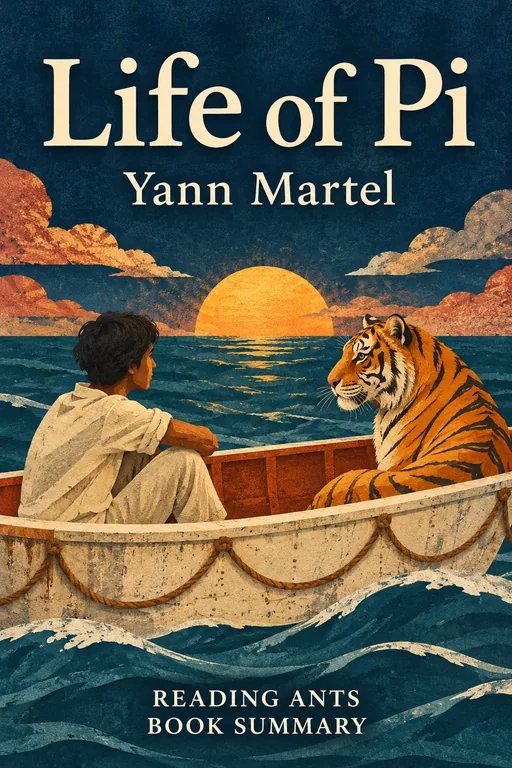
Life of Pi
Yann Martel
A teenage boy from India survives 227 days adrift in a lifeboat with a Bengal tiger, then tells two versions of what happened and asks which one we prefer to believe.
✨ Modern Fiction
The Little Prince
Antoine de Saint-Exupery
A pilot stranded in the desert meets a small boy from a tiny planet, who teaches him that the most important things in life, like love and friendship, can only be seen with the heart.
🌍 World LiteratureWant something different?
Pick another topic and we will show you three books to start with.