 Reading Ants
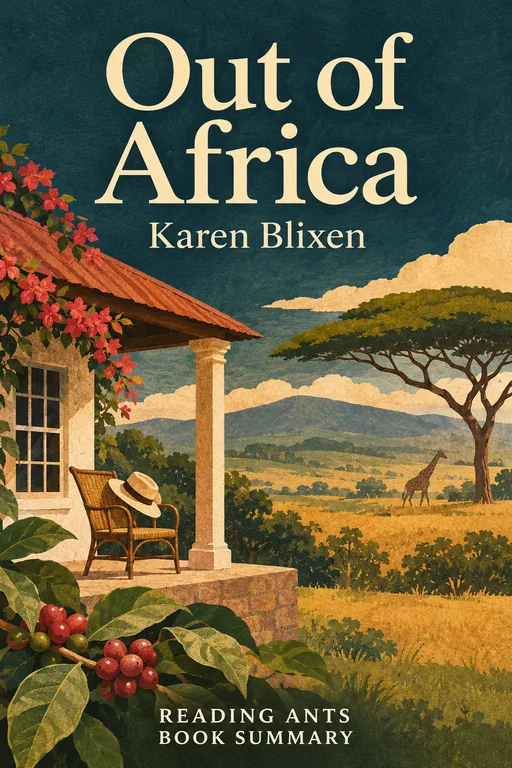
Out of Africa
Danish writer Karen Blixen, writing under the name Isak Dinesen, remembers the years, nearly two decades in all, that she spent running a coffee farm in the highlands of Kenya, and the landscape, animals and people she loved and lost.
Overview
Out of Africa is a memoir published in 1937 by Karen Blixen, who used the pen name Isak Dinesen. At the end of 1913, she traveled from Denmark to British East Africa, now Kenya, where she married her second cousin, a Swedish baron, and they started a coffee plantation near Nairobi. The marriage failed, but she stayed on to manage the farm. The book is not a day-by-day diary but a series of connected sketches, in a lyrical, reflective style, about the land, the workers and the friends that she knew. It became more widely known after a 1985 film, which also drew on other material about her life. It also reflects the attitudes of its time and of the colonial world.
Full Summary
A Farm in the Highlands
Blixen opens with a description of the farm, at a high altitude, at the foot of the Ngong Hills, where the air is clear and the light is silvery. She writes of the mornings and evenings, the skies and the seasons, and the sense that she was living in a different world, in which time passed slowly. She describes the work of the farm, the coffee trees and the machinery, and her hopes for the business. From the beginning, the book shows an intense love of the place.
The People of the Farm
Many of the people who lived and worked on the farm were from the Kikuyu community, and she describes their customs and her relations with them. She acts as a doctor and a judge, treating their illnesses and settling disputes. She tells the story of a sick boy, Kamante, whom she treated and who later became her cook. She also writes of Farah, her Somali servant and trusted manager. She admires them, and calls them proud and dignified, but she views them through the lens of a colonial landowner, and often in a patronizing way.
Animals and the Wild
The author writes with enthusiasm about the wildlife, such as lions, giraffes and antelope, and she describes going on safari. She tells of keeping a young antelope, Lulu, as a pet, who wandered in and out of the house. She also writes about hunting, which she did with skill, and with an awareness of the beauty of the animals. In an episode with lions, she shows both fear and respect. She believes that humans and animals share the land, and feels that Africa has taught her to see differently.
Friendship and Love
Blixen’s closest friend in Africa was Denys Finch Hatton, an Englishman, hunter and pilot, who would come and go from the farm. He kept his books and gramophone at her house, gave her a gramophone of her own and brought new records, and he took her flying over the land in his small plane. Their relationship was deep, though not a conventional marriage. In the evenings he liked to lie by the fire and listen while she made up long stories for him, like Scheherazade. He was independent and often absent, which brought her both joy and sorrow. The portrait of the two of them is among the most moving parts of the book.
Drought, Debt and Loss
Hard times came to the farm. It lay a little too high for coffee, there were years of drought, swarms of grasshoppers came, and coffee prices fell. Blixen tried other crops and did her best to hold on, but the debts grew, and the farm had to be sold. Around the same time, Denys died when his plane crashed, and the news was a terrible blow. She describes his burial in the hills, and the sense of an era ending. She prepared to leave, and was moved by the way that the people of the farm said goodbye.
Leaving Africa
The last part of the book deals with her departure, and her efforts for the Kikuyu families who had lived on the farm, who were given notice to leave and had to find new land. She reflects on what the years had given her: a sense of beauty and a deep love of the land. She left behind her friend’s grave, and the memory of a life that had been difficult and happy. The book closes with her departure and farewell to the land and her people, taking the memory of Africa with her.
Why It Matters
Out of Africa is a classic of twentieth-century literature, admired for its style, and it shaped the picture of Kenya for generations of readers. It brought Blixen international fame. Her descriptions of the landscape, of friendship and of loss have moved many readers. The 1985 film, which won several Academy Awards, helped to keep the story alive. At the same time, the book is also studied as an example of colonial writing, and invites reflection on how Europeans saw Africa and Africans. It remains a rich and complicated text.
Key Takeaways
- Place can shape a person. Blixen was changed by Africa.
- Love and loss go together. Her bond with Denys and his death are central.
- Humility before nature. She respects the wild and its creatures.
- Colonial perspectives are limited. The view of the African people is that of a ruling outsider.
- Writing can preserve memory. The book became a way to hold on to what she had lost.
What We Can Learn
The book invites us to look at how we see other places and people, and to be aware of our own viewpoint. Blixen’s writing teaches us to notice the details of the land, the light and the weather. Her story shows how to bear loss with dignity and to turn it into creative work. At the same time, a careful reader will ask whose voices are missing, and read African writers from the same region and period. Reading both can give a fuller picture of the times.
Criticism and Counterpoints
Many critics, especially in recent decades, say that the book romanticizes colonial life, and that its descriptions of Africans are condescending, treating them as part of the landscape or as children. Writers from Kenya and other parts of Africa have given their own accounts of the same history, which paint a different picture of land loss and forced labor. Some scholars say that the book is a shaped, literary memoir rather than a plain record, and that people in it are portrayed in a stylized way. She herself has been admired for her honesty about her own failure. The book is best read with this awareness.
Who Should Read It
This book is for readers who love lyrical memoirs and travel writing, and who can read it with an awareness of its colonial context. It is slow and descriptive rather than fast-paced. Those looking for an African perspective on the period should read it together with African authors.
Want the whole book?
A summary is a taste, not the meal. Here is where to find the full book.
You reached the end 🎉
Nicely done. Mark this one as read, and we will suggest what to read next.
Read this next
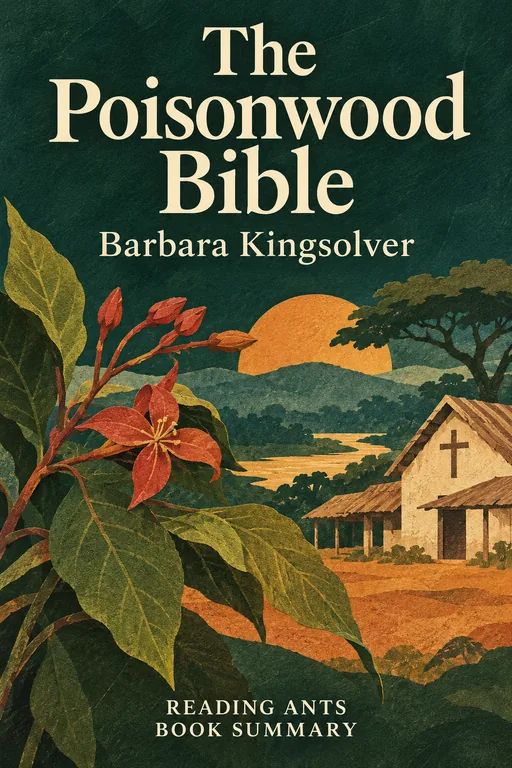
The Poisonwood Bible
Barbara Kingsolver
In 1959, an American Baptist missionary named Nathan Price drags his wife and four daughters to the Belgian Congo, where his rigid zeal and the country's turmoil change all of their lives, as told by the women of the family.
✨ Modern Fiction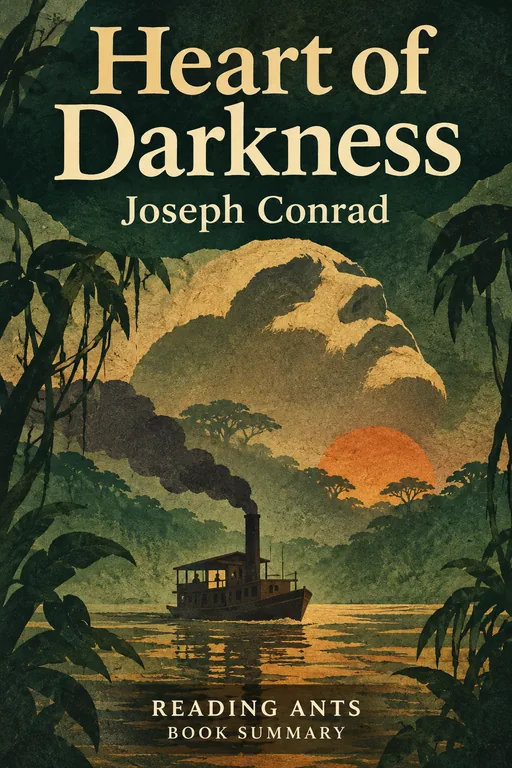
Heart of Darkness
Joseph Conrad
A sailor named Marlow tells his friends of a journey up the Congo River to find a mysterious ivory trader named Kurtz, and of the horror and moral darkness he finds at the end of it.
📜 Classics
Seven Years in Tibet
Heinrich Harrer
Austrian mountaineer Heinrich Harrer tells how, after escaping a prison camp in British India during World War II, he crossed the Himalayas into Tibet and spent nearly seven years there, about five of them in Lhasa, where he befriended the young Dalai Lama.
👤 Real Lives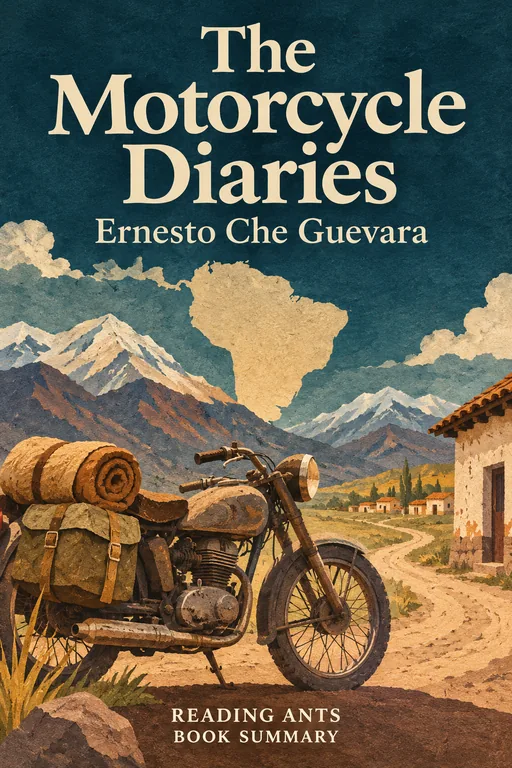
The Motorcycle Diaries
Ernesto Che Guevara
The young Ernesto Guevara, who later became known as Che, records the journey through South America that he made in 1952 with his friend Alberto Granado, a trip of adventure and humor that opened his eyes to poverty and injustice.
👤 Real Lives
Man's Search for Meaning
Viktor E. Frankl
A psychiatrist who survived the Nazi concentration camps explains that even in the worst suffering, people can choose their attitude, and that finding a reason to live is what gives us the strength to endure.
👤 Real Lives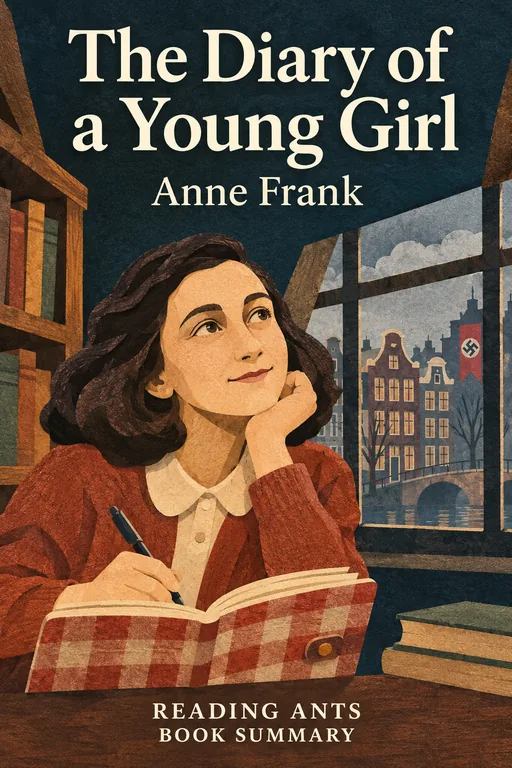
The Diary of a Young Girl
Anne Frank
A Jewish teenage girl hiding from the Nazis in a secret apartment in Amsterdam records two years of fear, family quarrels, first love and big dreams in a diary that became one of the most famous books in the world.
👤 Real LivesWant something different?
Pick another topic and we will show you three books to start with.