Refugee
Three children, in three different times and places, flee danger by sea, and their stories show the courage and the cost of being a refugee.
Overview
Refugee is a historical novel for young readers by Alan Gratz, published in 2017. It tells three separate stories in alternating chapters. Josef is a Jewish boy in Nazi Germany in 1938. Isabel is a Cuban girl in 1994, during a time of unrest and shortage. Mahmoud is a Syrian boy in 2015, in the middle of the civil war. Each child and their family must leave home and make a dangerous journey across water, in the hope of finding safety. The book is fast-paced and emotional, and it connects the experiences of refugees across generations.
Main Characters
- Josef Landau: a Jewish boy from Berlin, whose family tries to escape Nazi persecution.
- Isabel Fernandez: a spirited Cuban girl, who sails toward Florida with her family.
- Mahmoud Bishara: a Syrian boy from Aleppo, who travels with his family toward Europe.
- The families: parents, grandparents and siblings, who protect and sacrifice for the children.
Full Summary
Josef: Leaving Germany
In 1938, Josef’s life in Berlin is becoming more dangerous. On the night of Kristallnacht, Nazi soldiers invade the family’s home, and his father, Aaron, is arrested and sent to a concentration camp. Months later he is allowed to leave, but only if the family leaves Germany at once. They buy passage on the St. Louis, a ship carrying Jewish refugees to Cuba. Aaron comes out of the camp frightened and suspicious, and Josef finds himself acting like the adult of the family. On the ship the family feels safer, and Josef has his bar mitzvah, the Jewish coming-of-age ceremony.
When the ship reaches Havana, the passengers are not allowed to land. Each day the Cuban officials say “tomorrow,” and nothing changes. The ship then sails north to ask the United States to take the passengers, but that request is refused too.
Isabel: Raft to Florida
In 1994, in Havana, the Cuban economy is in crisis, and food is scarce. After riots break out, Isabel’s father, Geraldo, fears that the police will jail him again, so the family decides to flee to the United States on a homemade boat. Isabel trades her beloved trumpet for gasoline, and they set off at night with their neighbors, the Castillos. Her pregnant mother, Teresa, and her grandfather Lito come too. Police on the shore shoot at the boat, and a bullet leaves a hole in its side.
At sea, the leaking boat is nearly hit by a tanker, then caught in a storm. When the family reaches land, they find it is the Bahamas, and they must turn back. Isabel’s best friend, Iván, is killed by sharks. As Miami comes into view, a Coast Guard boat heads toward them, and Lito confesses a secret from his past. He then jumps into the water to distract the Coast Guard so that the others can reach the shore. Teresa gives birth as they near land.
Mahmoud: Fleeing Aleppo
In 2015, Mahmoud, a boy in Aleppo, has learned to stay unnoticed in order to survive. When a missile tears through his family’s apartment, they decide to escape to Germany. Mahmoud, his father, Youssef, his mother, Fatima, his younger brother Waleed and his baby sister Hana set out by car, and then on foot, toward Turkey. In Turkey, they wait many days for a smuggler’s boat to Greece, and people try to cheat them, including a boy who sells them fake life vests.
When they finally cross to Greece in a dinghy, a storm throws them into the water. Mahmoud and his mother cannot find room in a passing boat, so he asks the people on it to take Hana. The Greek Coast Guard later rescues the rest of the family, but they cannot find the baby.
Waiting and Hoping
Between the moments of danger, there are quieter scenes. Josef’s family tries to hold on to ordinary life, and the ship’s passengers hope that tomorrow will bring news. Isabel worries that she cannot count the Cuban rhythm called clave, and wonders whether she will stay connected to her Cuban roots. Mahmoud, who has learned that being invisible keeps him safe, begins to wonder whether he must be seen in order to be helped. These small moments show what each child is trying to protect.
The Dangers
In each story, there are moments when the children think that they cannot go on. Josef watches his father break down, and some passengers become so desperate that a group of men, with Josef among them, tries to take over the ship. The captain talks them down. Isabel’s boat leaks, loses its motor, and meets storms and sharks, and the people on it must make hard decisions. Mahmoud’s family is held at gunpoint by a taxi driver in Serbia, and later arrested at the Hungarian border.
Each child is tested, and each makes choices that show courage and kindness. They find that there are people who help them, and others who do not.
Endings
The stories have different endings. The St. Louis cannot land its passengers in the Americas and must return to Europe, but they are placed in several European countries. Josef’s family is resettled in France. When Germany invades France, the Nazis catch them and tell his mother she may save only one child. Josef gives himself up so that his sister Ruthie can go free. Josef and his mother die in the camps, though Ruthie lives. Isabel’s family reaches Miami, where an uncle takes them in, and she gets a new trumpet and finds she can count clave at last. Mahmoud walks out of the Hungarian refugee camp, and the other refugees follow him, on a long march to Austria. The family goes on to Germany and wins asylum. There they stay with an elderly couple, and the woman turns out to be Ruthie, Josef’s sister, who tells Mahmoud how she survived. Hana is still missing, but the family hopes to find her.
In the final chapters, the three stories echo one another, which links the lives of the children across time. The book ends on a note of hope, with a reminder that refugees are people with stories.
Why It Matters
Refugee was a bestseller, and has been widely used in schools. It brings the reality of refugees to young readers, and it shows that the experiences of people in different times and places have things in common. The book was published at a time of intense debate about refugees, and it gave many readers a more human view. It was also praised for its research, and for the author’s notes at the end, which explain the history behind each story. Many schools have chosen it as a shared class read, and it has helped students to connect the stories on the news with the history that they study, and to talk about what it means to welcome people who have lost their homes.
Key Takeaways
- Refugees are people. They leave home because they have no choice.
- Courage is shared. Each child shows bravery in a different way.
- History repeats. The problems of 1938 are echoed in 2015.
- Strangers can help. Kindness is found in unexpected places.
- Family gives strength. Each child draws on the love of relatives.
What We Can Learn
The book helps us to see refugees as individuals, with hopes, fears and families, instead of as a faceless group. It encourages us to think about how we treat newcomers in our own communities, and how our countries respond to people in need.
It also reminds us to learn from history, so that we do not repeat past failures. Finally, it shows that even young people can be brave and resourceful, and that small acts of kindness matter. A reader can ask what they would pack, whom they would trust, and what they would hope for, if they had to leave in a hurry, and then think about how they might welcome a new student who has made such a journey.
Criticism and Counterpoints
Some readers find the book’s structure, with its quick jumps among three stories, a little confusing, and the cliffhanger style repetitive. Others feel that the happy coincidences that link the stories are too neat. Some critics say that the book simplifies complex histories, and that the characters are not deeply developed. A few parents may find the violence upsetting for younger readers. Still, many teachers find it a useful starting point for discussion.
Who Should Read It
This book is for readers from about ten years old, and is a good choice for class reading. It is fast and gripping. Younger or sensitive readers may need support with the scenes of danger and death.
Want the whole book?
A summary is a taste, not the meal. Here is where to find the full book.
You reached the end 🎉
Nicely done. Mark this one as read, and we will suggest what to read next.
Read this next
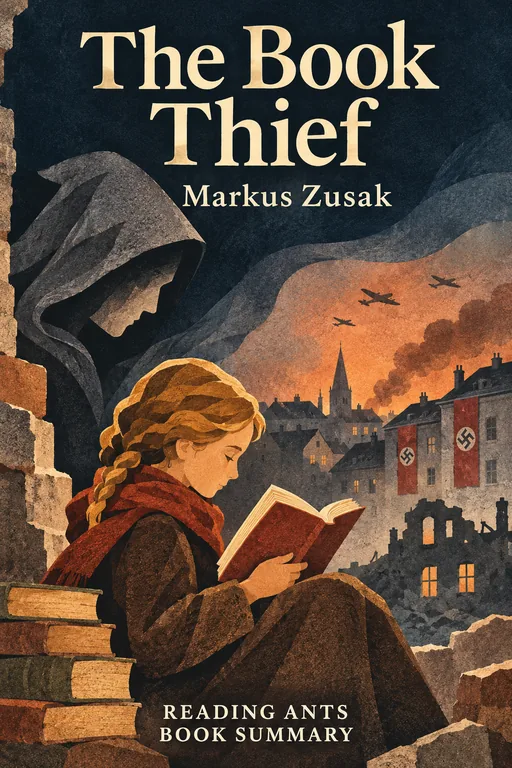
The Book Thief
Markus Zusak
Death narrates how a foster child in Nazi Germany steals books, learns the power of words and forms loving bonds that war eventually destroys.
🎒 Young Adult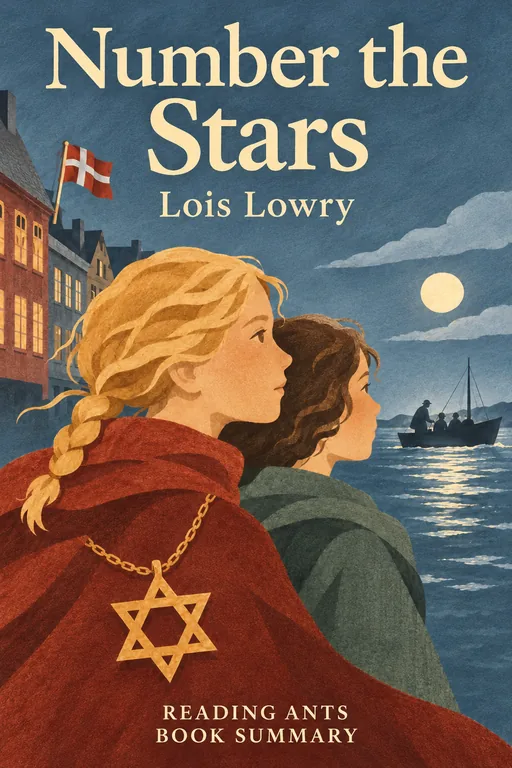
Number the Stars
Lois Lowry
In 1943, a ten-year-old Danish girl named Annemarie helps her Jewish best friend Ellen escape from Nazi-occupied Copenhagen by pretending that Ellen is her sister and by helping with a daring rescue.
🧸 Children's Books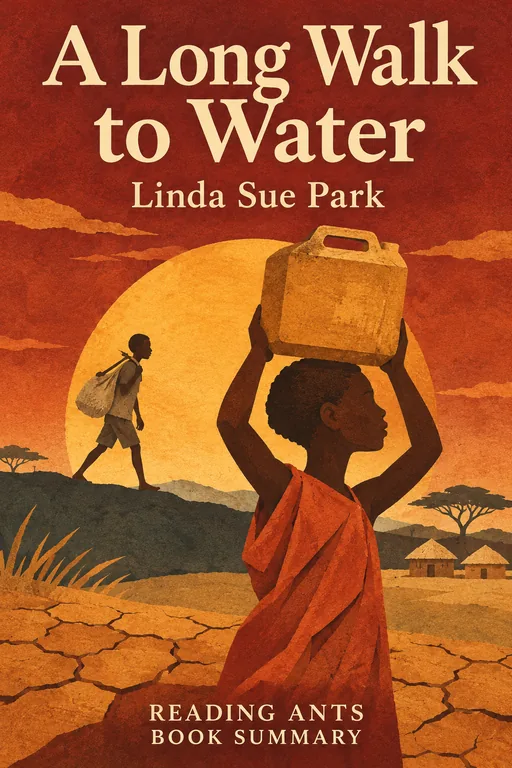
A Long Walk to Water
Linda Sue Park
Two young people in Sudan, twenty-three years apart, are linked by their search for water, in a story inspired by the real life of Salva Dut.
🎒 Young Adult
Inside Out and Back Again
Thanhha Lai
In short poems, a ten-year-old Vietnamese girl named Hà describes fleeing Saigon in 1975, living in a refugee camp and starting a new life in Alabama, where she learns a strange new language and a new way of life.
🧸 Children's Books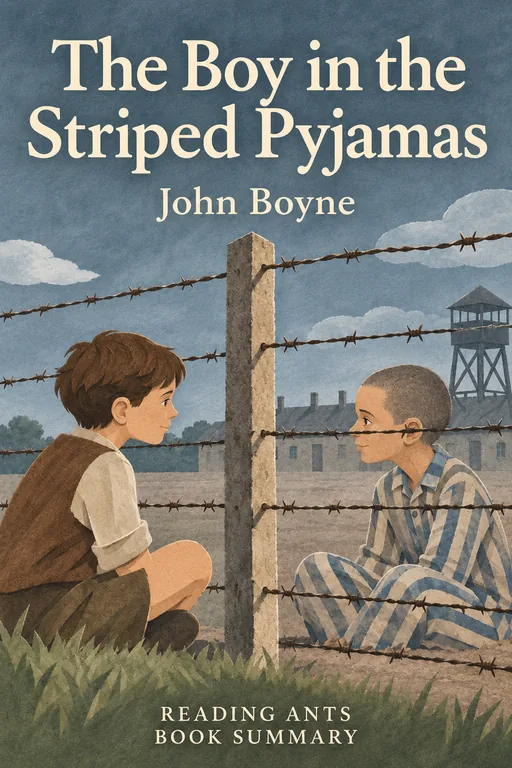
The Boy in the Striped Pyjamas
John Boyne
The nine-year-old son of a Nazi commandant befriends a Jewish boy on the other side of a camp fence, without understanding where he is, and their innocent friendship ends in tragedy.
🧸 Children's Books
The Giver
Lois Lowry
In a perfectly controlled community with no pain, choice or color, a boy about to turn twelve is chosen to hold the memories of the past, and discovers the terrible price his people pay for their safety.
🎒 Young AdultWant something different?
Pick another topic and we will show you three books to start with.