 Reading Ants
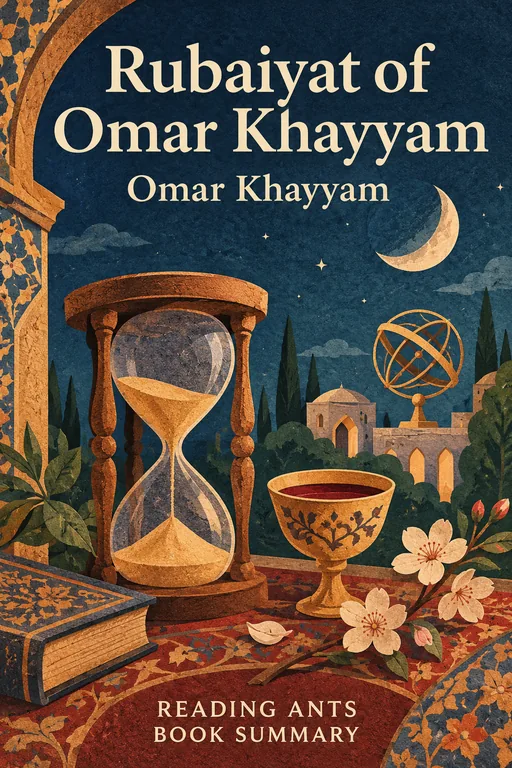
Rubaiyat of Omar Khayyam
Original title: رباعیات خیام
In short four-line poems, a Persian scholar-poet reflects on how brief life is, how little we can know about God or the future, and why we should enjoy the present moment.
Overview
The Rubaiyat (“quatrains”) is a collection of short poems attributed to Omar Khayyam, a Persian mathematician, astronomer and poet who lived from about 1048 to 1131. He is better known in his own time for his mathematics and the reform of the calendar than for poetry. Scholars disagree about how many of the quatrains are really his, since many verses were added by others over the years. The collection became famous in the English-speaking world through Edward FitzGerald’s free, loose translation, first published in 1859, which was not well known at first but became hugely popular. Each poem has four lines, and the poems are linked by themes rather than a story: time, death, wine, doubt and the beauty of the moment.
Main Characters
The poems have no plot or characters in the usual sense. The speaker is a thoughtful, skeptical observer who addresses a friend or “Saki,” the cupbearer, and thinks about the mystery of life. Other figures include the Potter, an image of God who shapes human beings from clay, the Cupbearer who pours wine, and the Beloved who shares the moment. Recurring images are the Rose and the Nightingale, the Wine and the Cup, the Sultan’s palace left in ruins, and the Moving Finger that writes and cannot be called back.
Full Summary
Time and the Passing Day
Many of the quatrains begin with morning, as a call to wake up and enjoy the day. The speaker compares life to a caravan that stops for a short while at a place before moving on, and to a snow that falls on the desert and is gone. Palaces where kings once feasted are now the home of lions and lizards, and the great Jamshid, a legendary Persian king, is only a name. The poems repeat that time keeps moving, and nothing, however grand, can hold back the passing hours.
The Question of the Universe
The speaker asks questions about where we come from and where we go, and finds that wise men and holy books give no clear answers. He says that he once visited many scholars, and heard them talk, but he left by the same door he came in. He imagines that the heavens are a bowl turned over us, under which we crawl, and that we cannot ask the sky for help, since it is as helpless as we are. The poems are not simple unbelief, but a humble admission of how little we know.
The Potter and the Clay
One of the best-known sets of images is the story of the pots. The speaker pictures a visit to a potter’s shop, where the clay vessels seem to murmur and question the maker. Some say that they are shaped without reason, and some wonder why they must be broken. The pots argue among themselves about the Potter, who stands for God, and the poem gives no clear answer; the image suggests that humans are made from earth, and return to it, and that we should not blame the maker or expect to understand.
Wine and Delight
Wine is a major theme, though readers differ on whether it is real wine, a symbol of spiritual joy or both. The speaker urges the cupbearer to fill the cup, and says that a loaf of bread, a jug of wine and a beloved in a quiet place would make a wilderness a paradise. He calls for pleasure not out of carelessness but because he believes that regret over the past and fear of the future steal the one thing we have, the present.
Death and What Follows
Some of the quatrains meditate on death with calm and pity. The speaker sees the graves of past generations, the dust of those who were once beautiful, and thinks that the clay of the earth may once have been a face. He says that he does not fear what he cannot know, and urges kindness while we are here, since no one has come back to tell us what is beyond.
A Quiet Ending
In FitzGerald’s adaptation, the final poems return to the garden, the rose and the cup. The speaker imagines the moon rising again and again over the garden and looking for him in vain, and he asks the one he loves, when passing among the guests, to turn down an empty glass at the place where he once sat, as though a friendship could cross the centuries. The ending is gentle and humane, and suggests that the best response to a mysterious world is to be generous and attentive to the present.
Why It Matters
The Rubaiyat is among the best-known poems in the world, and FitzGerald’s version is a classic of English literature in its own right, though it is more an adaptation than a faithful translation. It has been translated into many languages, set to music and illustrated by artists. Lines from it, such as the image of the moving finger writing, are quoted widely in English.
It also stands for a tradition of Persian poetry that values doubt, beauty and moderation. In Iran and elsewhere, Khayyam is admired as a poet, a scientist and a free thinker, and his tomb in Nishapur is visited by many.
Key Takeaways
- Life is short. Time passes, and so do kings and palaces.
- We cannot know everything. The poems accept uncertainty without anger.
- Enjoy the present. Pleasure, friendship and beauty are real goods.
- Do not trust empty promises. Religious and political claims are questioned.
- Be kind. Compassion is a fitting response to mortality.
What We Can Learn
The poems encourage us to value the present day without ignoring how brief it is. In a time when many people worry constantly about the future, their calm invitation to notice a rose or a friend’s voice can be a relief.
They also teach humility about big questions. Khayyam’s speaker does not claim certainty, and his honesty can help us to listen to people who think differently without feeling threatened.
Finally, they show that doubt and gentleness can go together. A person can be skeptical and still be warm, generous and attentive to others.
Criticism and Counterpoints
Scholars argue that FitzGerald’s version is a creative recasting that adds ideas from Victorian England, and that it gives a misleading picture of Khayyam as a simple hedonist. Many quatrains are doubtful in authorship, and some interpreters see in the wine imagery a Sufi meaning. Others find the message of enjoying the day shallow or irresponsible.
Some religious readers find the poems disrespectful, and in parts of the Muslim world they have been controversial. Translations differ widely, from FitzGerald’s flowing verses to more literal versions, so readers may wish to compare several.
Who Should Read It
This book suits teenagers and adults. The poems are short and can be read in any order, in a few minutes. A modern edition with notes explaining the images, or a comparison of several translations, is helpful.
Want the whole book?
A summary is a taste, not the meal. Here is where to find the full book.
You reached the end 🎉
Nicely done. Mark this one as read, and we will suggest what to read next.
Read this next
Masnavi
Rumi
Rumi's long Persian poem uses stories, jokes and parables to teach that the soul is separated from its source and is happiest when it returns to it through love.
🎭 Epics, Drama & Poetry
Shahnameh
Ferdowsi
Ferdowsi's vast Persian epic tells the history of Iran from the creation of the world through legendary kings and heroes to the Arab conquest, with the tragic story of the hero Rostam at its heart.
🎭 Epics, Drama & Poetry
The Bhagavad Gita
Vyasa
On the eve of a great battle, the warrior Arjuna despairs, and the god Krishna, serving as his charioteer, teaches him about duty, the soul, selfless action and devotion.
🕊️ Philosophy & Religion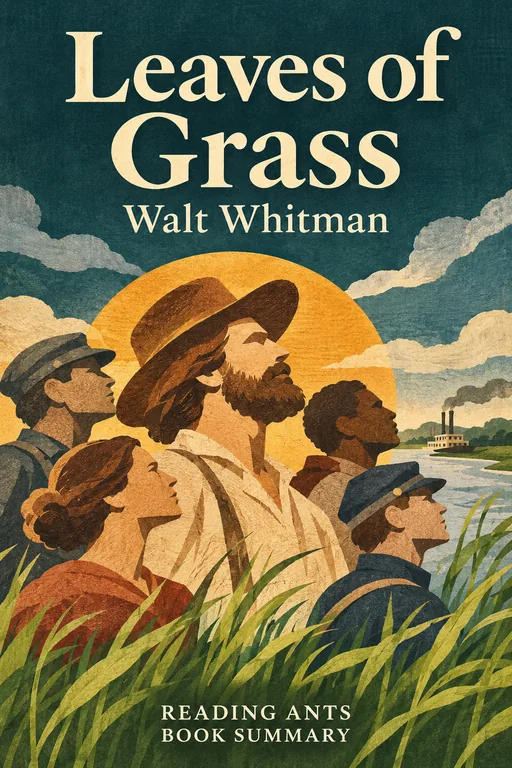
Leaves of Grass
Walt Whitman
Walt Whitman's lifelong book of free-verse poems celebrates the self, the body, democracy, nature and ordinary Americans, in a bold new voice that changed poetry.
🎭 Epics, Drama & Poetry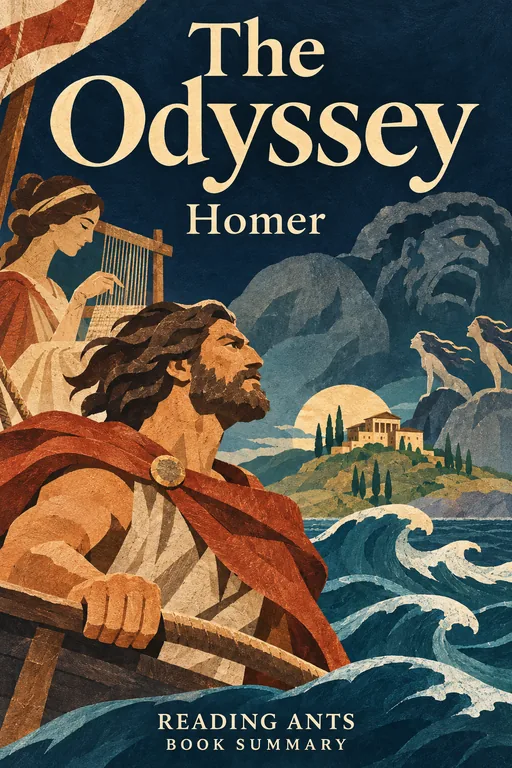
The Odyssey
Homer
After the Trojan War, the clever hero Odysseus struggles for ten years against monsters, gods and temptations to return home to his faithful wife and son, then must win back his house from the men trying to steal it.
🎭 Epics, Drama & Poetry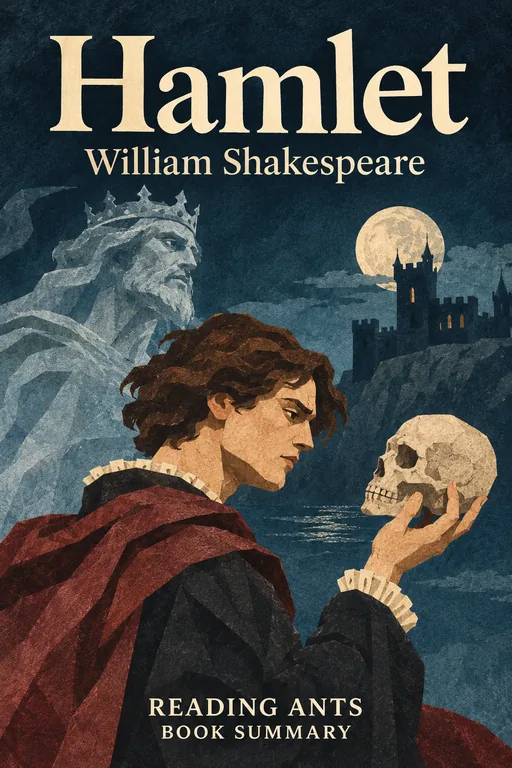
Hamlet
William Shakespeare
A grieving prince of Denmark learns from his father's ghost that his uncle murdered the king to take the throne, and his struggle to decide whether and how to take revenge leads to madness and death.
🎭 Epics, Drama & PoetryWant something different?
Pick another topic and we will show you three books to start with.