The Overcoat
Original title: Шинель
A poor, humble clerk in St. Petersburg, who is mocked by his colleagues, saves for years to buy a new overcoat, which brings him joy and then brings his ruin, and his ghost takes a strange revenge.
Overview
The Overcoat is a short story by the Russian writer Nikolai Gogol, first published in 1842, in the third volume of Gogol’s collected works. That volume is dated 1842, though it only reached bookshops in January 1843. It is set in the capital, St. Petersburg, in the world of low-ranking government clerks, and it is a mixture of comedy, pathos and the supernatural. It has had a great influence on Russian literature. A famous line says that Russian realist writers all came out from under Gogol’s overcoat; it is credited to the French critic Eugène-Melchior de Vogüé and is often misattributed to Dostoevsky. The story is brief, and it is a study of poverty, loneliness and the dignity of a small man.
Main Characters
- Akaky Akakievich Bashmachkin: a lowly copy clerk, quiet, diligent and content with his work.
- Petrovich: a one-eyed, hard-drinking tailor, who makes the overcoat.
- The clerks: Akaky’s colleagues, who tease him.
- The Significant Person: a newly promoted, self-important official, who rebukes Akaky.
- The thieves: a group of mustached men who steal the coat.
- The ghost: the dead clerk’s spirit, who takes coats from people near a St. Petersburg bridge.
- The narrator: a wry voice, who tells the story with irony and pity.
Full Summary
A humble clerk
Akaky Akakievich Bashmachkin is a minor government clerk in St. Petersburg, whose job is to copy documents. He loves copying, finding in it a little world of his own, and he works late into the night, with no ambition or social life. He is balding and poorly dressed, and nobody in the office pays him any attention. His younger colleagues make fun of him, dropping scraps of paper on his head and telling him it is snow, and he only asks them gently to leave him alone. His plea moves one young man, newly arrived at the office, who suddenly sees the cruelty of what he and the others are doing.
The old coat
One bitterly cold winter, Akaky notices that the cold is getting through his threadbare overcoat, which his colleagues have long mocked. He takes it to Petrovich, the one-eyed tailor, who looks at it and says that it is beyond repair, and that he must buy a new one. The price he names, well over a hundred roubles, is far more than Akaky can imagine. Akaky already has some savings, and he decides to save the rest, giving up his evening tea, using less candle and fuel, and sending out less laundry, and walking carefully so as to spare his shoes. His dream of a new coat gives him a purpose, and he becomes more alive.
The new coat
A bonus from work, larger than he expected, helps Akaky at last to have enough, and he goes with Petrovich to pick the cloth, with a collar of cat fur because marten was too expensive. Petrovich brings the finished coat early one morning, and when Akaky puts it on, he feels transformed. At the office, his colleagues crowd round to admire it, and congratulate him, and, for the first time, they take notice of him. They insist that he should hold a party to celebrate, and a senior official, whose birthday it happens to be, invites them all to his own house instead. Akaky, shy and a little confused, goes, and for the first time has a taste of society and champagne.
The theft
On the way home from the party, late at night, in a huge, empty square, a group of men seize Akaky, and take his coat. When he runs to a watchman, the man says that he thought they were friends. Akaky’s landlady sends him to a senior police official, who asks him why he was out so late, and in what company, and does little to help. Some colleagues take up a collection for him, but it raises very little. One of them suggests that he should appeal to a Significant Person, a high-ranking official, who might help. Akaky, though timid, goes, hoping that the powerful man will use his influence to recover the coat.
The Significant Person
The Significant Person, who is newly promoted, and eager to show his importance, keeps Akaky waiting while he chats with an old friend, and then receives him with the friend present. When Akaky explains, he is given a loud, severe lecture about the proper way to make a petition, and the man’s tone terrifies him so much that he nearly faints. Akaky staggers out into a stormy day, without an overcoat. He catches a severe chill, and, the next day, falls into a fever. He rants in delirium, about the thieves and the grand official who scolded him, and dies, with no one at the office knowing until days later, leaving only a few poor belongings.
The ghost
Soon after, rumors spread that a ghost in a clerk’s uniform is haunting the area near a bridge in St. Petersburg, stealing overcoats from passers-by of every rank, and the police cannot catch him. The Significant Person, who has felt some pangs of guilt, is riding home one night after a cheerful evening when the ghost seizes him by the collar, and demands his coat. Terrified, he hands it over, and he becomes a little less harsh to his subordinates afterward. After this, the ghost is not seen again, as though satisfied. The story ends with a slightly comic note, as another ghost, taller and with a huge mustache, is glimpsed in the dark near another bridge.
Why It Matters
The Overcoat is one of the most influential short stories in world literature, and it was a model for later Russian writers, including Dostoevsky. It gave a voice to a figure that was rarely noticed in literature, the poor, low-ranking clerk, and treated him with both humor and compassion. The shift in tone from satire to sadness to the supernatural has been much admired. The story also comments on bureaucracy, social rank and the way that people judge one another by clothes and status. It remains widely read and adapted.
Key Takeaways
- Dignity belongs to everyone. Akaky deserves respect, though he is poor.
- Possessions can transform. The coat changes how others see him.
- Bureaucracy can be cruel. The system ignores his plight.
- Pettiness hurts. Casual mockery and rudeness do damage.
- Justice may be strange. The ghost provides a kind of revenge.
What We Can Learn
You can learn from Akaky’s story to treat people with kindness, especially those who seem insignificant, and to be careful about the way that we use power over others. The story also shows how easily people are judged by their appearance, and how much a small thing can matter to someone with little. Try to notice the people around you who are often overlooked, and think about how you can treat them with respect. The humor of Gogol’s narration invites us to see both the absurd and the sad.
Criticism and Counterpoints
Some readers find the ghostly ending out of keeping with the realistic story, and puzzling in its tone, and some think that the narrator’s irony makes Akaky seem foolish, not worthy of pity. Others note that Gogol was both mocking and sympathetic, and that critics have long debated which side prevails. Some modern readers feel that the story is too simple in its treatment of bureaucracy, and that the characters, like the clerks, are types. Because it was written in the 1840s, certain references to the ranks and customs of the time may need notes.
Who Should Read It
This book is for readers from about twelve who enjoy classic short stories, satire and Russian literature. It is short and can be read in less than an hour. Readers who like it may go on to Gogol’s Dead Souls, or to Dostoevsky’s early stories.
Want the whole book?
A summary is a taste, not the meal. Here is where to find the full book.
You reached the end 🎉
Nicely done. Mark this one as read, and we will suggest what to read next.
Read this next

Dead Souls
Nikolai Gogol
A smooth-talking traveler roams the Russian provinces buying the names of dead serfs, and the landowners who sell them reveal how foolish and greedy people can be.
🌍 World LiteratureBartleby, the Scrivener
Herman Melville
A Wall Street lawyer hires a quiet copyist who, one day, begins to answer every request with the polite refusal that he would prefer not to, and the lawyer's kindness and bafflement fail to save him.
📜 Classics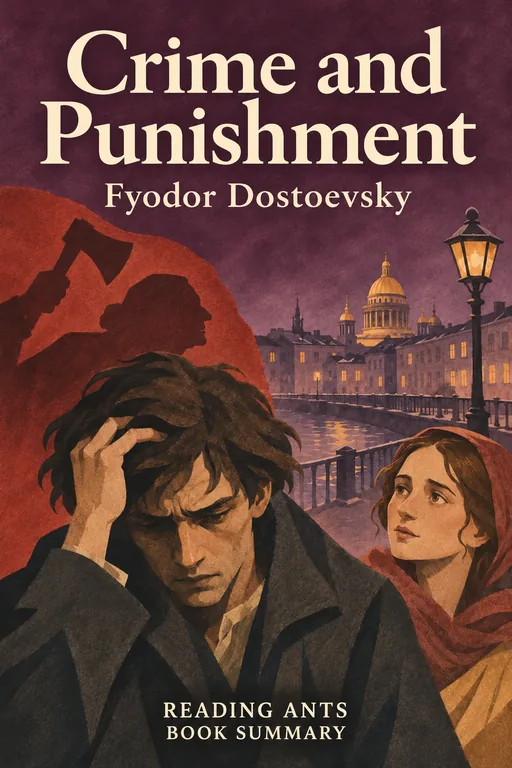
Crime and Punishment
Fyodor Dostoevsky
A poor former student in St. Petersburg murders an old pawnbroker to prove he is an extraordinary man above ordinary morality, then is tormented by guilt until love and confession offer him a path to redemption.
🌍 World Literature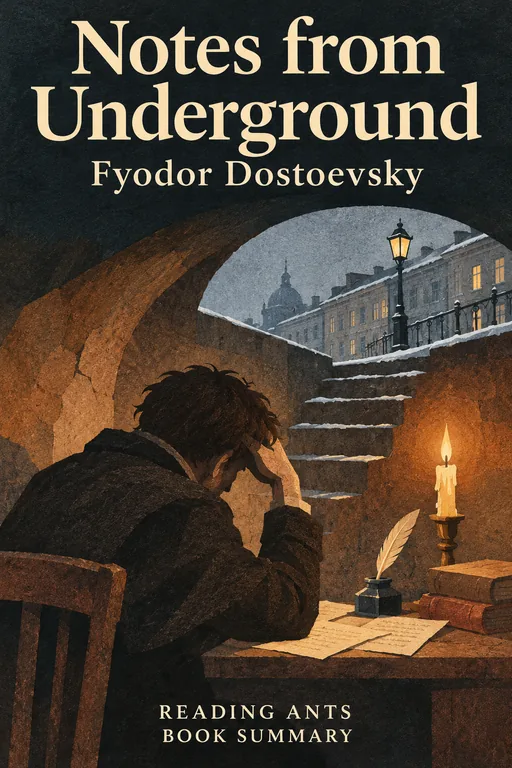
Notes from Underground
Fyodor Dostoevsky
A bitter, lonely former clerk who lives in a squalid underground existence writes an angry confession about his own spite, his contempt for the world and a humiliating episode from his past.
🌍 World Literature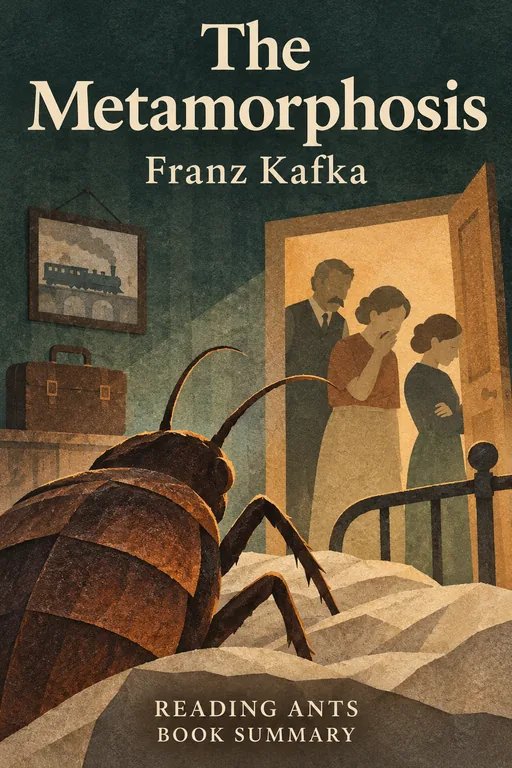
The Metamorphosis
Franz Kafka
A hardworking traveling salesman wakes one morning to find himself transformed into a monstrous insect, and his family's love for him slowly turns to disgust and neglect.
🌍 World Literature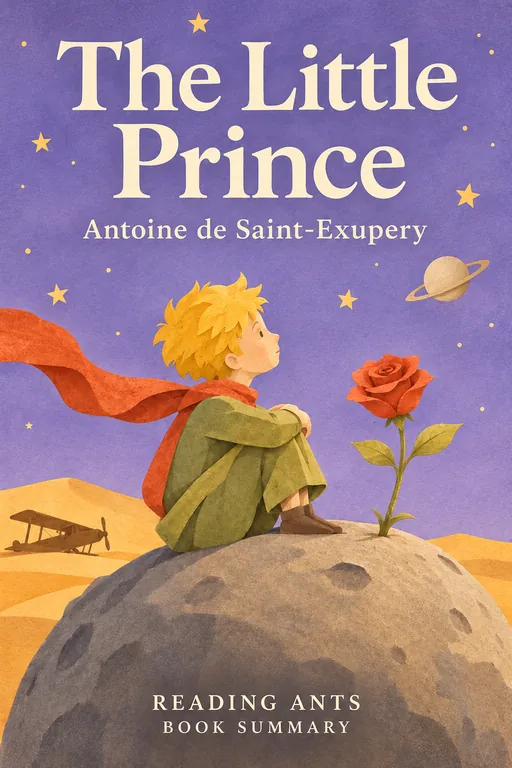
The Little Prince
Antoine de Saint-Exupery
A pilot stranded in the desert meets a small boy from a tiny planet, who teaches him that the most important things in life, like love and friendship, can only be seen with the heart.
🌍 World LiteratureWant something different?
Pick another topic and we will show you three books to start with.