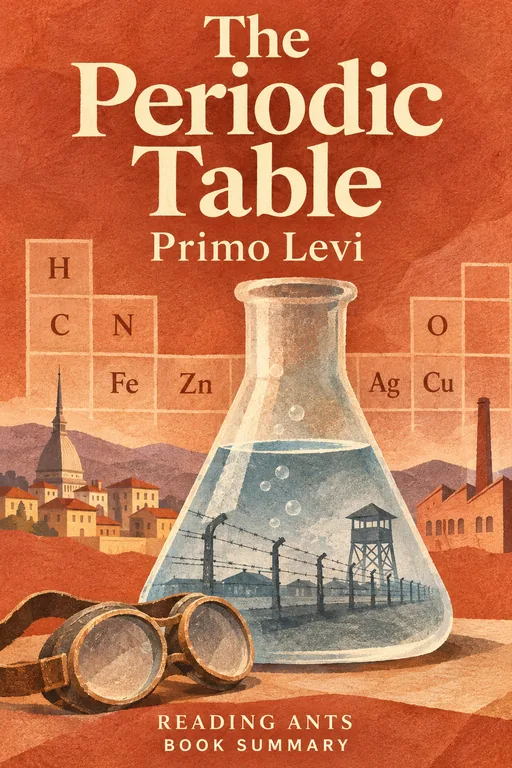
The Periodic Table
Original title: Il sistema periodico
Chemist and writer Primo Levi tells twenty-one short stories, each named after a chemical element, that mix memoir, fiction and reflection to explore his life as a chemist, a Jew in fascist Italy and a survivor of Auschwitz.
Overview
The Periodic Table was published in Italian in 1975 by Primo Levi, who worked as an industrial chemist and became a major writer after surviving the Holocaust. The book is made up of twenty-one chapters, each named for an element, such as hydrogen, zinc, iron, nitrogen and carbon. Some chapters are autobiographical, telling of Levi’s family, his studies, his work and his time in the camp, while others are imaginative tales. Chemistry is the lens through which he looks at life, matter and human character. In 2006, the Royal Institution of Great Britain named it the best science book ever written.
Full Summary
The chapters follow a broad time order, from Levi’s ancestry and boyhood, through his student years under fascism, the Resistance and Auschwitz, to his postwar work as an industrial chemist. Two chapters, “Lead” and “Mercury,” are imaginative tales that Levi wrote before his capture, and a few others, such as “Sulfur” and “Titanium,” appear to be invented.
1. Family and boyhood: Argon, Hydrogen and Zinc
The idea: Levi opens with “Argon,” named for the inert gas, and describes his Piedmontese Jewish ancestors and their dialect. Their quiet, withdrawn way of life, which included an uncle who stayed in bed for more than twenty years, serves as a metaphor for inertness. In “Hydrogen,” two boys experiment with electrolysis, and Levi’s idealism is set against the practical outlook of his boyhood friend Enrico. In “Zinc,” a university laboratory exercise shows that pure zinc resists acid while impure zinc dissolves, and Levi uses the contrast to reflect on purity and impurity.
In real life: Sometimes a little imperfection is what makes something happen.
2. Student years under fascism: Iron, Potassium and Nickel
The idea: In “Iron,” set when Levi is a young chemistry student in Turin and the racial laws have come into force, his friend Sandro takes him on mountain walks. Sandro, the son of a family of peasant blacksmiths, embodies the strength Levi associates with iron, and he later dies as a partisan. In “Potassium,” a scrap of the metal catches fire in the laboratory, because Levi expected it to behave like sodium, and he learns to distrust things that seem nearly the same. The chapter also reflects on the way that many Italian Jews refused to look at the danger around them. In “Nickel,” Levi is hired to extract nickel from the waste of an asbestos mine, and he succeeds, but he later realizes that the metal might have ended up in weapons.
In real life: Things that look almost the same can behave very differently.
3. Resistance and the camp: Gold and Cerium
The idea: In “Gold,” Levi is captured after joining the Resistance, and held in a cold cell in Aosta. There he meets a fanatical Fascist, and also a smuggler from a family of gold panners whose free life he envies. In “Cerium,” set in Auschwitz, Levi and his friend Alberto steal rods of an iron and cerium alloy from the factory laboratory, and make them into lighter flints, which they trade for food. Alberto disappears on a death march shortly before the liberation of the camp. The element becomes a means of survival, and Levi’s chemistry helps him in a literal way.
In real life: A bit of knowledge can sometimes change what is possible in a desperate time.
4. Two ways of looking back: Vanadium and Chromium
The idea: In “Vanadium,” about twenty years after the war, Levi, who works in a paint factory, receives a letter about a defect in a varnish, and realizes that the sender is Dr. Müller, who had been a German supervisor in the laboratory at Auschwitz. Their strange correspondence includes a request for forgiveness from the German, alongside what seems to be a denial of what happened, and Levi reflects on how inadequate any such confrontation is. “Chromium” is lighter. Levi adds an ingredient to a varnish formula as a temporary fix, and company bureaucracy keeps it there for years.
In real life: Meeting someone from a painful past can raise questions that have no easy answers.
5. Work and imagination: Phosphorus, Nitrogen, Tin and the fables
The idea: Many chapters on Levi’s working life are comic and inventive. In “Phosphorus,” he works in a laboratory in Milan, investigating a doubtful claim that phosphorus can treat diabetes, and he recalls a painful episode with a woman he loved. In “Nitrogen,” he tries to make cosmetics from hen-house droppings, and concludes that the origin of matter does not decide what it is good for. In “Tin,” he and his friend Emilio run a failed home laboratory making stannous chloride. “Lead” and “Mercury” are fables, the first about a primitive metallurgist’s family and the second about settlers on a remote island. These stories show the humor and ingenuity of a young chemist, and the pleasure of work.
In real life: Solving a puzzle at work can bring great satisfaction, even in an odd place.
6. Matter, memory and the final story: Carbon
The idea: The last chapter, “Carbon,” follows a single carbon atom through limestone, the air and living things, until it ends up in the writer’s brain, where it helps to guide his hand to make the final mark of the book. It expresses Levi’s belief in the unity of matter and life, and the cycles that connect all things. The ending is a celebration of the wonder of existence, in contrast to the horror that is the shadow of the book.
In real life: The atoms in your body have been part of many other things and living beings.
Why It Matters
The Periodic Table is regarded as one of the finest books to join science and literature, and one of Levi’s best. It shows that chemistry can be a source of metaphors and meaning, and that scientific habits, such as curiosity and precision, can shape a writer’s style. The book also provides an indirect and humane perspective on the Holocaust, and on the experience of a Jewish chemist. It is widely read, and in 2006 the Royal Institution voted it the best science book ever written, which gave it a new audience.
Key Takeaways
- Chemistry is a lens on life. Elements give metaphors for character and fate.
- Imperfection can be necessary. Impurity helps reactions to occur.
- Knowledge can save. In the camp, Levi’s training helped him to survive.
- Memory and matter are linked. The cycle of atoms joins all life.
- Dignity and curiosity persist. Work and wonder survive even dark times.
What We Can Learn
You can use the book to look at everyday things, such as a piece of metal, a lipstick or a cup of milk, and ask what they are made of. Notice how the work you do can reflect your values and curiosity. Be open to the stories of survivors, and to the complexity of memory. Reflect on how the atoms in your body connect you to the rest of the world. And think about how science and the humanities can talk to each other. Reading it with a teacher or a friend can help with the heavier chapters.
Criticism and Counterpoints
Some readers say that the book’s structure, with its links to the elements, is loose, since sometimes the element is central to the story and sometimes it is only a tag for a memory. Others note that it blends fact and fiction, and that this can be confusing for those who want a straightforward memoir. A few critics find that the chapter about Auschwitz and the German chemist is open-ended, and leaves moral questions unresolved. Some readers who know If This Is a Man may expect more about the camps. Most find that the subtlety is a strength.
Who Should Read It
This book is for readers who love literature, science and memoirs, and who like thoughtful, stylish writing. The chapters are short and can be read separately. Those who are looking for a conventional account of the Holocaust should begin with Levi’s If This Is a Man.
Want the whole book?
A summary is a taste, not the meal. Here is where to find the full book.
You reached the end 🎉
Nicely done. Mark this one as read, and we will suggest what to read next.
Read this next
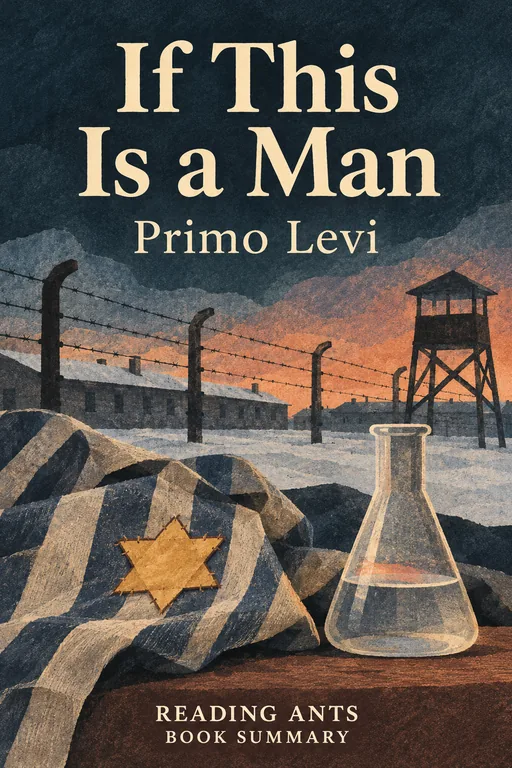
If This Is a Man
Primo Levi
Primo Levi, an Italian Jewish chemist, describes with clarity and restraint his eleven months as a prisoner in the Auschwitz camp, and asks what it means to remain human when everything is taken from you.
👤 Real Lives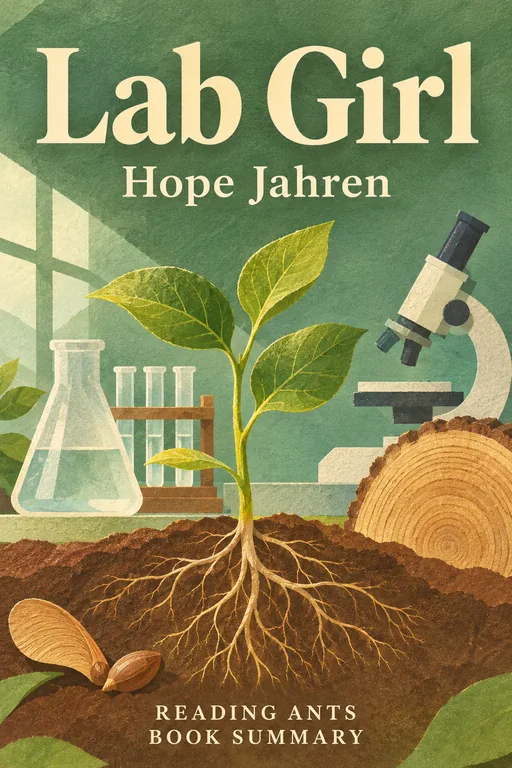
Lab Girl
Hope Jahren
Geobiologist Hope Jahren interweaves the story of her life as a scientist, with its struggles and her deep friendship with her lab partner Bill, with lyrical chapters on how plants live, grow and survive.
🔬 Science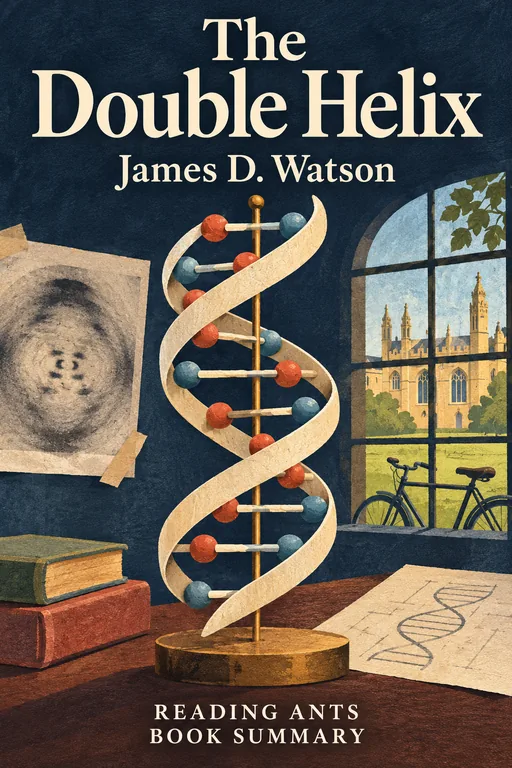
The Double Helix
James D. Watson
James Watson gives a personal, frank and controversial account of how he and Francis Crick worked out the double-helix structure of DNA in 1953, and of the rivalry, luck and ambition that went with it.
🔬 Science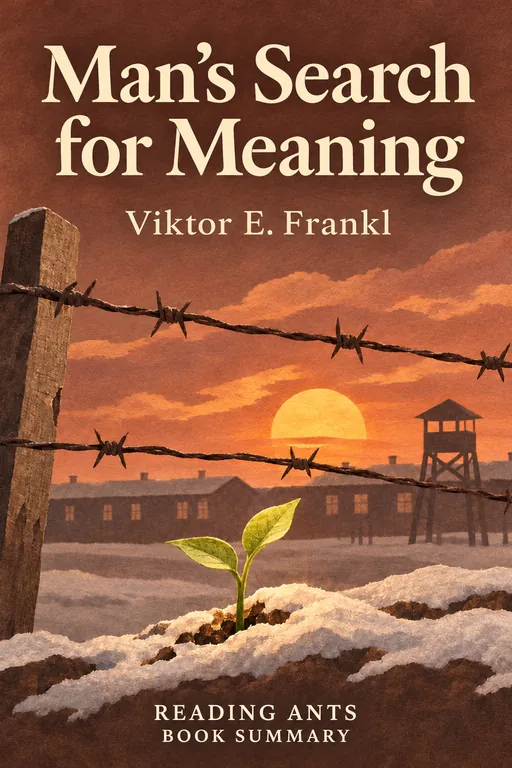
Man's Search for Meaning
Viktor E. Frankl
A psychiatrist who survived the Nazi concentration camps explains that even in the worst suffering, people can choose their attitude, and that finding a reason to live is what gives us the strength to endure.
👤 Real Lives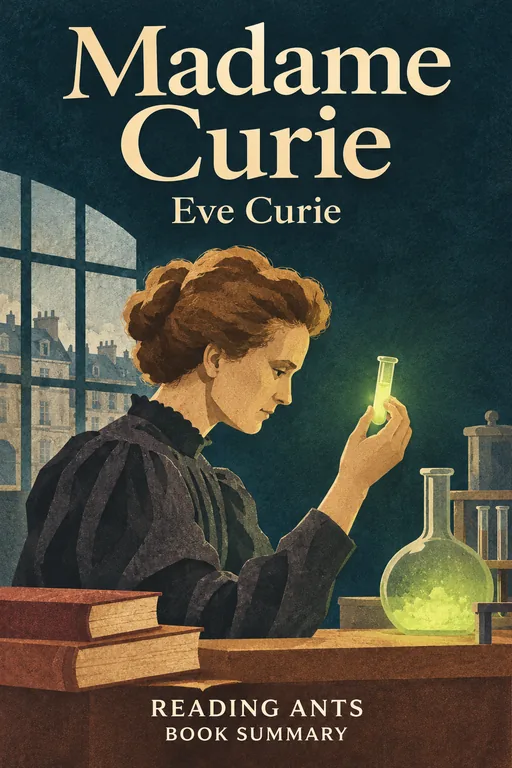
Madame Curie
Eve Curie
Eve Curie writes the story of her mother, Marie Curie, a poor Polish student who became the first woman to win a Nobel Prize and the only person to win it in two different sciences.
👤 Real Lives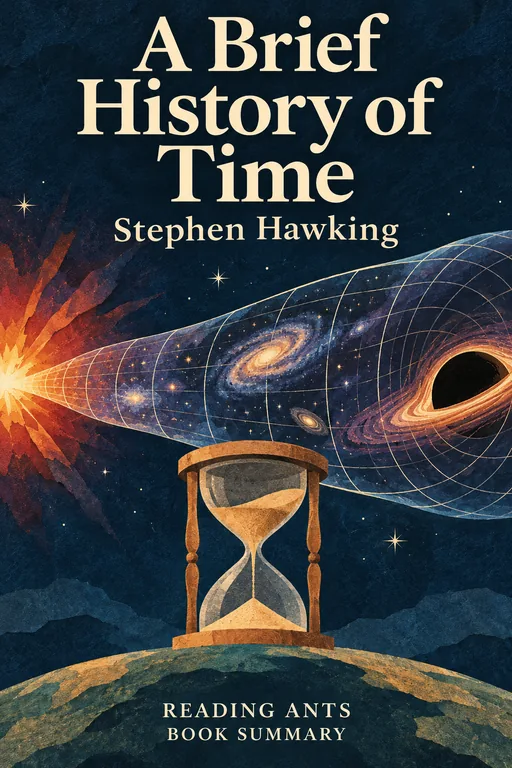
A Brief History of Time
Stephen Hawking
One of the world's greatest physicists explains, with almost no math, what we know about the origin, structure and fate of the universe, from the Big Bang to black holes and the nature of time itself.
🔬 ScienceWant something different?
Pick another topic and we will show you three books to start with.