 Reading Ants
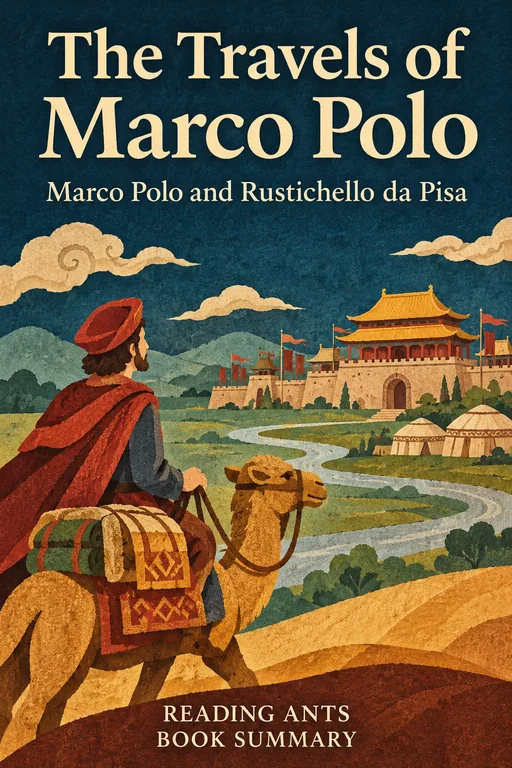
The Travels of Marco Polo
Original title: Le Devisement du monde
A Venetian merchant's account of his long journey to Asia and his years in the service of the Mongol emperor Kublai Khan, which opened the eyes of medieval Europeans to the wealth, cities and customs of the East.
Overview
The Travels of Marco Polo, also known as Il Milione or the Description of the World, records the journeys of Marco Polo, a young man from Venice who traveled with his father and uncle to the Mongol empire in the thirteenth century. After he returned, he was captured in a war between Italian city states and, while in prison in Genoa, told his story to a writer named Rustichello da Pisa, who wrote it down around 1298. The book was copied and translated in many versions. It is a mix of travel diary, geography, trade guide and tall tale, and it has been debated ever since.
Full Summary
1. A merchant family sets out
The idea: The book begins with Marco’s father and uncle, who had traveled to Asia as traders and met the Mongol ruler Kublai Khan, who asked them to carry a message to the pope requesting learned Christian teachers, and to bring back oil from the lamp at the Holy Sepulchre in Jerusalem. They returned to Venice and, a few years later, set out again in 1271 with the young Marco, who was in his teens. The route took them across the Middle East and through Persia, then over high mountains and deserts.
In real life: A family business sometimes takes a child along on a trip, and the child learns more in a year than in school.
2. The journey across Asia
The idea: Marco describes the many places along the way, from cities of the Middle East to the high Pamir mountains and the deserts of Central Asia. He reports on the peoples, their religions, foods, clothes and trade goods. He tells of fabled spices, carpets and silk, of strange customs and of dangers such as bandits and sandstorms. After several years, the family reached the court of Kublai Khan.
In real life: A long trip in a new country shows how many ways there are to live.
3. At the court of the Great Khan
The idea: Kublai Khan, the grandson of Genghis Khan and ruler of a vast empire, received the travelers kindly and took a liking to Marco. The book describes the splendid summer capital, with its palaces and parks, the grand feasts, the hunts and the efficient system of messengers on horseback that carried news across the empire. Marco says that he served the Khan for many years on missions to distant provinces.
In real life: An outsider who learns the language and customs of a place may be trusted with responsibility.
4. Marvels of China
The idea: Marco’s descriptions of China, which he calls Cathay and Manzi, amazed his readers. He wrote about enormous cities, such as the one now called Hangzhou, with canals, bridges and busy markets. He describes the use of paper money, which the Khan made valuable by law, and the use of black stones, which we call coal, as fuel. He also mentions the postal system and the care of the poor.
In real life: Imagine reading for the first time about a city much larger than any you have ever seen.
5. Islands, spices and the sea
The idea: The book also describes lands that Marco visited, or heard about, in Southeast Asia, India and the Indian Ocean, with accounts of spices, pearls, giant birds and strange rituals. He speaks of Japan, which he knew only by hearsay, as an island rich in gold. After many years, the Polos were allowed to leave, and they escorted a Mongol princess by sea to Persia, in a voyage that took long and was dangerous.
In real life: A story told second-hand may be exciting, but it is wise to ask how the teller knows.
6. The return and the doubts
The idea: The Polos finally reached Venice in 1295, after about twenty-four years away. Marco told his stories to a doubting audience, and some people thought that he exaggerated, and the book’s Italian title, Il Milione, is of debated origin; one traditional explanation is that it mocked his huge numbers. Whether he stretched the truth or not, the book became one of the most popular travel books in Europe, and it inspired map-makers and later explorers. Christopher Columbus owned a Latin copy and filled its margins with his own notes.
In real life: Sometimes the most remarkable true stories sound like inventions.
Why It Matters
The Travels of Marco Polo was one of the most widely read books of the late Middle Ages, and it shaped how Europeans pictured Asia for centuries. It gave details about the geography and customs of China, India and Persia at a time when few Europeans had been there, and encouraged curiosity about trade and exploration. Maps made in the following period used its information, and it influenced those who dreamed of reaching Asia by sea. The book is also a window into the Mongol empire at its height. Debates over how much of it is first-hand, and how reliable it is, have kept scholars busy, and show the challenge of using traveler’s accounts as history.
Key Takeaways
- Travel widens the mind. Meeting other cultures changes how we see our own.
- The Mongol empire connected Eurasia. Roads and messengers allowed trade and ideas to flow.
- Curiosity leads to discovery. The book inspired generations of explorers.
- Sources need care. An exciting account can mix fact, rumor and exaggeration.
- Trade links peoples. Goods and stories moved across continents.
What We Can Learn
Marco Polo’s story encourages us to be curious and brave about the unknown, and to listen to people from different places. It also teaches us to be careful readers. When someone describes a faraway place or a marvelous thing, we can ask what they saw themselves, what they heard and how it can be checked. And it reminds us that cultures influence each other, through trade, travel and storytelling, and that no society lives entirely alone. If you ever get the chance to travel, even to a nearby town, keep a notebook of what you see, and compare your notes with what others say.
Criticism and Counterpoints
Some scholars argue that Marco Polo may not have traveled as far as he claimed, pointing out that his account omits things that a visitor to China might have been expected to mention, such as the Great Wall, tea or the writing system. Others defend him, saying that many details match what is known from Chinese and Persian sources, and that omissions can be explained. The text exists in many manuscripts that differ, and the writer Rustichello may have added or shaped parts. Some of the stories are plainly fantastic. Scholars therefore treat it as a valuable but imperfect source.
Who Should Read It
This book is for readers who like travel, medieval history and stories of exploration. The language of older translations can be slow, but there are accessible modern versions, and the chapters are short. Those who want a precise historical account should read it together with other evidence from the time.
Want the whole book?
A summary is a taste, not the meal. Here is where to find the full book.
You reached the end 🎉
Nicely done. Mark this one as read, and we will suggest what to read next.
Read this next
The Histories
Herodotus
Herodotus, often called the father of history, tells how the Greeks and the Persians came into conflict and fought the great wars of the early fifth century BCE, with long, colorful detours into the lands, customs and legends of the known world.
🏛️ History
The Muqaddimah
Ibn Khaldun
Ibn Khaldun, a North African scholar of the fourteenth century, sets out a pioneering theory of how societies are organized, how states rise and fall, and how economies work, as an introduction to a larger history of the world.
🏛️ History
The Thousand and One Nights
Anonymous
A storyteller postpones her execution night after night with unfinished tales whose wonders, dangers and nested voices gradually challenge a king's murderous view of human nature.
🌍 World Literature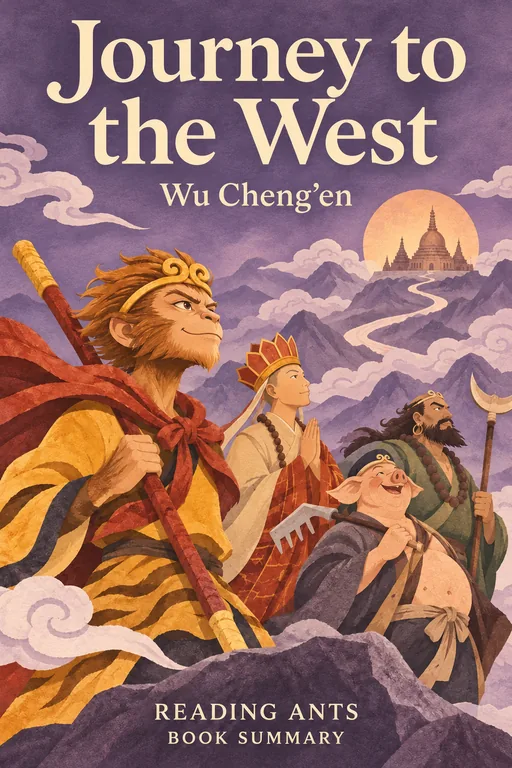
Journey to the West
Wu Cheng'en
A rebellious, magical Monkey King and two monstrous companions protect a gentle Buddhist monk on his long, demon-filled journey from China to India to bring back holy scriptures.
🌍 World Literature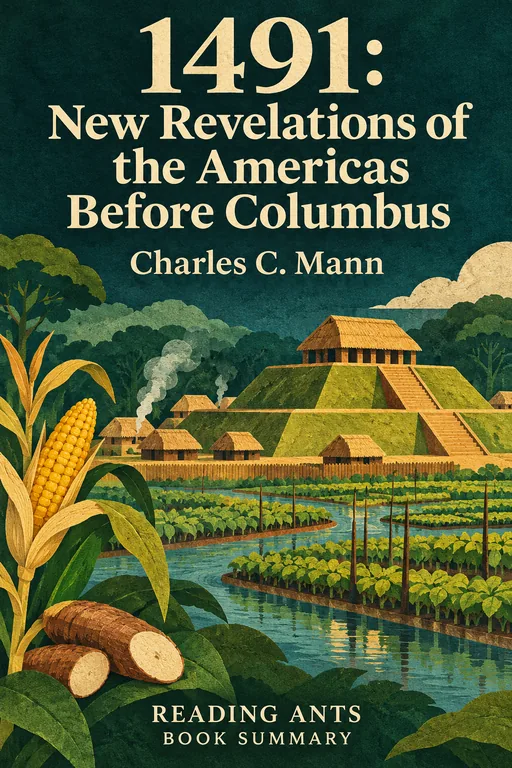
1491: New Revelations of the Americas Before Columbus
Charles C. Mann
Charles Mann gathers recent research to argue that the Americas before Columbus held more people, older cities and more skillful land managers than most of us were taught, and that the picture of a pristine, empty wilderness is wrong.
🏛️ History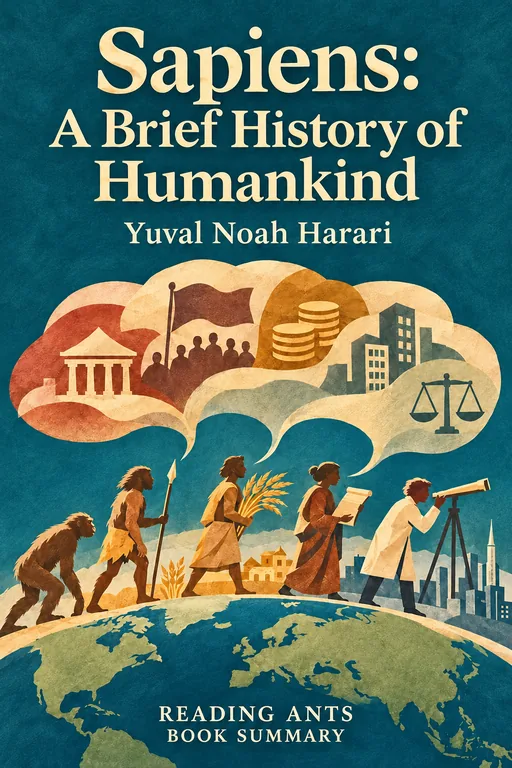
Sapiens: A Brief History of Humankind
Yuval Noah Harari
Humans came to rule the planet not because we are the strongest animals but because we can believe in shared stories (gods, nations, money, companies) that let millions of strangers cooperate.
🏛️ HistoryWant something different?
Pick another topic and we will show you three books to start with.