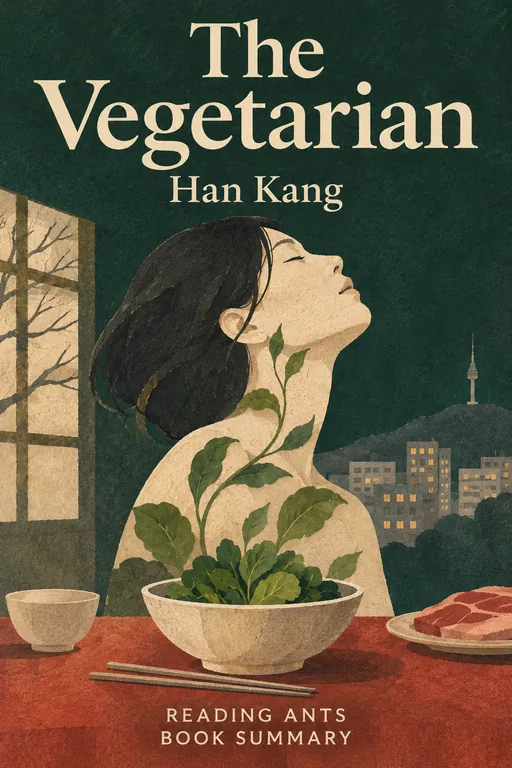
The Vegetarian
Original title: 채식주의자
After a disturbing dream, an ordinary Korean housewife stops eating meat, and her quiet refusal sets off a family crisis that pushes her toward a strange, desperate escape.
Overview
The Vegetarian is a novel by the South Korean writer Han Kang, published in 2007, and translated into English in 2015. It is set in contemporary Seoul, and told in three parts, each from a different point of view: her husband, her brother-in-law and her sister. The heroine, Yeong-hye, is not the narrator of any part, and the reader sees her mostly through the eyes of others. Han Kang won the Nobel Prize in Literature in 2024, and this novel, which won the International Booker Prize in 2016, helped make her known around the world. It contains disturbing scenes of violence and sexuality.
Main Characters
- Yeong-hye: a quiet woman, who works part-time as a graphic artist, and who suddenly refuses to eat meat after a series of bloody dreams.
- Mr. Cheong: her husband, a dull, conventional man, who tells the first part.
- In-hye: Yeong-hye’s older sister, who cares for her.
- The brother-in-law: In-hye’s husband, a video artist, who becomes obsessed with Yeong-hye.
- Yeong-hye’s father: a strict, stern former soldier, who served in Vietnam and uses violence.
- Yeong-ho: Yeong-hye’s brother, who is at the family dinner.
- In-hye’s son: the young child that In-hye cares for alone after her marriage ends.
Full Summary
The Vegetarian
The story begins with Mr. Cheong’s account. He describes his wife as an ordinary woman, who never made trouble. One day, he finds her throwing out all the meat in the house. When he demands an explanation, she answers vaguely that she has had a dream, and she will no longer eat meat.
He is angry and embarrassed. Her refusal is a nuisance to him, and he feels that she is making him look bad, including in front of his colleagues. As the months pass she eats less and less, and grows thinner, and she turns away from him. He refuses to accept this and treats her badly, and he calls her family to deal with the problem.
The Family Dinner
The family gathers to confront her. Her father, a harsh man with a stern temper, slaps her when she refuses to eat meat. He then tries to force a piece of pork into her mouth, while Mr. Cheong and her brother hold her arms. In response, Yeong-hye spits out the meat, takes a fruit knife and cuts her wrist, and is rushed to the hospital.
Her family continues to treat her as a problem to be solved. Her husband, who cannot bear it, eventually divorces her.
Aftermath
At the hospital, Yeong-hye’s mother tricks her into drinking something made with meat by telling her that it is made from vegetables, and Yeong-hye is sickened when she learns the truth. Later, Yeong-hye walks out of the hospital. When she is found, she shows a bird in her hand that has a bite mark in it, and she asks whether she has done something wrong. The family does not know how to deal with her, or with what has happened.
Mongolian Mark
The second part is told by Yeong-hye’s brother-in-law, a video artist who is struggling with his work. He learns from his wife that her sister has a birthmark, which is often called a Mongolian mark. He becomes obsessed with Yeong-hye, and with the idea of a video in which two people have flowers painted on their bodies.
Yeong-hye agrees to model for him, and he paints flowers across her body and films her. He then makes a second video, with another artist, which does not go as he planned. Finally he has sex with Yeong-hye himself, taking advantage of her fragile state. When In-hye discovers them, she is horrified, and calls emergency services. The brother-in-law is taken away, and his marriage is over.
Flaming Trees
In the third part, we see Yeong-hye through the eyes of her sister, who visits her in a psychiatric hospital. The rest of the family has turned away, and In-hye is the only one who still supports her. Yeong-hye has stopped eating almost entirely, and she believes that she is becoming a plant, not a human being.
In-hye, who is worn out by caring for her son and for her sister, and who is struggling with her own divorce and unhappiness, keeps visiting and keeps trying to make her sister eat.
The Ambulance
When In-hye sees the hospital staff force-feeding her sister, she steps in and bites the nurse who is holding her back, and takes her sister away. The doctors send them to another hospital by ambulance, as the only hope of saving Yeong-hye’s life. During the ride, In-hye looks out at the trees along the road, which seem to her to be burning in the sunlight.
The book ends without a clear resolution, with Yeong-hye still resisting, and her sister left to wonder about the meaning of her suffering.
Why It Matters
The Vegetarian was Han Kang’s first book to be translated into English, and it received international praise. It is often read as a study of violence, patriarchy and the limits of the body, and as a story about a woman who tries to take control of her own life by refusing what is expected of her. The novel’s strange, dreamlike style has been widely admired. It was a landmark in the growth of Korean literature around the world, and was followed by the Nobel Prize for the author in 2024.
Key Takeaways
- Refusal can be a form of power. Yeong-hye’s choice is a protest.
- Families can be violent. Control is exercised, even in the name of care.
- Bodies are contested. Others try to define what a woman should do with hers.
- Not everything can be explained. Yeong-hye’s inner life remains a mystery.
- Care can exhaust. In-hye is drained by caring for others.
What We Can Learn
The book reminds us to listen to people who say “no,” and to ask why, instead of simply trying to force them to conform. Pressure and violence rarely solve a problem.
It also shows how much we depend on stories that are told about us, and that people who are different can be silenced. If someone you know is suffering from an eating disorder or mental illness, it is important to seek professional help, and to offer support without judgment. Finally, the book shows the toll that caring for others can take on the caregiver.
Criticism and Counterpoints
Some readers find the book disturbing and bleak, and the scenes of sexual abuse are hard to read. Others feel that the heroine is never given a voice, so that she is more an object than a person. The book’s meaning is ambiguous, and critics disagree on whether it is a feminist work, a study of mental illness or a surreal fable. Some find the style cold. The English translation by Deborah Smith has also been debated: critics, notably in Korea, said that it left out, added or changed details, though others, including the author, defended it.
Who Should Read It
This book is for adult readers who like strange, challenging literary fiction. It is short, but it is heavy. Those who are sensitive to descriptions of violence, abuse, self-harm or eating disorders should read with care or avoid it.
Want the whole book?
A summary is a taste, not the meal. Here is where to find the full book.
You reached the end 🎉
Nicely done. Mark this one as read, and we will suggest what to read next.
Read this next
Convenience Store Woman
Sayaka Murata
A woman who has found peace working at a convenience store for eighteen years is pressured by family, friends and society to become "normal," and she must decide what kind of life is truly hers.
🌍 World Literature
The Bell Jar
Sylvia Plath
A talented young woman named Esther Greenwood, who seems to be on the path to success in 1950s America, sinks into depression and a suicide attempt, and slowly begins to recover.
📜 Classics
The Metamorphosis
Franz Kafka
A hardworking traveling salesman wakes one morning to find himself transformed into a monstrous insect, and his family's love for him slowly turns to disgust and neglect.
🌍 World Literature
No Longer Human
Osamu Dazai
A man who feels like an alien among other people hides behind a mask of clowning, and sinks, through drink, drugs and failed relationships, into despair.
🌍 World Literature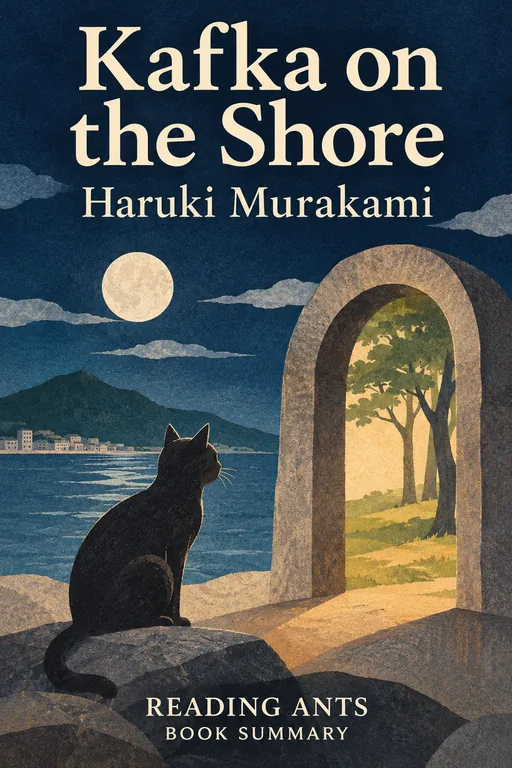
Kafka on the Shore
Haruki Murakami
A fifteen-year-old runaway and an elderly man who can talk to cats follow two strange paths that slowly draw together, in a story about fate, memory and the doors between worlds.
🌍 World Literature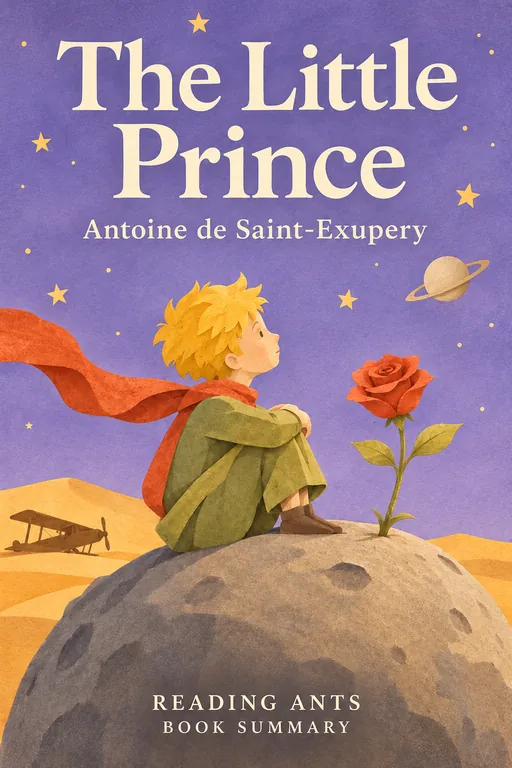
The Little Prince
Antoine de Saint-Exupery
A pilot stranded in the desert meets a small boy from a tiny planet, who teaches him that the most important things in life, like love and friendship, can only be seen with the heart.
🌍 World LiteratureWant something different?
Pick another topic and we will show you three books to start with.